
Dubai Travel Guide for First-Time Visitors
A practical Dubai travel guide for first-time visitors covering the best areas to stay, how to get around, food neighbourhoods, safety tips, timing, and a zone-based itinerary.

Dubai is a brilliant first trip when you plan it like a city of zones, not a single downtown with a beach attached. The mistake is trying to “do Dubai” by bouncing from the marina to the creek to the mall to the Palm in one heroic day.
This guide focuses on the choices that actually shape a first visit: where to stay, when the metro helps, when taxis are saner, where food gets interesting, and how to build an itinerary that does not collapse under heat, distance, and expensive shiny objects.
Quick answer: First-time visitors should usually stay in Downtown Dubai for landmark convenience, Dubai Marina/JBR for beach-and-evening energy, or Deira/Bur Dubai/Al Fahidi for value, food, and older Dubai.
Quick Facts
- Best for: winter sun, comfortable city breaks, families and couples, architecture and skyline views.
- Stay in: Downtown Dubai, Dubai Marina/JBR, Deira/Bur Dubai/Al Fahidi.
- Best time: November to March for the best first-time experience; April/October as warmer shoulder months; May-September only if indoor/pool/resort planning is acceptable.
- Minimum stay: 3 to 5 days.
- Getting around: Use the metro for simple station-to-station routes; use taxis or Careem for Palm, Jumeirah, late dinners, beaches, desert pickups, and awkward last-kilometer trips.
Table of Contents
- 1.Is Dubai a good first-time destination?
- 2.Where to stay in Dubai
- 3.How Dubai neighbourhoods actually feel
- 4.Getting around Dubai without wasting your trip
- 5.What to do in Dubai on a first visit
- 6.Food in Dubai: where the trip gets better
- 7.Safety, customs, dress, and practical rules
- 8.A simple Dubai itinerary for first-time visitors
- 9.Best time to visit Dubai
- 10.How to find better Dubai flight and hotel value
Is Dubai a good first-time destination?
Dubai is a good first-time destination if you want winter sun, comfortable hotels, beaches, architecture, easy airport access, global food, shopping, and a city that is logistically simple once you understand its layout. It is especially good for travelers who like polished infrastructure and do not mind using taxis.
Dubai is not ideal if you want a compact walking city, cheap old-town atmosphere, spontaneous wandering all day, or a destination where the best experiences are mostly free. It has history and texture, especially around the creek, but the city’s dominant first impression is modern, spread out, and heavily engineered.
Best fit: couples, families, stopover travelers, winter-sun seekers, shoppers, architecture fans, and first-time Middle East visitors who want comfort.
Worst fit: travelers who hate malls, highways, heat, paid attractions, dress/behavior rules, or cities where “nearby” can still mean a 25-minute ride.
The right first Dubai trip should show you three versions of the city: the spectacle around Downtown and Marina, the older trading-city feel around the creek, and the resort/beach/desert side. If you only see the malls and towers, Dubai can feel like an airport duty-free shop achieved sentience. If you add the creek, food areas, waterfront evenings, and some real pacing, it becomes much more interesting.
Where to stay in Dubai
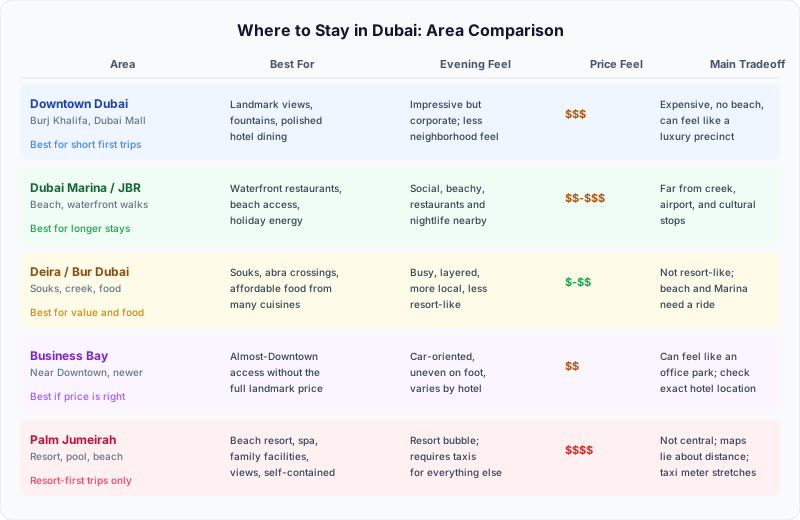
The best area to stay in Dubai depends less on the “best neighbourhood” and more on where you want to be after dinner. Dubai’s sights are spread out, so your hotel should match your evening style, not just your sightseeing list.
Downtown Dubai: best for the classic first trip
Stay in Downtown Dubai if Burj Khalifa, Dubai Mall, the fountains, easy taxis, and landmark convenience matter most. This is the easiest base for a short two- or three-night visit because several headline sights are clustered together.
The tradeoff is cost and personality. Downtown is efficient and impressive, but it can feel more like a giant luxury precinct than a neighbourhood. Food can be convenient but not always the best value, and beach time still requires a ride.
Dubai Marina and JBR: best for beach, restaurants, and evenings
Dubai Marina and JBR are better if you want waterfront walks, beach access, restaurants, nightlife, and a more holiday-like base. This area works well for longer first trips because you can end days with a walk, dinner, or beachside evening without needing another cross-city ride.
The tradeoff is distance from older Dubai, the airport, and some cultural stops. It is a poor base if your main interests are the creek, souks, and historic districts. It is a strong base if you want Dubai to feel like a warm-weather city break with a beach attached.
Deira, Bur Dubai, and Al Fahidi: best for value and older Dubai
Deira, Bur Dubai, and Al Fahidi are where first-timers can see a less polished, more layered Dubai. This side is better for souks, creek crossings, affordable hotels, Indian/Pakistani/Iranian/Arab food, and a sense of the city before the skyline became the whole postcard.
The tradeoff is that it is not as resort-like. Streets can be busy, hotels vary more, and beach or Marina trips take time. Choose this area if value, food, and older Dubai matter more than pool-club energy.
Business Bay: useful if the price is right
Business Bay can work as a practical almost-Downtown base. It often has newer hotels and can be cheaper than staying right beside Dubai Mall. It suits travelers who will use taxis and want access to Downtown without paying the full landmark premium.
The tradeoff is that it can feel car-oriented and uneven on foot. Check the exact hotel location before booking; “Business Bay” covers places that feel convenient and places that feel like you are sleeping beside an office park with a lobby fragrance budget.
Palm Jumeirah: best for resort-first trips
Palm Jumeirah is best if the hotel is the point: beach resort, pool, family facilities, spa, views, and a self-contained stay. It is not the best base for first-time sightseeing unless your budget is generous and you are comfortable using taxis often.
Stay on the Palm for a resort trip. Do not stay there because a map made it look central. Maps lie by omission. They never show the taxi meter quietly stretching.
How Dubai neighbourhoods actually feel
Dubai neighbourhoods are better understood as trip modes than traditional districts. Pick the mode you want most often.
- Downtown Dubai feels iconic, polished, expensive, and convenient for the famous stuff.
- Dubai Marina/JBR feels social, waterfront, beachy, and better for evenings.
- Deira/Bur Dubai feels older, busier, cheaper, and more food-driven.
- Al Fahidi feels heritage-focused and good for a slower creekside morning.
- DIFC is better for upscale dining and bars than daytime sightseeing.
- Jumeirah/Kite Beach suits beach time, cafes, and a more residential coastal feel.
- Palm Jumeirah is resort Dubai: great if you chose it deliberately, annoying if you expected easy city access.
Simple decision: choose Downtown for a short landmark trip, Marina/JBR for beach and nightlife, Deira/Bur Dubai for value and food, and Palm Jumeirah only when the resort itself is your main attraction.
For many first-time visitors, the best compromise is splitting time mentally rather than physically: stay in one area, then dedicate specific days to other zones. You do not need to change hotels unless you are staying a week or more.
Getting around Dubai without wasting your trip
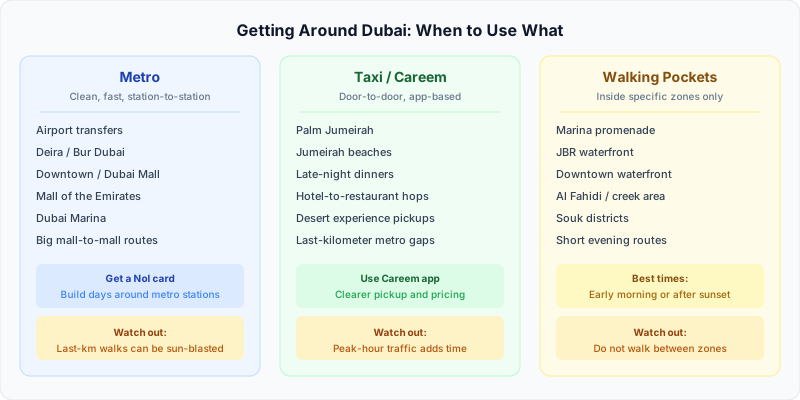
Dubai transport is easy when you stop pretending one method solves everything. Use the metro where it is direct, taxis or Careem where the city sprawls, and walking only inside specific pockets.
The Dubai Metro is clean, safe, and useful for the airport, Deira, Bur Dubai, Downtown/Dubai Mall, Mall of the Emirates, and Dubai Marina. Get a Nol card or use the appropriate ticketing option and build metro days around stations that actually line up with your plans.
But the metro does not neatly solve beach clubs, Palm Jumeirah, many hotels, Jumeirah, desert pickups, or late dinners. That is taxi territory. Dubai taxis are generally straightforward, and Careem is useful when you want app-based pickup clarity.
The biggest transport trap is the last kilometer. A place can be “near the metro” and still involve a sun-blasted walk across roads, ramps, and building complexes that appear to have been designed by someone with a personal vendetta against pedestrians.
Use this rule:
- Metro: airport, Downtown, Deira/Bur Dubai, Marina, big mall-to-mall routes.
- Taxi/Careem: Palm, Jumeirah beaches, late nights, hotel-to-restaurant hops, desert pickup points.
- Walking: Marina promenade, JBR, Downtown waterfront, Al Fahidi, creek/souk areas, malls, and short evening routes.
Dubai is safer and easier than many huge cities, but the distances still matter. Plan by zone and you will feel clever. Zigzag across town and Dubai will invoice you for your optimism.
What to do in Dubai on a first visit
A strong first Dubai visit should mix skyline, creek, beach/waterfront, food, and one big optional experience. The goal is not to collect every attraction. The goal is to understand the city’s contrasts without turning your trip into a queue with hotel sheets.
Start with Downtown, but do not live in Dubai Mall
Burj Khalifa, Dubai Mall, and the Dubai Fountain are obvious first-timer stops. They are worth seeing because they explain modern Dubai’s scale quickly. If you care about the view, book Burj Khalifa for a clear day or golden-hour slot; if you do not care, enjoy the skyline from the ground and spend the money elsewhere.
Dubai Mall is useful, air-conditioned, and enormous. It is also a time-eating machine. Go with a purpose: fountains, aquarium exterior, meal, shopping, or access to the Burj. Otherwise you can lose half a day wandering between luxury stores and wondering whether your vacation is now technically retail therapy.
Give the creek a real morning or afternoon

Dubai Creek, Al Fahidi, Bur Dubai, Deira, and the souks are essential for a first trip because they add context. Take an abra across the creek, walk through souk areas, visit Al Fahidi, and eat nearby instead of rushing back to the towers.
This is where Dubai feels less like a showcase and more like a trading city shaped by migration, commerce, and food. It will not look as glossy as the brochures. Good. That is the point.
Choose one desert or resort-style splurge
A desert experience can be worthwhile, but choose carefully. Some trips are more conservation- or landscape-focused; others are built around entertainment, dune driving, and dinner camps. Neither is automatically wrong, but they are different products.
If desert is not your thing, put the splurge into a beach club, hotel pool day, special dinner, or Museum of the Future. Dubai is very good at selling premium experiences. Your job is to buy one that fits your trip, not six that fit an algorithm’s commission structure.
Add a beach or waterfront evening

Plan at least one evening around JBR, Dubai Marina, Bluewaters, Kite Beach, or a hotel beach area. Dubai makes more sense at night, when the heat drops, the lights come on, and waterfront districts start doing the thing they were built to do.
A beach or marina evening also balances the mall-and-tower version of the city. For many visitors, this is when Dubai finally feels like a vacation rather than a logistics exercise.
Food in Dubai: where the trip gets better
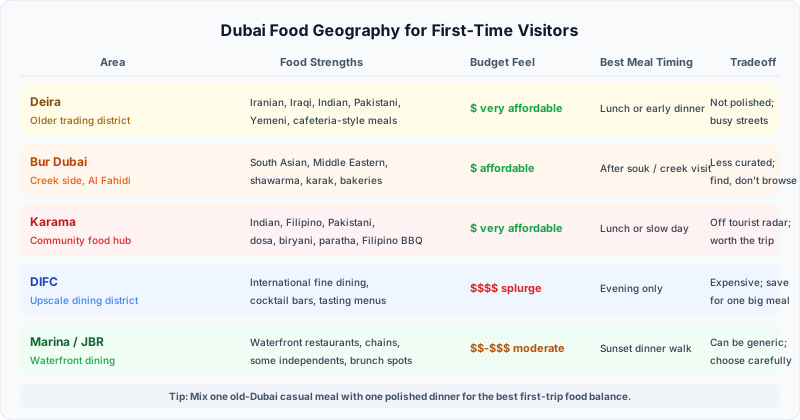
Dubai’s food scene is far better than the lazy “luxury hotel buffet” stereotype. The best first trip mixes casual community-driven food with one polished dinner if the budget allows.
For older Dubai food, focus on Deira, Bur Dubai, Karama, and nearby areas. This is where you can build meals around Indian, Pakistani, Iranian, Iraqi, Filipino, Yemeni, Lebanese, Emirati, and cafeteria-style spots. The value can be excellent compared with hotel and waterfront dining.
For polished meals, DIFC, Downtown, Dubai Marina, and hotel restaurants offer the expensive side: tasting menus, rooftop views, licensed venues, brunches, and international names. Some are great. Some are just expensive rooms where the lighting is doing more work than the kitchen.
For a first trip, aim for this balance:
- One creek/old-Dubai meal after souks or Al Fahidi.
- One casual South Asian or Middle Eastern meal in Deira, Bur Dubai, or Karama.
- One waterfront dinner around Marina/JBR, Jumeirah, or Downtown.
- One nicer dinner in DIFC, Downtown, or your hotel if that fits the budget.
- At least one simple breakfast or snack: karak, manakish, shawarma, dosa, paratha, or a bakery/cafeteria stop.
Alcohol is available in licensed venues, usually hotels, bars, clubs, and some restaurants. It is also expensive enough to make you briefly reconsider your life choices. Budget for that if nightlife or cocktails matter.
Safety, customs, dress, and practical rules

Dubai is generally very safe for visitors. Street crime is low, taxis are regulated, tourist infrastructure is strong, and solo travelers usually find the city manageable. The issues are less about danger and more about laws, heat, etiquette, cost, and overconfidence.
Dress is more flexible than many first-timers expect in hotels, beaches, malls, and tourist areas. Still, dress more modestly in older districts, souks, government buildings, religious contexts, and family-oriented public places. Swimwear belongs at pools and beaches, not in malls or taxis. This should not need saying, but airports prove humanity likes a challenge.
Practical rules:
- Avoid public drunkenness and aggressive behavior.
- Be careful with public displays of affection.
- Do not photograph people closely without permission, especially families or women.
- Respect Ramadan customs if visiting during the holy month; hours, atmosphere, and dining patterns can shift.
- Carry water and sun protection.
- Schedule outdoor walks early morning or evening outside the coolest months.
- Check whether your hotel is actually walkable to transit, restaurants, or beach access.
- Leave buffer time for traffic, especially at peak times and between distant zones.
Dubai is not hard to visit. It just punishes lazy assumptions. Treat heat, distance, and rules as real planning factors and the city becomes much smoother.
A simple Dubai itinerary for first-time visitors
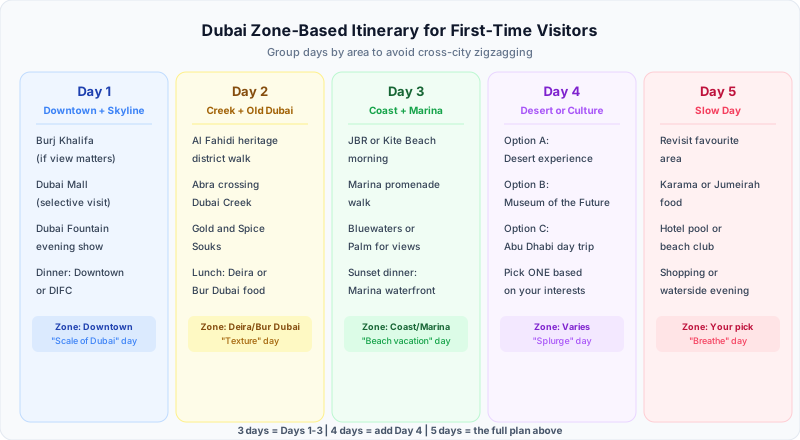
The best Dubai itinerary groups each day by area. Three full days is enough for a first taste; four or five lets you add beach, desert, or Abu Dhabi without rushing.
Day 1: Downtown Dubai and the skyline
Start with Downtown Dubai. Visit Burj Khalifa if the viewpoint matters to you, use Dubai Mall selectively, and spend late afternoon or evening around the fountains and waterfront. Keep dinner nearby in Downtown, Business Bay, or DIFC.
This is the “scale of Dubai” day. Do not add the creek, Marina, Palm, and desert to it. That is not ambition; that is itinerary tax fraud.
Day 2: Al Fahidi, Dubai Creek, Deira, and Bur Dubai
Spend a real block of time around Al Fahidi, the creek, souks, and Deira/Bur Dubai food. Take an abra, wander the gold/spice/textile souk areas as interest allows, and eat in the area.
This day gives the trip texture. It is also a good reminder that Dubai was a trading city before it became a skyline brand.
Day 3: Beach, Marina, JBR, or Jumeirah
Make day three about the coast. Choose JBR and Dubai Marina for easy waterfront energy, Kite Beach/Jumeirah for a more casual beach feel, or Palm Jumeirah if you are doing a resort, beach club, or family attraction.
Stay in the area for sunset and dinner. This is not the day to also do three indoor attractions across town unless you enjoy turning vacations into errands.
Day 4: Desert, Museum of the Future, or Abu Dhabi
If you have a fourth day, choose one major add-on. A desert trip works if you want landscape and a break from the city. Museum of the Future works if you like architecture and immersive exhibits. Abu Dhabi is possible as a long day trip, especially for the Sheikh Zayed Grand Mosque and Louvre Abu Dhabi, but it deserves an early start and realistic expectations.
Day 5: Slow day, shopping, or a second food area
With a fifth day, slow down. Revisit a favourite area, add Karama or Jumeirah food, use a hotel pool, shop properly, or spend more time by the water. Dubai is more enjoyable when at least one day has room to breathe.
Best time to visit Dubai
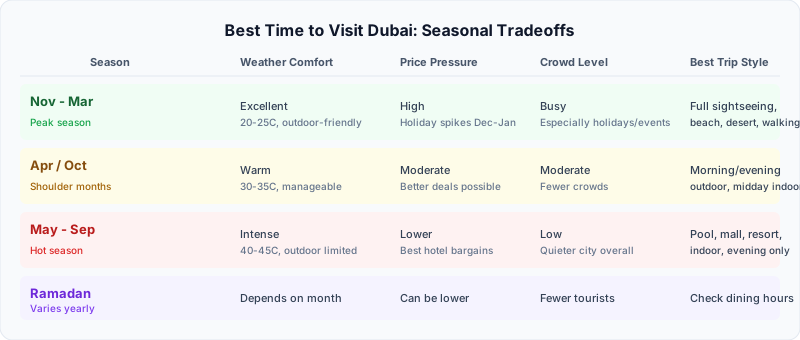
The best time to visit Dubai is November to March, when outdoor sightseeing, beach time, terraces, walking, and desert trips are most comfortable. This is also the busiest and most expensive period, especially around holidays, events, and school breaks.
April and October can work if you accept warmer days and plan outdoor time carefully. May to September is hot enough that first-time visitors should treat the trip as indoor, pool, mall, hotel, and evening-focused. Summer can be cheaper, but cheap is not always value if the weather blocks the version of Dubai you came for.
Seasonal tradeoffs:
- November to March: best weather, highest demand, strongest first-time experience.
- April and October: possible shoulder value, warmer but still workable for some travelers.
- May to September: lower prices possible, intense heat, indoor/pool-heavy planning required.
- Ramadan: culturally interesting, but check dining hours, attraction schedules, and local expectations.
For a first Dubai trip, pay attention to weather before flight price. A bargain fare in August can be perfectly fine for a resort-and-mall trip. It is less fine if your dream was long outdoor exploring and creekside wandering at noon.
How to find better Dubai flight and hotel value
Dubai pricing is heavily shaped by season, events, hotel zone, and how flexible you are. Flights can look attractive while hotels quietly eat the savings with a tiny silver spoon.
To improve value, compare several date combinations and hotel areas before committing. Downtown and Palm properties often price high in peak season. Business Bay, Deira, Bur Dubai, Al Barsha, and some Marina-adjacent options can offer better value depending on your plans.
The best value is not always the cheapest hotel. A low nightly rate far from transit, food, or your main activities can cost you in taxis and wasted time. Look for the total trip shape: flight timing, hotel zone, transport pattern, and what you want to do after dark.
Use Fare Window logic: search flexible dates, watch hotel spikes, compare nearby neighbourhoods, and decide whether you are optimizing for weather, price, beach access, or landmark convenience. Dubai is a tradeoff city. Pick the tradeoff on purpose.
Final advice for a first Dubai trip
Do Dubai by zones: one skyline day, one creek/old-Dubai day, one coast or resort day, and one optional splurge day if time allows. Choose a hotel based on evenings and transport, not just a famous address. Use the metro where it works, taxis where they save sanity, and do not let malls become your whole personality for three days.
A good first Dubai trip is not about seeing everything. It is about seeing the right contrasts: towers and creek, beach and food, polished spectacle and older trading streets, comfort and heat-aware pacing. Get those decisions right and Dubai becomes far more than a layover with a tall building.
Let Fare Window find the best fares to Dubai
Dubai prices swing with winter demand, holidays, events, and hotel-zone pressure. Track flexible dates before you lock the whole trip around one expensive week.
Start tracking faresKeep planning
Related travel guides
Explore more first-time destination guides while you compare routes, seasons, and trip shapes.


