
Berlin Travel Guide for First-Time Visitors
A practical Berlin guide for first-time travelers who want the right neighborhood, the right season, and a trip that feels well-planned instead of chaotic.

Berlin is one of the best first-time city trips in Europe if you care more about substance than postcard prettiness. It is big, layered, historically heavy, and full of neighborhoods that actually feel different from one another.
It also rewards a little planning. Stay in the right area, visit in the right season, and shape the trip around your interests instead of a generic attractions checklist, and Berlin becomes much easier to love.
Quick Facts
- Best for: History, neighborhoods, strong transit, museums, food scenes, and a city with some edge left in it.
- Stay in: Mitte, Prenzlauer Berg, or Kreuzberg depending on your priorities.
- Best months: May, June, September, and early October.
- Minimum stay: 3 full days.
- Better stay: 4 to 5 days for a slower, more rewarding pace.
- Value: Often better value than London, Paris, or Amsterdam for a major capital.
Table of Contents
Is Berlin worth visiting?
Yes — Berlin is worth visiting if you want a city with real character, excellent museums, serious history, good nightlife, and neighborhoods you can explore for hours without feeling like you are walking through a tourist theme park.
Berlin is not built around one tidy old town and a cathedral that everybody photographs from the same bridge. It is broader than that. The appeal is in the mix: imperial leftovers, Cold War scars, creative energy, giant parks, strong public transit, Turkish food, wine bars, techno basements, flea markets, brutalist corners, and a constant feeling that the city does not particularly care if you approve.
Quick answer: Berlin is one of the best European city breaks for travelers who want history, neighborhoods with personality, strong public transit, and a lot to do without museum-fatigue nonsense.
That also means Berlin is not ideal for every traveler. If you want compact old-world beauty and a hit-list of famous landmarks within ten minutes of each other, you may prefer Prague, Vienna, or Paris. Berlin is better for travelers who like cities that unfold by neighborhood.
Best time to visit Berlin
The best time to visit Berlin for most travelers is late spring or early fall.
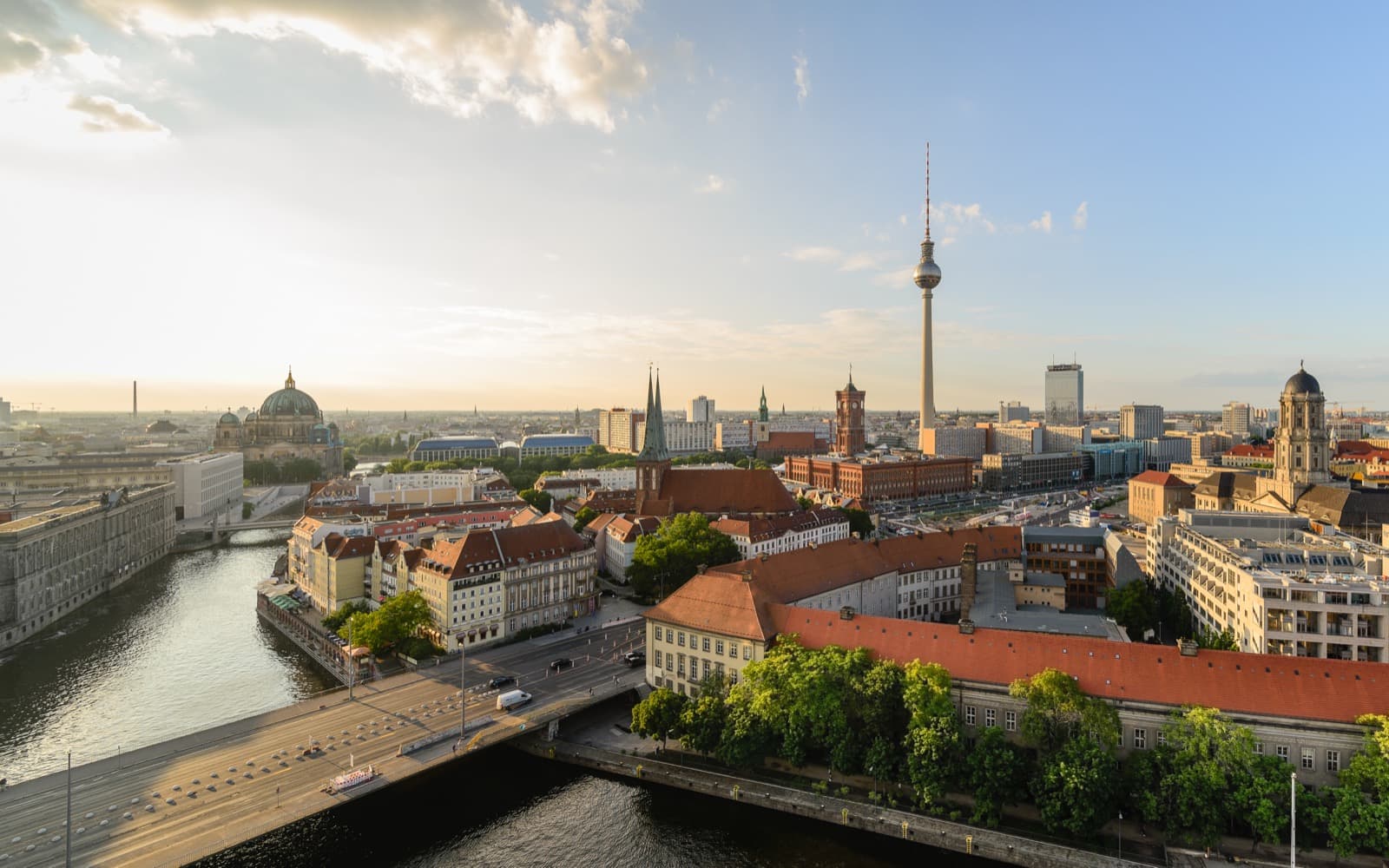
May and June are excellent because outdoor life wakes up properly, the parks feel alive, long daylight makes the city easier to use well, and temperatures are usually comfortable for walking. September is another strong choice because Berlin still feels active but the peak summer travel pressure starts easing off.
July and August can still be fun, especially if you care about lakes, beer gardens, and long evenings. The tradeoff is that the city gets busier, accommodation can cost more, and hot days hit harder in places without strong air conditioning. Berlin is not unique there — Europe loves pretending insulation is a personality trait.
Winter is worth it only if you know what you are signing up for. December can be good for Christmas markets and a moody urban atmosphere, but the days are short and gray. January and February are the toughest months for most first-time visitors unless you care more about museums, nightlife, and lower hotel prices than being outdoors.
Quick answer: For most first-time visitors, the best time to visit Berlin is usually May to June or September, when the city is lively but not at peak midsummer heat or deep winter gloom.
Seasonal tradeoffs at a glance
Best balance of outdoor energy, greenery, and comfortable walking.
Longest days, busiest crowds, higher prices, beer gardens.
Active city feel with easing tourist pressure.
Christmas markets, moody atmosphere, short gray days.
Timing anchors worth knowing
Annual timing anchors matter less in Berlin than in some festival cities, but a few things are worth noting. Major holidays, summer weekends, and big event periods can tighten hotel prices. If you want a balance of energy and value, shoulder season is usually the cleanest win.
Where to stay in Berlin
The best area to stay in Berlin depends on whether you want maximum convenience, a livelier food-and-bars base, or a more relaxed local feel.
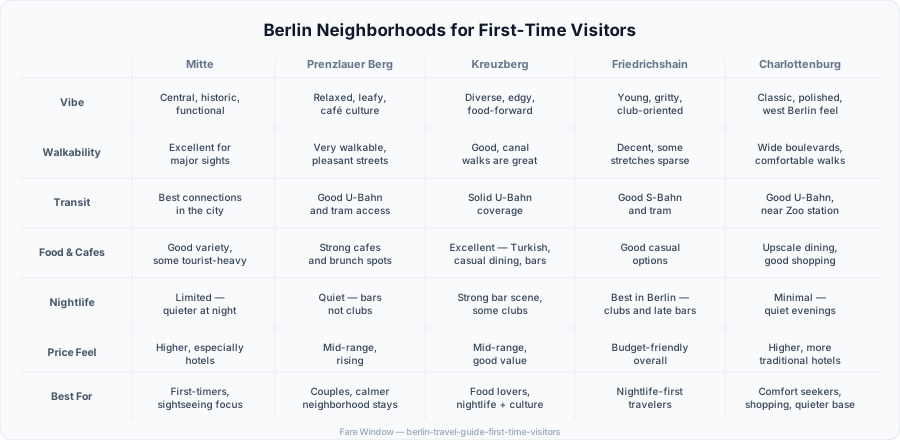
Quick answer: For most first-time visitors, the best areas to stay are Mitte, Prenzlauer Berg, or Kreuzberg depending on whether you want convenience, a calmer local feel, or more nightlife and food.
Mitte: best for first-trip convenience
Stay in Mitte if you want the easiest logistics. You will be close to major historical sights, museums, and strong transit connections. It is the safest recommendation for travelers who want to see a lot without constantly crossing the city.
The tradeoff is that some parts of Mitte can feel more functional than charming, and hotels here are often not the cheapest.
Prenzlauer Berg: best for cafes, calmer streets, and easy days
Stay in Prenzlauer Berg if you want a softer landing. It is walkable, pleasant, full of cafes, and good for travelers who want neighborhood energy without nonstop nightlife.
It works especially well for couples, repeat Europe travelers, and anyone who likes morning coffee, dinner spots, and low-drama wandering.
Kreuzberg: best for food, nightlife, and a little edge
Stay in Kreuzberg if you want more character and a stronger night scene. This is one of the best areas for casual food, bars, mixed cultures, and a city experience that feels less polished.
The tradeoff is that not every pocket is equally quiet or equally convenient for a first-time visitor trying to cover the classic sights efficiently.
Friedrichshain: best for nightlife-first trips
Stay in Friedrichshain if nightlife is a major reason you are coming. It has clubs, bars, younger energy, and easier access to parts of east Berlin.
The tradeoff is that it is not the calmest base, and if your trip is more about museums and classic first-time sightseeing, other neighborhoods are easier.
Charlottenburg: best for a more classic and comfortable base
Stay in Charlottenburg if you want a more traditional west Berlin feel, better shopping, and a slightly calmer, more polished atmosphere.
It is a good fit for travelers who care less about nightlife and more about comfort, shopping, and broader boulevards. The tradeoff is that it feels less central to Berlin's contemporary identity for many first-timers.
What to do in Berlin
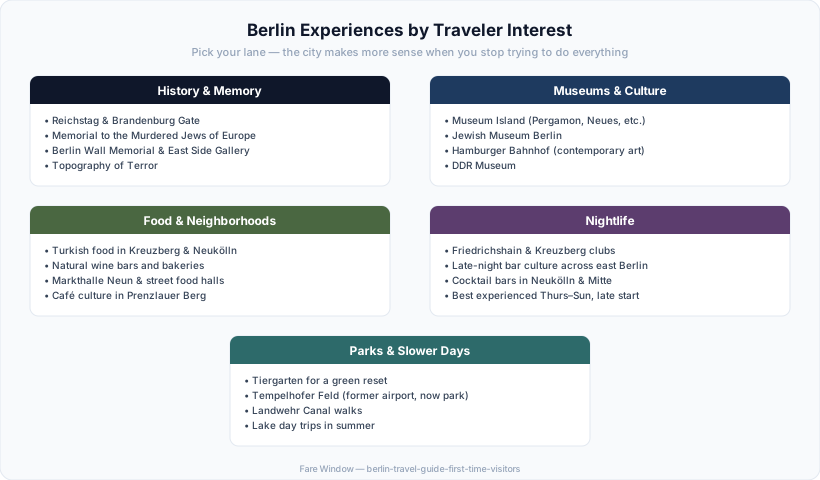
The best things to do in Berlin depend on what kind of traveler you are, because this is a city where intent matters more than checklist worship.
If you care about history and memory
Start with the Reichstag area, Brandenburg Gate, the Memorial to the Murdered Jews of Europe, Topography of Terror, and the Berlin Wall Memorial. Berlin is one of the few cities where twentieth-century history is not just something in a museum — it is built into the street plan, the voids, and the feeling of certain places.
Museum Island is also worth your time if you want world-class collections and a stronger sense of Berlin's older cultural identity.
If you care about neighborhoods and city texture
Walk through Prenzlauer Berg, Kreuzberg, Neukölln, and parts of Mitte instead of trying to optimize every hour around landmarks. Berlin is often most enjoyable when you let the city explain itself block by block.
This is where Berlin beats more obvious capitals. The reward is not just seeing the famous thing. It is seeing how different kinds of Berlin coexist.
If you care about food
Berlin is not Europe's most polished food city, but it is one of its most interesting and least stuffy. The city is excellent for Turkish food, casual modern dining, natural wine bars, bakeries, neighborhood cafes, and lower-key places that do not feel engineered for influencer livestock.
A first trip should leave room for both classic snack culture and proper neighborhood meals. Do not reduce the city to one döner and call it research.
If you care about nightlife
Berlin remains one of Europe's defining nightlife cities, but it works best if that is genuinely your scene rather than a box you feel obliged to tick. The city rewards curiosity, patience, and not dressing like you googled “Berlin club outfit” five minutes ago.
If nightlife is central to the trip, choose your hotel area with that in mind. Do not stay somewhere sleepy and then act surprised when a 4 a.m. ride home feels like a moral test.
If you want a slower day
Use Tiergarten, the Landwehr Canal, Tempelhofer Feld, or one of Berlin's lake day trips as a reset. Berlin is large enough that pacing matters. You do not need to turn every day into a historical decathlon.
How many days to stay
Three full days is enough for a strong first Berlin trip, but four to five days is better if you want the city to feel like more than a sequence of transit transfers.
Quick answer: Three full days is a strong first trip. Four to five days gives you room for museums, neighborhoods, and a slower pace.
With 3 days, focus on core history, one major museum cluster, and two or three neighborhoods. With 4 days, you can add more neighborhood time, a slower food day, and a park or lake break. With 5 days, Berlin starts to feel properly open-ended, which is when many people finally stop trying to conquer it and start enjoying it.
If this is your first stop on a larger Europe trip, 3 days is usually the sweet spot. If Berlin is the main point of the trip, give it 4 or 5.
Strong first trip covering core history, museums, and neighborhoods.
Room for food focus, parks, and slower neighborhood days.
Berlin starts to feel open-ended and properly enjoyable.
How to time your trip for better prices
For better prices, aim for shoulder season and avoid peak summer weekends when possible.
Flights to Berlin often price better when you book before the busiest summer travel rush and when your dates stay flexible by even a day or two. Hotel costs usually climb fastest around warm-weather weekends, holidays, and major event periods.
Quick answer: May, early June, September, and early October often give you the best mix of value and experience. Midweek arrivals can also help.
In practical terms, May, early June, September, and early October often give you the best mix of value and experience. Midweek arrivals can also help. Berlin is popular, but it is not one of those cities where you need to pay a premium just to stand in the same queue as everyone else if you plan with a little discipline.
Practical Berlin travel tips
Berlin is easy to use once you accept that the city is large and that transit matters more than walking end-to-end.
Tips that matter most
- Choose your hotel based on neighborhood + transit, not just price. Where you sleep shapes the whole trip.
- Build each day around one or two areas, not the whole city. Berlin is too big for cross-city sprinting.
- Leave room for neighborhood wandering. Berlin often lands best in the unplanned gaps.
- Do not underestimate travel time across the city, especially at night. Distances are real.
- If you want museums, book strategically. Do not try to cram four serious institutions into one afternoon like a maniac.
- If nightlife matters, structure the trip around it. Do not staple it onto an already full sightseeing day.
Final take
Berlin is one of the easiest major European cities to shape around your own interests, which is exactly why it works so well for first-time visitors.
Get the season right, stay in the right neighborhood, and decide early whether your trip is mainly about history, food, museums, nightlife, or just learning the city by walking it. Do that, and Berlin stops feeling sprawling and starts feeling deliberate.
Planning a trip to Berlin?
Let Fare Window find the best fares
Set your trip's departure and return windows. Fare Window checks every date combination automatically and sends you a daily fare report.
Start your free trialKeep planning
Related travel guides
Explore more first-time destination guides while you compare routes, seasons, and trip shapes.


