Lima Travel Guide for First-Time Visitors
A practical first-time Lima guide covering where to stay, neighborhoods, getting around, food, safety, what to prioritize, and a simple three-day itinerary.
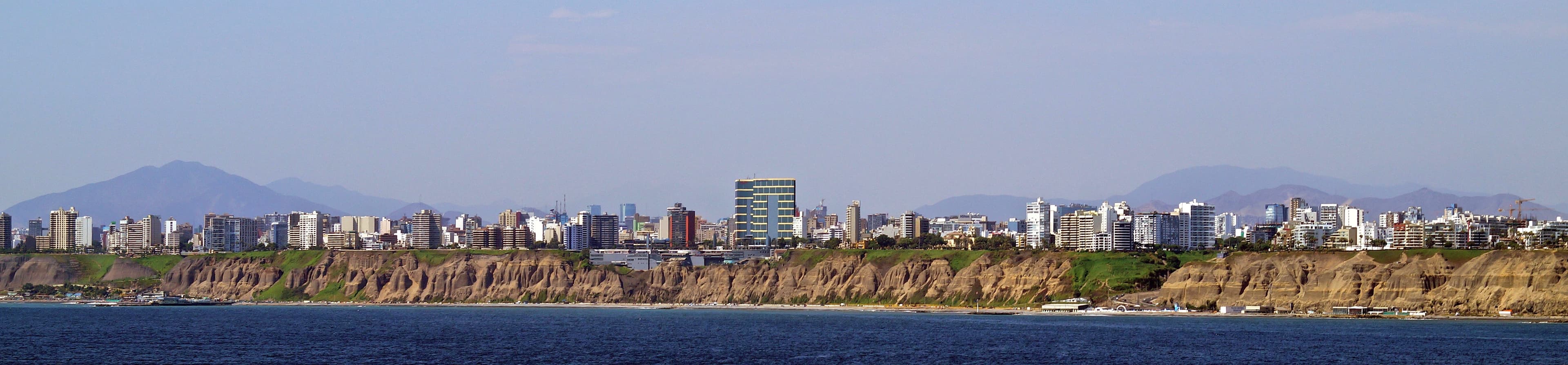
Lima is the right first stop in Peru if you treat it as a real city, not just a layover before Cusco. The best first-time version of Lima is built around Miraflores, Barranco, San Isidro, the Historic Center, and a deliberate food plan. The worst version is landing late, booking a random cheap hotel far from the coast, and assuming the city will behave like a compact old town. It will not. Lima is huge, coastal, traffic-heavy, food-obsessed, and much better when you group your days by district.
For most first-time visitors, Miraflores is the easiest base. Barranco is the more atmospheric choice if you care about art, restaurants, and evenings out. San Isidro is quieter and more polished. The Historic Center is essential to visit but usually not the best place to sleep on a first trip unless you know exactly why you are choosing it.
Quick Facts
- {'label': 'Best first-time base', 'value': 'Miraflores'}
- {'label': 'Best atmosphere base', 'value': 'Barranco'}
- {'label': 'Best quiet/upscale base', 'value': 'San Isidro'}
- {'label': 'Best trip length', 'value': '2-3 full days as part of a Peru trip; 4 days if food is the point'}
- {'label': 'Getting around', 'value': 'Walk inside district cores; use app rides or arranged taxis for longer jumps'}
- {'label': 'Main planning rule', 'value': 'Group days by district because Lima traffic can eat weak itineraries alive'}
- {'label': 'Safety posture', 'value': 'Use known visitor districts, manage phones carefully, and avoid empty late-night walks'}
Table of Contents
- 1.Who Lima Is Best For
- 2.Quick Facts for Planning
- 3.What to Prioritize on a First Lima Trip
- 4.Where to Stay in Lima
- 5.Best Neighborhoods and Areas for First-Timers
- 6.Getting Around Lima Without Wasting the Trip in Traffic
- 7.Food Strategy for a First Lima Trip
- 8.Safety and Practical Tips
- 9.A Simple 3-Day Lima Itinerary
- 10.Common First-Timer Mistakes
- 11.Bottom Line
Who Lima Is Best For
Lima is best for travelers who want food, coastal walks, museums, pre-Columbian history, and an easy soft landing before the rest of Peru. It is especially good for people who like eating well without every meal becoming a white-tablecloth production. Ceviche, Nikkei cooking, anticuchos, markets, casual menus, coffee, pisco, and tasting-menu restaurants can all fit into the same trip if you plan like an adult and not like a hungry golden retriever.
Lima is not ideal if you want a small, walk-everywhere colonial city. It is also not the strongest choice if you only have one night in Peru and need to be at the airport early. The airport is far enough from the main visitor districts that a short stop can turn into a traffic management exercise with dinner attached.
Quick Facts for Planning
| First-trip question | Practical answer | |---|---| | Best first-time base | Miraflores | | Best atmosphere base | Barranco | | Best quiet/upscale base | San Isidro | | Best food strategy | Mix one planned restaurant, one market or casual lunch, and one ceviche-focused meal | | Best trip length | 2-3 full days if Lima is part of a Peru trip; 4 days if food is the point | | Airport plan | Official taxi, arranged transfer, or app ride with clear pickup instructions | | Getting around | Walk inside Miraflores/Barranco/San Isidro; use app rides for longer jumps | | Main planning mistake | Treating Lima as a quick airport stop instead of choosing a district plan | | Safety posture | Stay in known visitor districts, manage phones carefully, and avoid empty streets late | | Weather rule | Lima is often gray and humid in winter; do not build the trip around sunshine |
Table of Contents
- [What to Prioritize on a First Lima Trip](#what-to-prioritize-on-a-first-lima-trip) - [Where to Stay in Lima](#where-to-stay-in-lima) - [Best Neighborhoods and Areas for First-Timers](#best-neighborhoods-and-areas-for-first-timers) - [Getting Around Lima Without Wasting the Trip in Traffic](#getting-around-lima-without-wasting-the-trip-in-traffic) - [Food Strategy for a First Lima Trip](#food-strategy-for-a-first-lima-trip) - [Safety and Practical Tips](#safety-and-practical-tips) - [A Simple 3-Day Lima Itinerary](#a-simple-3-day-lima-itinerary) - [Common First-Timer Mistakes](#common-first-timer-mistakes) - [Bottom Line](#bottom-line)
What to Prioritize on a First Lima Trip
Lima works best when you prioritize districts and meals, not a giant checklist. A good first trip should include the Miraflores coast, Barranco, the Historic Center by day, at least one serious food experience, and one older Lima site such as Huaca Pucllana or a strong museum.
The coastal strip is the easiest introduction. Walk the Malecon in Miraflores, use Parque del Amor and Larcomar as orientation points, and understand that the cliffs are more useful as a planning spine than as a standalone attraction. They tell you where the first-time visitor version of the city lives: ocean on one side, restaurants and hotels inland, Barranco to the south, San Isidro to the north.
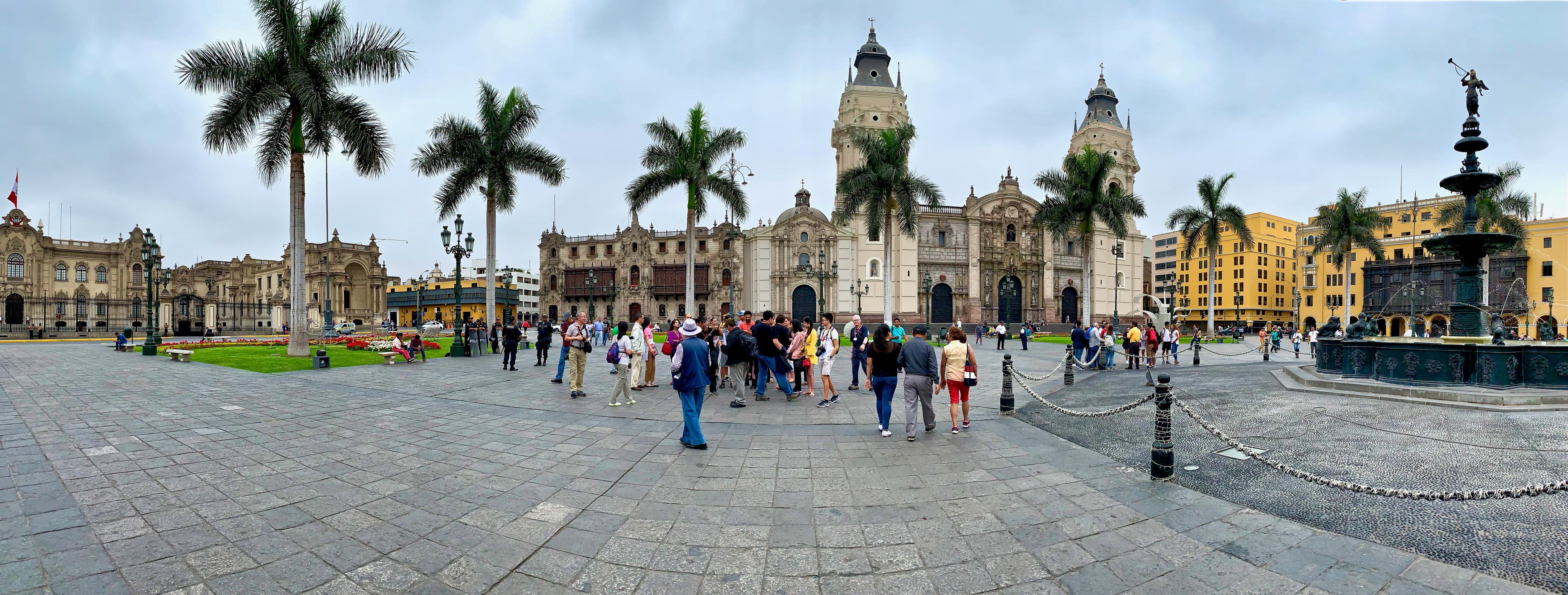
Huaca Pucllana is a strong first-timer stop because it puts Lima's pre-Columbian history in the middle of modern Miraflores. The Historic Center gives you colonial Lima, Plaza Mayor, churches, balconies, and civic scale, but it should be treated as a deliberate daytime outing, not a place to wander into casually at night.
Barranco is the best change of rhythm. It is colorful, creative, restaurant-heavy, and easier to love than downtown. If your Lima trip has only one proper evening out, Barranco should probably get it.
Where to Stay in Lima
Miraflores is the best default for most first-time visitors because it solves the most problems at once: hotels, restaurants, coastal walking, tour pickups, app rides, cafes, and a reasonably comfortable tourist infrastructure. Stay near Parque Kennedy if you want maximum convenience, or closer to the Malecon if coastal walks matter more.
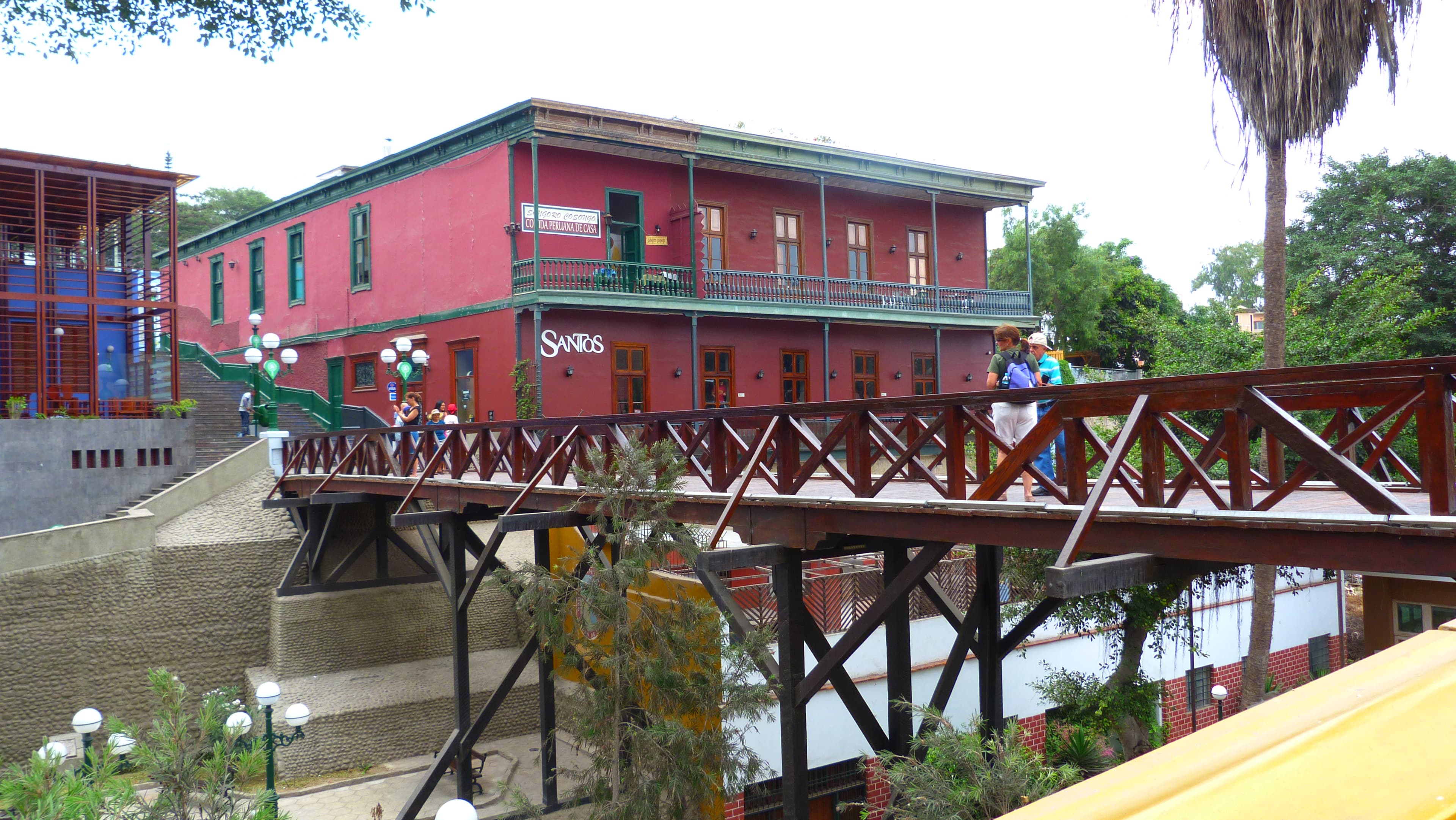
Barranco is better if you want atmosphere and a more memorable neighborhood. It has galleries, bars, restaurants, old houses, and the Bridge of Sighs area, but it is a little less frictionless than Miraflores for first-timers. Pick Barranco when you want Lima to feel like part of the trip, not just the place where your hotel happens to be.
San Isidro is the quieter business/upscale choice. It works well for travelers who want calmer streets, better hotels, parks, and good restaurant access without being in the busiest tourist zone. The tradeoff is that it can feel less lively at night, and you may use app rides more often.
The Historic Center is best for sightseeing, not usually sleeping. It has the big civic landmarks, older architecture, and museums nearby, but most first-time visitors will be happier visiting by day and returning to Miraflores, Barranco, or San Isidro afterward.
Best Neighborhoods and Areas for First-Timers
Miraflores is the easiest neighborhood to recommend because it is practical. It is not the most soulful part of Lima, but it is the area that keeps first trips from becoming logistics homework. Use it for your first hotel, your first coastal walk, and your first ceviche or casual dinner.
Barranco is the neighborhood most likely to make people say they liked Lima more than expected. The area around the Bridge of Sighs, Bajada de Banos, galleries, bars, and restaurants gives the city color and personality. It is best in the afternoon and evening, with a ride plan back if you are staying elsewhere.
San Isidro is clean, green, and controlled. It suits travelers who value quiet hotels, business-class comfort, and access to restaurants without the full tourist buzz. It is also a good choice if Lima is a recovery stop after flights or altitude-heavy travel.
Surquillo is useful for food, especially markets, but it is not the easiest first-time hotel base. Treat it as a lunch or market stop from Miraflores, not as your default place to sleep.
The Historic Center belongs on the itinerary, but it is a daytime decision. Go for Plaza Mayor, the cathedral area, San Francisco, balconies, older streets, and museums. Leave before the day gets awkward unless you have a specific plan.
Getting Around Lima Without Wasting the Trip in Traffic
The best Lima transport plan is simple: walk inside district cores and use app rides or arranged taxis between them. Lima traffic can be slow, distances are bigger than they look, and the airport is not close to the main visitor districts.
Inside Miraflores, Barranco, and parts of San Isidro, walking is useful and often pleasant. Between those districts, short app rides are usually the cleanest answer. From Miraflores to the Historic Center, leave more time than the map suggests and avoid stacking it with a tight dinner reservation back on the coast.
For airport transfers, use an official taxi counter, prearranged transfer, or app ride with clear pickup instructions. Do not improvise with curbside offers after a long flight. That is not local immersion; that is just volunteering for avoidable nonsense.
Public transport exists, and the Metropolitano can be useful for some routes, but it is not the easiest default for nervous first-time visitors with luggage or limited Spanish. If you use it, use it deliberately and during reasonable hours.
Food Strategy for a First Lima Trip

Lima's food scene is the main reason to give the city real time. The trick is not to chase only famous restaurants. A better first trip mixes levels: one planned dinner, one ceviche lunch, one market or casual meal, and one neighborhood night in Barranco or Miraflores.
Ceviche is usually better at lunch than late dinner. Build a midday meal around ceviche, tiradito, causa, or seafood rice, then keep dinner more flexible. If you want fine dining, reserve early and choose your district around the rest of the day. Central is in Barranco, Maido is in Miraflores, and Lima has plenty of excellent restaurants below the international-awards tier.
Surquillo Market is useful because it gives food-curious travelers a more grounded view of Lima's ingredients without requiring a full culinary expedition. Pair it with Miraflores or a planned lunch nearby. Do not turn it into a random cross-city errand if your day is already overloaded.
For casual eating, look for menus, sandwich spots, anticuchos, chicken, seafood, coffee, bakeries, and pisco bars. Lima rewards curiosity, but it still helps to anchor meals by neighborhood. The city is too spread out for "we'll just go wherever" to be a strategy.
Safety and Practical Tips
Lima is very visitable, but first-time travelers should be conservative with movement, phones, and late-night wandering. The U.S. State Department currently advises increased caution in Peru due to crime, civil unrest, and kidnapping risk, with specific high-risk areas outside the usual Lima visitor path. That does not mean Miraflores is a danger zone. It means you should use normal city judgment and avoid pretending the whole city is equally easy.
Keep your phone controlled near curbs and in traffic. Avoid walking long, quiet stretches late at night. Use app rides or arranged taxis after dinner if the route is not obvious. Keep valuables out of sight, use hotel safes intelligently, and do not make ATM stops on empty streets.
Avoid demonstrations and large crowds. In Peru, protests can disrupt roads and transport with little warning. Check local news if you are moving between cities, heading to the airport, or planning a same-day onward connection.
Lima's weather also catches people off guard. Winter can be gray, damp, and sunless for days. Summer is warmer and brighter, but coastal fog and humidity are part of the city's personality. Pack layers, not fantasy beach-resort optimism.
A Simple 3-Day Lima Itinerary
Day 1: Miraflores and the coast
Start with Miraflores because it makes the city legible. Walk the Malecon, use Larcomar and Parque del Amor as reference points, and settle into the coastal rhythm. Add Huaca Pucllana if you want history without leaving the district. Keep dinner in Miraflores or nearby so the first night stays easy.
Day 2: Historic Center by day, Barranco by evening
Go to the Historic Center in the morning or early afternoon. Focus on Plaza Mayor, San Francisco, older streets, balconies, and one museum or church rather than trying to inhale every colonial building in a single pass. Return toward the coast before evening, then spend late afternoon or dinner in Barranco.
Day 3: Food, Barranco, San Isidro, or a recovery day
Use the third day based on your trip style. Food-focused travelers should build around a ceviche lunch, Surquillo Market, or a reserved restaurant. Culture-focused travelers can add Museo Larco or more Historic Center time. If you are continuing to altitude or a packed Peru itinerary, keep this day lighter. Lima is a good place to recover before the rest of Peru starts asking things of your knees and lungs.
With a fourth day, add Callao Monumental with current local advice and a clear transport plan, deeper museums, Pachacamac, or another food-focused day. Do not add all of them. Lima is already big enough without you turning the trip into municipal tax auditing.
Common First-Timer Mistakes
The biggest Lima mistake is treating the city as an airport errand. If you only see traffic between the airport and a hotel, Lima will feel like work. If you choose a strong base and give the city two or three days, it becomes one of the better food-and-culture openings in South America.
The second mistake is choosing a hotel by price alone. A cheap room in the wrong district can cost you time, app rides, and comfort. For most visitors, Miraflores, Barranco, or San Isidro is worth the premium.
The third mistake is doing the Historic Center at the wrong time. Go by day, keep the plan focused, and do not assume the same wandering rules apply there at night as they do on the Miraflores coast.
The fourth mistake is overbooking meals. Lima is a serious food city, but three major restaurant commitments in two days can make the trip feel like digestion with landmarks between courses. Leave room for casual food.
The fifth mistake is underestimating traffic. Lima does not care that your itinerary looked efficient in a notes app. Group days by district and avoid unnecessary cross-town zigzags.
Bottom Line
Lima is worth treating as more than a layover. For most first-time visitors, the strongest plan is to stay in Miraflores, use Barranco for atmosphere and evenings, visit the Historic Center by day, eat deliberately, and keep transport simple.
Choose Miraflores if you want the easiest first trip, Barranco if you want more character, and San Isidro if you want quieter comfort. Build the trip around food, coastal walking, one historic day, and realistic traffic buffers. Lima is not a small, tidy postcard city. It is better than that when you stop asking it to be one.
Let Fare Window find the best fares for your next trip.
Track routes, watch price changes, and get smarter alerts before you book.
Start tracking faresKeep planning
Related travel guides
Explore more first-time destination guides while you compare routes, seasons, and trip shapes.