Marrakech Travel Guide for First-Time Visitors
Plan your first Marrakech trip with practical advice on where to stay, getting around, food, souks, safety, top sights, timing, and a simple itinerary.
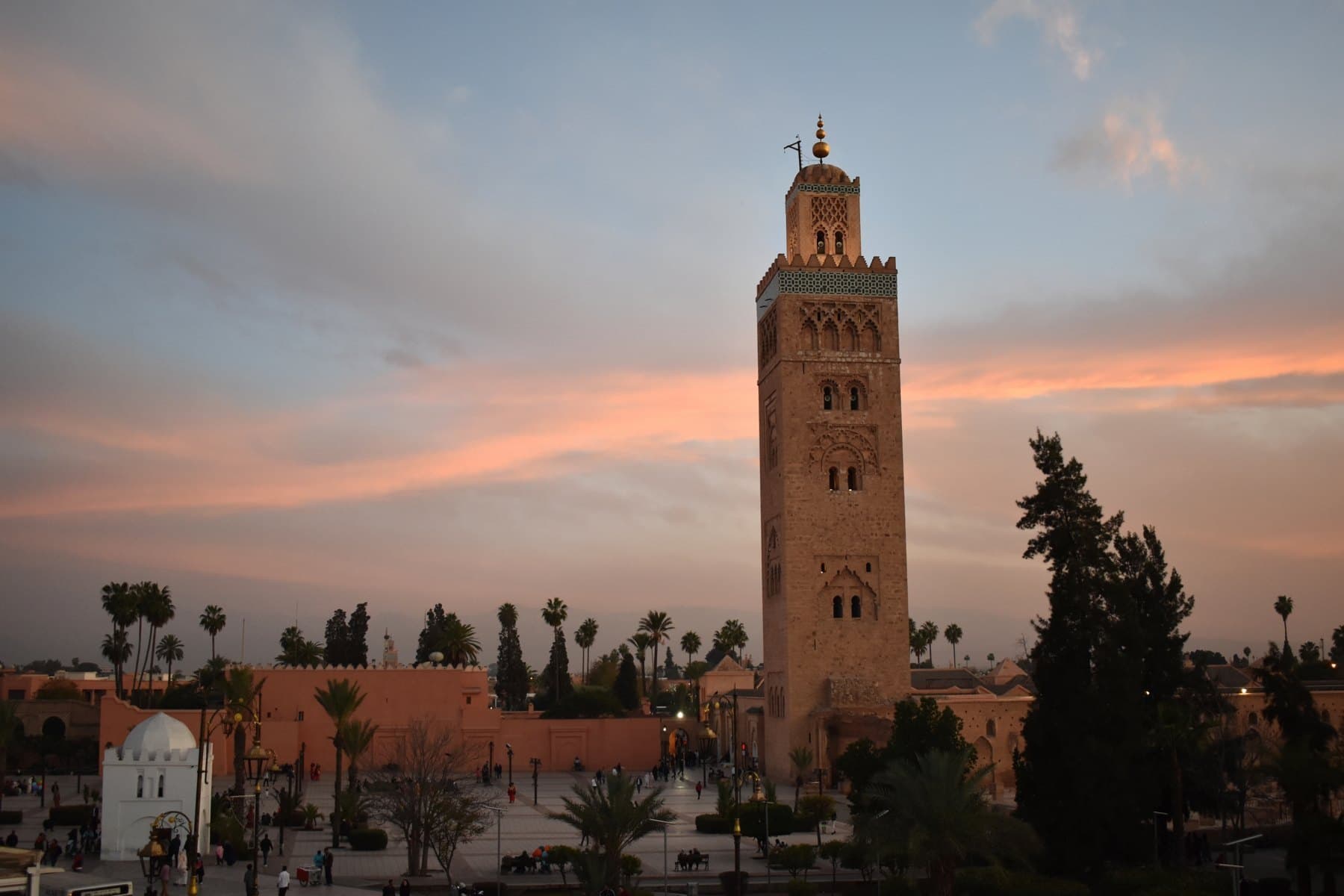
Marrakech is one of the best first trips in Morocco if you want atmosphere, design, food, rooftop evenings, and a city that feels different fast. It is also one of the easiest places to over-plan badly. The medina can be magical at 9:00 in the morning and exhausting by 5:00 in the afternoon. Jemaa el-Fnaa can be unforgettable after dark and also the exact place where a first-timer discovers that "friendly help" sometimes comes with an invoice.
A good Marrakech travel guide should not pretend the city is effortless. The better approach is to choose the right base, treat the medina as a walking environment rather than a transport grid, use Gueliz and Hivernage when you need breathing room, and build an itinerary with recovery stops. Marrakech rewards curiosity, but it punishes people who try to see every palace, garden, souk lane, food stall, and rooftop in one heroic blur. That is not a vacation. That is a spreadsheet having a panic attack.
**Quick answer:** First-time visitors should usually spend 3 full days in Marrakech, stay in the medina for atmosphere or Gueliz/Hivernage for easier logistics, walk inside the medina, use taxis or booked transfers between districts, plan Jemaa el-Fnaa for evening with firm boundaries, and balance souks/palaces with gardens, rooftops, and slower meals.
Quick Facts
Table of Contents
- 1.Is Marrakech worth visiting for first-time travelers?
- 2.Best time to visit Marrakech
- 3.Where to stay in Marrakech
- 4.Getting around Marrakech without wasting energy
- 5.Food, souks, and how to spend without feeling worked over
- 6.Best things to do on a first Marrakech trip
- 7.A simple 3-day Marrakech itinerary
- 8.Safety, hassle, and practical mistakes to avoid
- 9.How to time your Marrakech trip for better value
Quick facts for first-time visitors
- **Best for:** design lovers, food-curious travelers, riad stays, souks, rooftop evenings, gardens, hammams, photography, and short Morocco introductions - **Less ideal for:** travelers who hate bargaining, visitors who want effortless pedestrian navigation, nightlife-first trips, or anyone expecting a quiet European-style city break - **Best trip length:** 3 full days for Marrakech alone; 4 days if you want slower pacing or a desert/Atlas day trip without cramming the city - **Best areas to stay:** Medina, Kasbah, Gueliz, Hivernage, and Palmeraie depending on whether you want atmosphere, convenience, luxury, or resort quiet - **Getting around:** walk inside the medina, use taxis or arranged transfers between districts, and avoid driving yourself unless Marrakech is only a stop on a wider road trip - **Best time to visit:** March to May and October to November for the best balance of heat, light, and walking comfort; winter is pleasant but cooler at night; summer can be brutally hot - **Food reality:** the best meals are often in riads, modern Moroccan restaurants, neighborhood grills, and guided food walks, not random stalls chosen under pressure - **First-timer mistake:** booking a beautiful riad deep in the medina without checking luggage access, night arrival instructions, or how comfortable you are navigating alleys after dinner
Table of contents
1. Is Marrakech worth visiting for first-time travelers? 2. Best time to visit Marrakech 3. Where to stay in Marrakech 4. Getting around Marrakech without wasting energy 5. Food, souks, and how to spend without feeling worked over 6. Best things to do on a first Marrakech trip 7. A simple 3-day Marrakech itinerary 8. Safety, hassle, and practical mistakes to avoid 9. How to time your Marrakech trip for better value
Is Marrakech worth visiting for first-time travelers?
Yes, Marrakech is worth visiting if you want a city with strong sensory payoff: red walls, tiled courtyards, call-to-prayer atmosphere, busy souks, palms, spices, lanterns, rooftop sunsets, and a hotel scene that can make even a modest trip feel special. Few cities change the mood of a trip as quickly.
Marrakech is best for travelers who enjoy controlled chaos. If you like wandering, design, markets, cooking, gardens, and the feeling of stepping into a very different rhythm, it can be a brilliant first Morocco stop. It is also a useful base for the Atlas Mountains, Agafay desert experiences, Essaouira add-ons, and onward train travel to Casablanca, Rabat, or Fes.
The tradeoff is intensity. The medina is not a polished open-air mall. Motorbikes squeeze through lanes, wayfinding is imperfect, sellers can be persistent, and some first-timers feel tired of negotiating by day two. Marrakech is not unsafe in the dramatic movie-trailer sense for most visitors, but it can be socially tiring. The trick is to design the trip around that reality instead of pretending confidence alone will solve it.
> **Quick answer block:** Marrakech is a strong first Morocco city for travelers who want riads, souks, gardens, rooftops, Moroccan food, and easy flight access. It is weaker for travelers who want quiet streets, zero bargaining, simple navigation, or a completely low-friction city break.
Best time to visit Marrakech
The best time to visit Marrakech is usually March to May or October to November. These months give you warm days, cooler evenings, better walking conditions, and enough daylight for palaces, gardens, and rooftop dinners without the harsher summer heat.
Winter can be excellent if you pack properly. December through February often brings pleasant daytime sightseeing weather, but evenings can be cold, riads may feel chilly, and pools are not always useful unless heated. Winter is a good value window outside holiday peaks, especially for travelers who care more about city exploring than sunbathing.
Summer is the hard sell. Marrakech in July and August can be very hot, and the medina traps heat in a way that makes casual wandering feel less romantic. If summer is your only option, build the day around early mornings, long lunches, hotel pool time, hammam or spa breaks, and later evenings. Do not plan a noon souk marathon unless you are trying to become a cautionary tale with sandals.
Ramadan can be meaningful but changes the rhythm. Some restaurants and shops adjust hours, daytime energy can be quieter, and evenings become more social. It can still be rewarding for respectful visitors, but first-timers should check dates and avoid assuming every normal travel routine will run unchanged.
Where to stay in Marrakech
The best area to stay in Marrakech depends on how much atmosphere you want versus how much friction you can tolerate. First-timers should choose the neighborhood before falling in love with a tiled courtyard photo. Marrakech accommodation is powerful bait. One fountain and suddenly everyone forgets luggage has wheels.
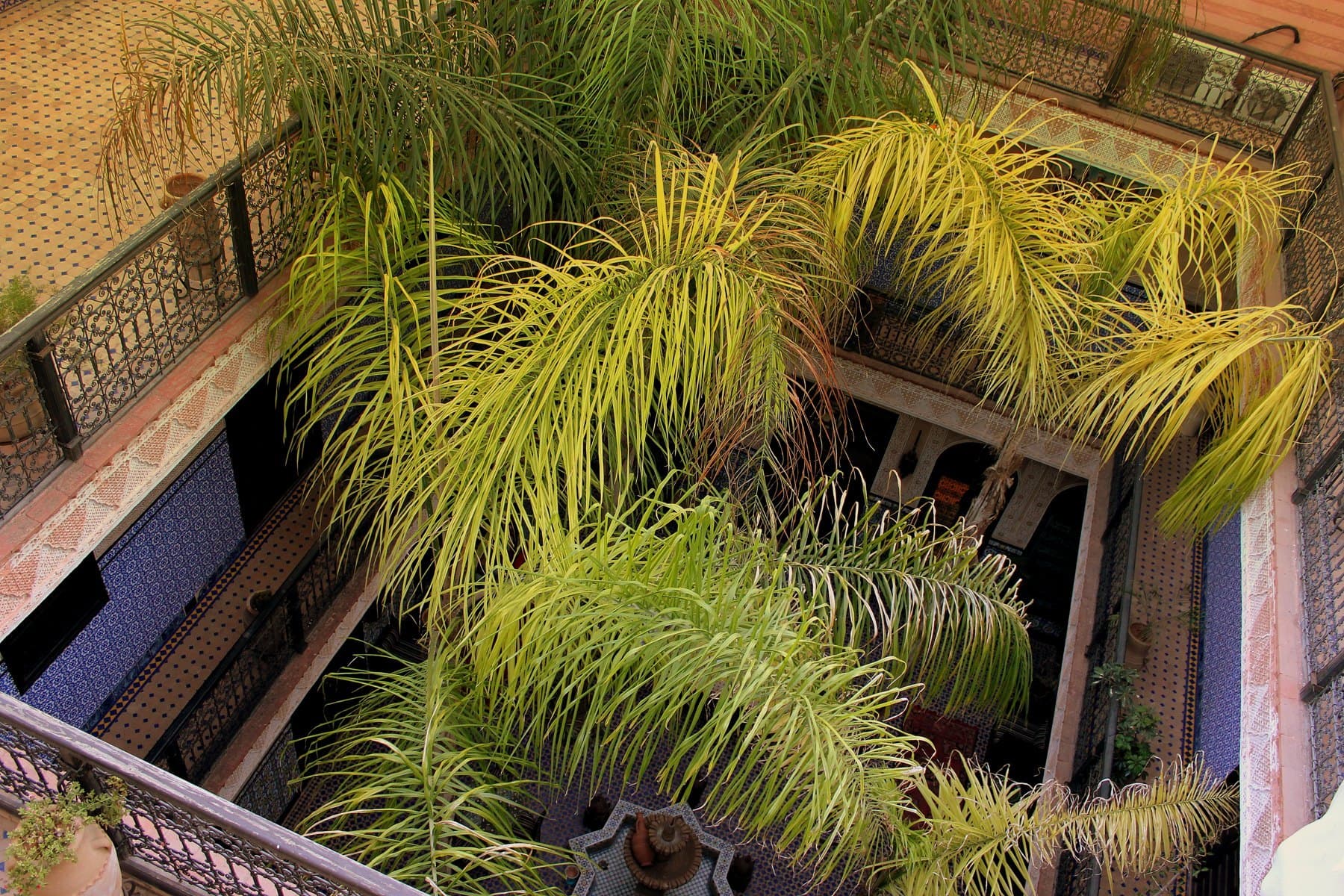
Medina
The medina is the classic first-time choice. Stay here if you want old-city atmosphere, rooftop breakfasts, riad courtyards, souks nearby, and the feeling that Marrakech starts at your front door. It is the best base for a short, immersive visit.
The downside is access. Many riads are down pedestrian lanes where cars cannot reach the door. That is charming at 3:00 p.m. and less charming at midnight with luggage and a dying phone. If you choose the medina, book a riad with clear arrival instructions, confirmed porter help if needed, and a location that is not too deep in the maze for your comfort level.
Kasbah
Kasbah is a strong compromise inside the old-city walls. It is near the Saadian Tombs, El Badi Palace, and southern medina sights, and it can feel calmer than the busiest Jemaa el-Fnaa/souk lanes. It works well for travelers who want historic texture without sleeping in the absolute thick of it.
Gueliz
Gueliz is modern Marrakech: wider streets, cafes, restaurants, shops, easier taxis, and a less intense evening environment. Stay here if you want medina access by taxi but prefer a simpler base. It is especially good for travelers who value air-conditioning, elevators, straightforward hotel pickup, and a break from old-city pressure.
Hivernage and Palmeraie
Hivernage is best for upscale hotels, pools, nightlife-adjacent restaurants, and polished convenience. Palmeraie is the resort/villa zone outside the center. Choose Hivernage when you still want easy city access; choose Palmeraie only when quiet, space, and pool time matter more than spontaneous medina wandering.
> **Quick answer block:** Stay in the medina for atmosphere, Kasbah for a calmer old-city base, Gueliz for easier logistics and food, Hivernage for polished hotels, and Palmeraie only if you want a resort trip more than a city trip.
Getting around Marrakech without wasting energy
Getting around Marrakech is easiest when you accept one rule: the medina is for walking, and longer cross-city moves are for taxis or arranged transfers. Trying to force a normal city-transit mindset onto the old city is where first-timers lose patience.
Inside the medina, walk. Use offline maps, but do not expect GPS to behave perfectly in tight lanes. Landmarks matter: Koutoubia, Jemaa el-Fnaa, Bab Agnaou, major museums, and your riad's nearest gate or taxi drop-off. Ask your accommodation for the best arrival point, not just the address.
For taxis, agree on the fare before getting in if there is no meter in practical use. Petit taxis handle city rides; larger private transfers are better for airport arrivals, luggage, late nights, or day trips. Your riad or hotel can arrange transfers, and that premium is often worth it on arrival. The first night in Marrakech is not the moment to become a transport libertarian.
Public buses exist, but most short-stay visitors will not find them as useful as walking plus taxis. The train station in Gueliz is straightforward for intercity travel, with ONCF trains connecting Marrakech to places such as Casablanca, Rabat, and Fes. Coach services matter for destinations not served well by rail, including Essaouira or some desert routes.
Do not rent a car for Marrakech city use. A car makes sense for a wider Morocco itinerary only if you are comfortable with local driving, parking, and navigation. For the city itself, it is mostly an expensive object to worry about.
Food, souks, and how to spend without feeling worked over
The best Marrakech food plan is to mix one or two polished Moroccan meals, a rooftop or riad dinner, a guided food walk if you are nervous about stalls, and casual lunches away from the most pressured tourist lanes. Marrakech can feed you extremely well, but it also has plenty of restaurants that survive entirely on location and tired visitors.
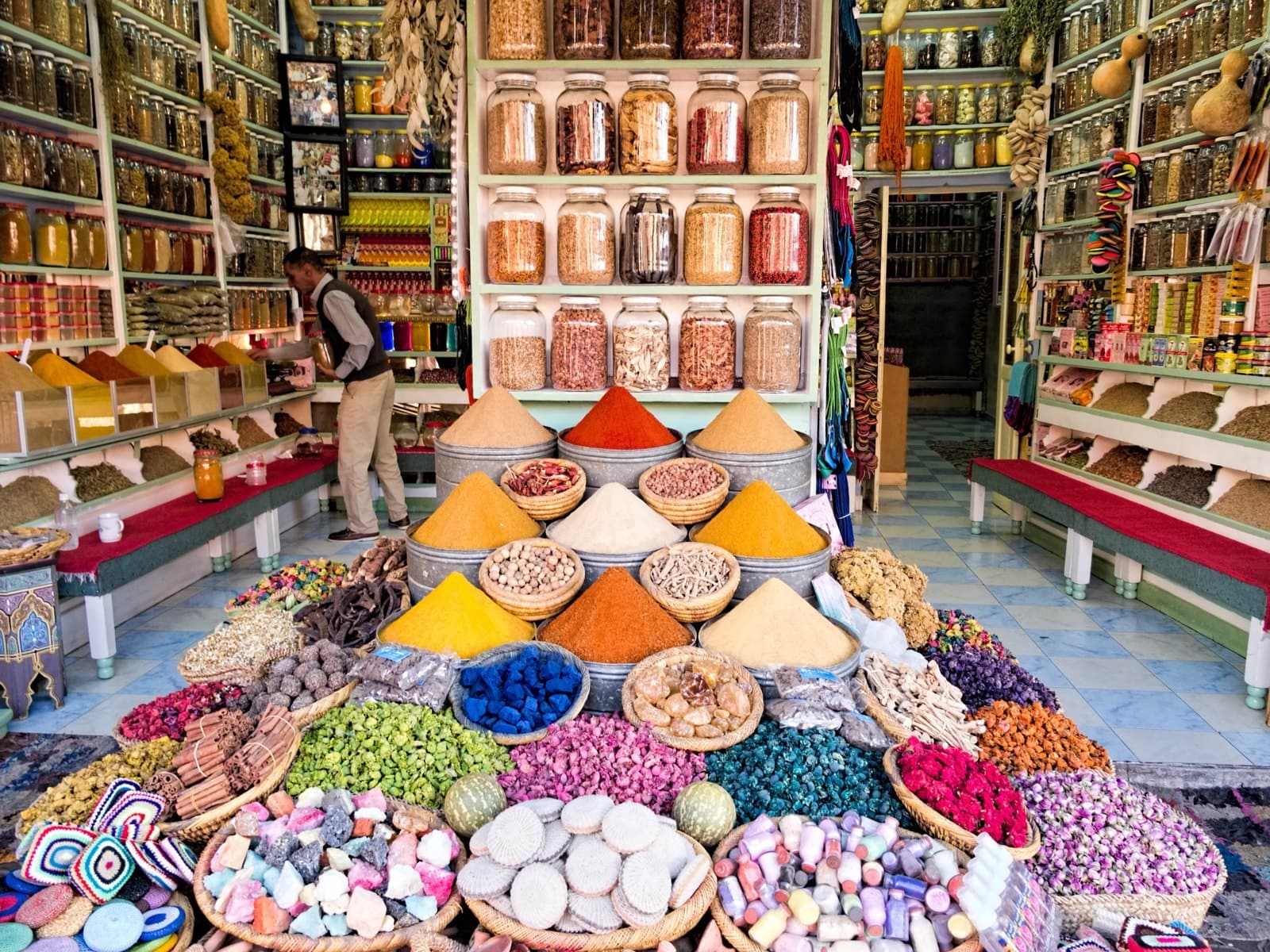
Start with dishes that actually belong in the trip: tagine, tanjia, couscous on the right day, harira, zaalouk, taktouka, msemen, briouats, olives, dates, mint tea, and grilled meats. Tanjia is especially tied to Marrakech, traditionally slow-cooked and rich. It is not light food. Plan accordingly unless you want to nap through the next palace.
Jemaa el-Fnaa food stalls are atmospheric, but they are not automatically the best food in the city. Go for the scene, not because every stall is a culinary revelation. If you are unsure, a reputable food tour can be a smart first-night move because it lowers the pressure of choosing while hungry and surrounded by people calling for your attention.
For souks, decide your goal before entering: browsing, buying a small souvenir, looking for rugs, ceramics, lanterns, leather, spices, or just seeing the craft districts. Bargaining is normal, but not every interaction has to become a courtroom drama. If you are not buying, smile, decline, and keep moving. If you are buying, know your rough ceiling and be willing to walk away.
Gueliz is useful for modern cafes, easier dinners, wine where licensed, and a less performative restaurant experience. The medina is better for atmosphere. Use both. The city gets easier when you stop asking one neighborhood to do every job.
Best things to do on a first Marrakech trip
The best first Marrakech itinerary should combine the medina, one or two major monuments, a garden, a rooftop, a hammam, and enough unscheduled wandering to let the city breathe. Do not turn Marrakech into a museum checklist. The spaces between sights are part of the point.
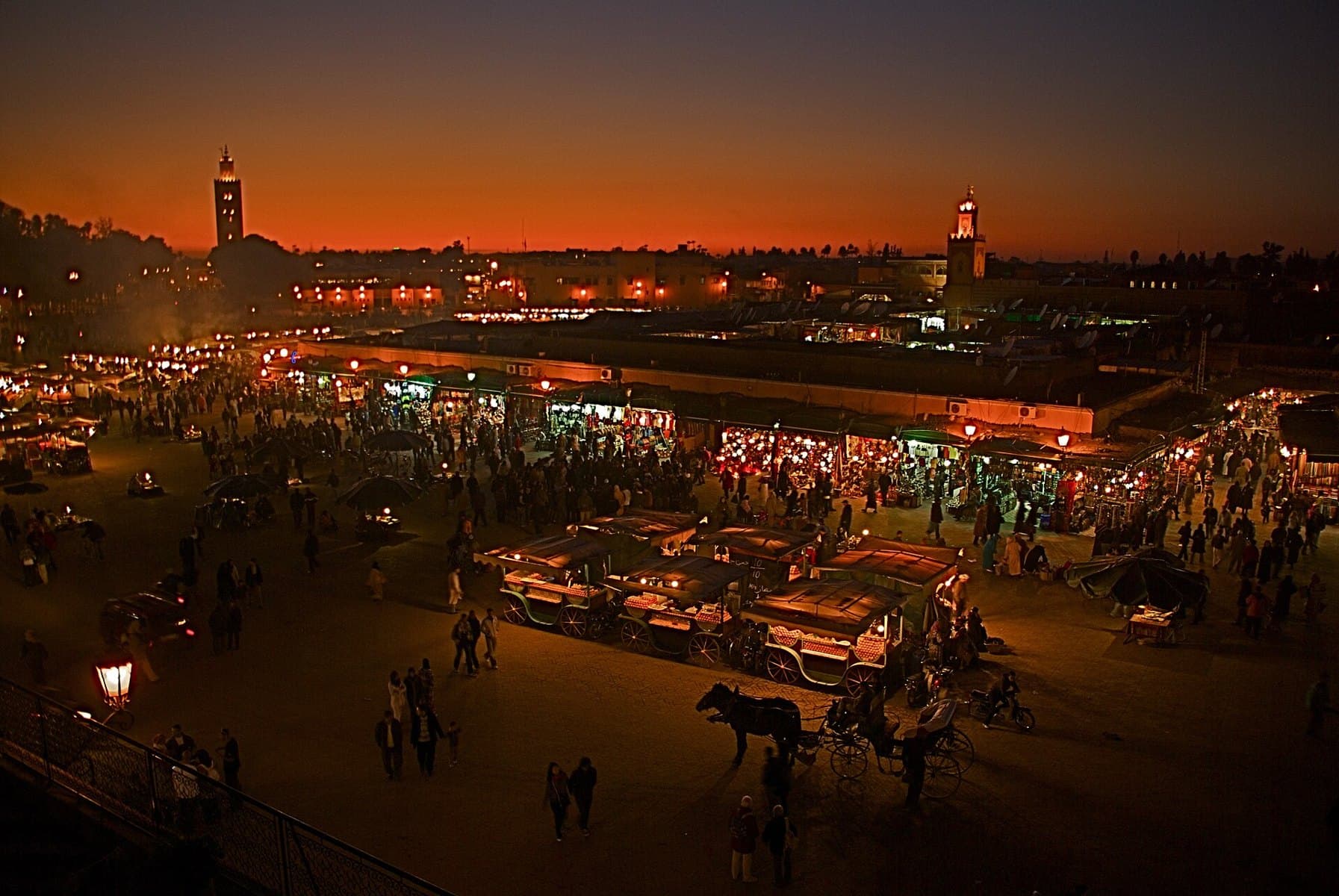
**Jemaa el-Fnaa** is essential, especially around sunset and early evening. Go for the scale, sound, food smoke, performers, orange juice stalls, and chaos. Keep boundaries around photos and animal performances. If someone puts something in your hand or starts a service you did not request, that is not a free cultural exchange. That is a bill warming up.
**The souks** are worth at least one focused wander. Go earlier in the day when you have energy. The deeper craft areas are more interesting than the most obvious tourist lanes. If you care about quality purchases, consider a reputable guide or shop recommendations from your riad.
**Bahia Palace** is one of the best first-time historic sights because the tilework, courtyards, and carved details are accessible even if you are not deep into Moroccan history. **Ben Youssef Madrasa** is another high-value stop for architecture and detail. **El Badi Palace and the Saadian Tombs** work well from a Kasbah base or on a southern-medina half-day.
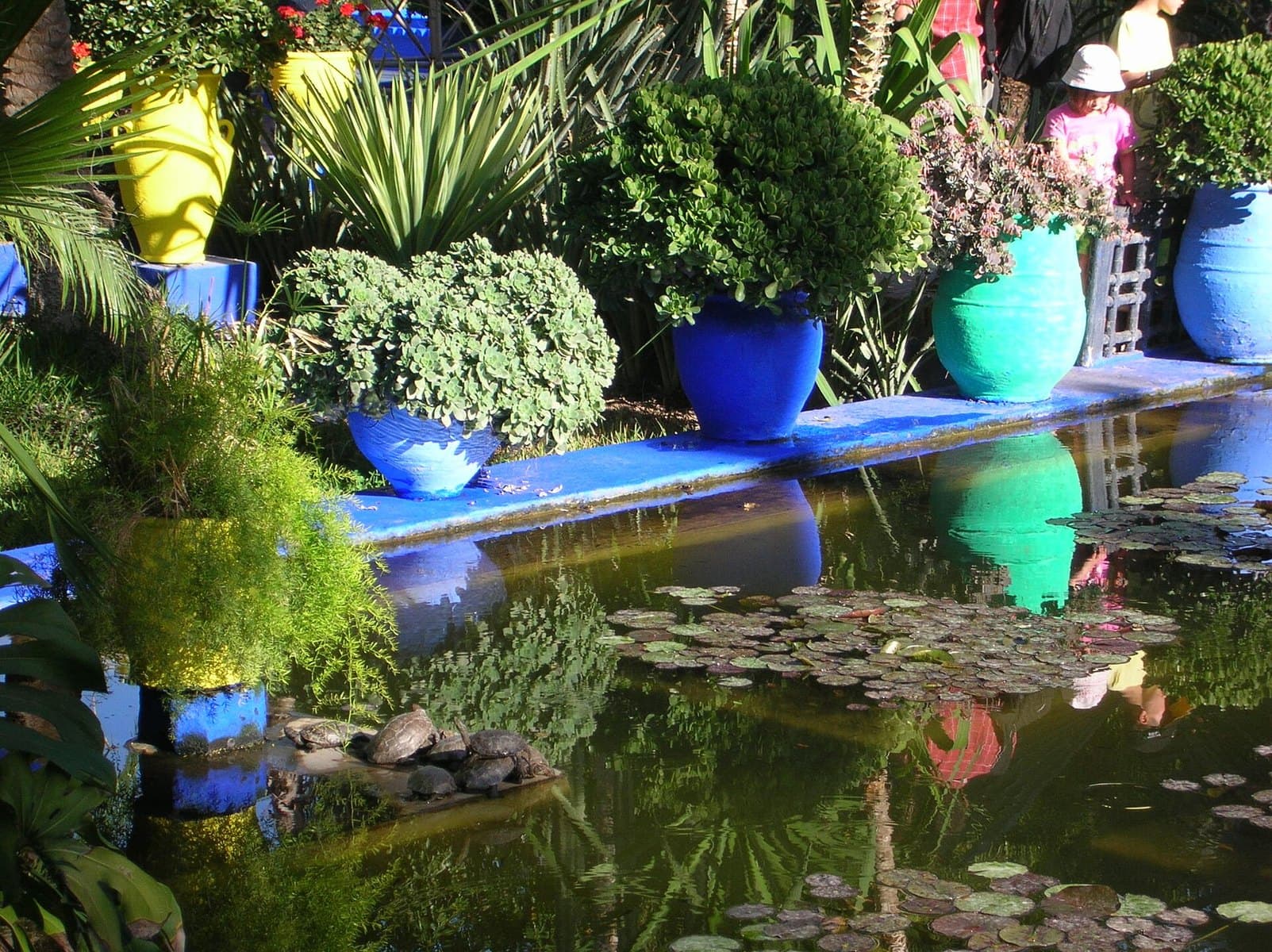
**Jardin Majorelle and the Yves Saint Laurent Museum** are popular for a reason, but they are also controlled, ticketed, and often crowded. Book ahead where possible and go early. Pair them with Gueliz lunch rather than trying to run straight back into the souks.
**A hammam** is worth considering, especially if your trip includes long walks or dusty day trips. Choose between a traditional local hammam experience and a spa-style hammam depending on your comfort level. They are different products. Do not book the rustic version and then complain it is rustic. That is how words work.
A simple 3-day Marrakech itinerary
A simple 3-day Marrakech itinerary works best when each day has one main zone, one recovery stop, and one evening idea. Marrakech is dense, but energy management matters more than distance.
Day 1: Medina orientation, Koutoubia, souks, and Jemaa el-Fnaa
Start with a slow orientation walk near your riad or hotel. Use Koutoubia and Jemaa el-Fnaa as anchors, then dip into the souks without trying to buy everything immediately. The first souk hour is for learning the rhythm.
Have lunch somewhere calmer, then return to your accommodation for a break. In the late afternoon, head back toward the Koutoubia/Jemaa el-Fnaa area and watch the square change at sunset. Choose dinner intentionally: a rooftop, a riad meal, or a guided food walk if you want the square without decision fatigue.
Day 2: Palaces, Kasbah, and a slower dinner
Use the morning for Bahia Palace, El Badi Palace, the Saadian Tombs, or some combination depending on your pace. Do not stack every monument just because they are near each other. Two strong stops plus lunch beats four rushed stops and a personality change.
Spend the afternoon around Kasbah or return for a rest. In the evening, choose either a polished Moroccan restaurant, a rooftop, or Gueliz for a modern dinner. This is a good night to leave the medina if day one felt intense.
Day 3: Jardin Majorelle, Gueliz, Ben Youssef, and final souks
Start early at Jardin Majorelle and the Yves Saint Laurent Museum if those are priorities. Continue into Gueliz for coffee, lunch, or shopping in a more modern setting.
In the afternoon, return to the medina for Ben Youssef Madrasa, museum stops, or final souk purchases. By now you will understand prices, pressure, and what you actually want. End with a hammam, rooftop drink where licensed, or a quiet riad dinner.
If you have a fourth day, use it for the Atlas Mountains, Agafay, Essaouira, or simply a slower Marrakech day. For most first-timers, Essaouira is better as an overnight than a rushed day trip, while the Atlas or Agafay can work as a long day if booked carefully.
Safety, hassle, and practical mistakes to avoid
Marrakech is generally manageable for tourists who use normal big-city habits, but first-timers should prepare for petty theft risk, crowd pressure, unsolicited guides, taxi negotiation, and persistent sales approaches. Current US and UK travel advice frames Morocco with increased caution around terrorism and security awareness, while everyday visitor problems in Marrakech are more often scams, pickpocketing, overcharging, and harassment than violent crime.
The most common mistake is accepting unsolicited help in the medina. Someone may say your road is closed, your riad is the other way, a sight is shut, or they will guide you for free. Sometimes they are being helpful. Often, there is a payment expectation. Use offline maps, call your riad, or ask a shopkeeper or official-looking staff member instead of following a random helper down lanes.
Be careful with photos in Jemaa el-Fnaa. Performers, animal handlers, henna artists, and some stall operators may expect money if you photograph them or accept a demonstration. Agree first or do not engage. Avoid animal-photo setups entirely if welfare concerns matter to you.
For money, use bank ATMs or reputable exchange offices, and count change. Keep some cash in Moroccan dirhams for small purchases, tips, taxis, and markets. Cards are common in hotels and many restaurants, but the medina still runs heavily on cash.
Women travelers may receive unwanted attention, especially when alone or walking in crowded tourist zones. This does not mean Marrakech is off-limits, but it does mean route choice, accommodation location, evening transport, and firm boundaries matter. Solo travelers should choose central, well-reviewed accommodation and avoid long, empty lane walks late at night.
Dress does not need to be severe, but modest, breathable clothing helps with comfort and reduces attention. Shoulders and knees covered or semi-covered is a practical default, especially in the medina and religiously sensitive areas.
How to time your Marrakech trip for better value
Marrakech value is less about one magic booking trick and more about matching season, flight patterns, hotel style, and heat tolerance. Spring and fall are the comfort sweet spots, so they often price accordingly. Winter can be better value, especially outside Christmas/New Year and major event periods. Summer can be cheaper for a reason.
If a riad is central, beautiful, and suspiciously cheap, check access, reviews, room size, heating/cooling, and noise. Medina rooms vary wildly. A gorgeous courtyard does not guarantee a quiet bedroom, and a cheap rooftop breakfast does not compensate for sleeping beside a scooter lane.
Book airport transfers through your accommodation if arriving late or staying deep in the medina. You may pay more than a hard-bargained taxi fare, but you are buying a clean first hour. That is not always laziness. Sometimes it is just understanding the assignment.
For flights, Marrakech has strong short-break demand from Europe, especially around weekends and school holidays. If you have flexibility, compare midweek arrivals, winter shoulder dates, and packages that include hotel value. If you are combining Morocco cities, check whether flying into Marrakech and out of Casablanca, Rabat, or Fes saves backtracking.
The best-value Marrakech trip is not the cheapest possible trip. It is the one where you spend enough on location, arrival logistics, and recovery time that the city feels exciting instead of adversarial.
Bottom line
Marrakech is a brilliant first-time destination when you plan it as an intense, beautiful, high-contact city rather than a frictionless resort with a medina attached. Stay in the medina or Kasbah if atmosphere matters most, choose Gueliz or Hivernage if logistics and calm matter more, and keep Palmeraie for resort-style trips.
Give yourself 3 full days, walk the medina in manageable blocks, use taxis or transfers for cross-city movement, eat deliberately, and treat Jemaa el-Fnaa as both a spectacle and a place that requires boundaries. Marrakech is not always easy, but with the right structure it is memorable for the right reasons.
Let Fare Window find the best fares for your next trip.
Track routes, watch price changes, and get smarter alerts before you book.
Start tracking faresKeep planning
Related travel guides
Explore more first-time destination guides while you compare routes, seasons, and trip shapes.