
Milan Travel Guide for First-Time Visitors
A practical Milan guide for first-time visitors who want the right neighborhood, realistic sightseeing priorities, good food, and a smoother northern Italy trip.

Milan is not the Italy most first-time visitors imagine first. It is not soft-focus Tuscany, chaotic-romantic Naples, or Rome with ancient stones stacked on top of more ancient stones. Milan is sharper than that: fashion, finance, design, aperitivo, trams, courtyards, polished storefronts, and a cathedral so theatrical it looks like someone tried to carve a thunderstorm out of marble.
That makes Milan easy to underrate and easy to misuse. A lot of first-timers treat it as a one-night airport stop or a Duomo-and-done city. That is a mistake if you like design, food, shopping, art, elegant neighborhoods, and day trips into northern Italy. It is also not a mistake if your dream Italy trip is ruins, beaches, and pure old-world chaos. Milan has a point of view. You either meet it on its terms or spend the whole time wondering why it is not Florence.
This Milan travel guide is for first-time visitors who want the practical version: where to stay, how the neighborhoods differ, how to get around, what is actually worth booking ahead, where the food scene works best, and how to build a simple itinerary without turning the trip into an expensive checklist in nice shoes.
Quick answer: Milan is best for first-time visitors who want a stylish, efficient northern Italian city with excellent transit, strong food and aperitivo culture, major art and design sights, and easy access to Lake Como or Bergamo. It is less ideal as a first Italy base if you mainly want ancient ruins, beach time, or maximum old-town romance.
Quick Facts
- Best for: Design, fashion, food, aperitivo, efficient city breaks, and northern Italy rail access.
- Best time: April to June and September to October.
- First-trip length: 2–3 full days, or 4 with a day trip.
- Best bases: Brera, Centro Storico, Porta Venezia, Navigli, Porta Nuova/Garibaldi.
- Transit style: Walk the center, use Metro/trams for longer hops.
- Book ahead: The Last Supper, Duomo rooftop, peak event dates, popular restaurants.
Table of Contents
- 1.Is Milan worth visiting for first-time travelers?
- 2.Best time to visit Milan
- 3.Where to stay in Milan for a first trip
- 4.How to get around Milan
- 5.What to do in Milan without wasting your trip
- 6.Food, coffee, and aperitivo: how Milan actually eats
- 7.Safety and practical tips for Milan
- 8.Simple 2- and 3-day Milan itinerary
- 9.When Milan is a smart Fare Window trip
Is Milan worth visiting for first-time travelers?
Milan is worth visiting if you treat it as a northern Italian city with its own strengths, not as a substitute for Rome or Florence. Its best qualities are style, mobility, food, shopping, design, and access to the wider Lombardy region.
The city is especially good for travelers who like compact but sophisticated city breaks. You can see the Duomo in the morning, walk through Galleria Vittorio Emanuele II, spend the afternoon in Brera, and end the day with aperitivo along the Navigli canals or in Porta Venezia. That is a very good travel day. It is just not the same kind of travel day you get in Rome.
Milan is also useful strategically. The airports are well connected, the train network is strong, and the city works as a clean entry point for Lake Como, the Alps, Turin, Verona, Venice, and Switzerland. If your Italy trip includes northern movement, Milan often makes more sense than people give it credit for.
The honest tradeoff: Milan is expensive by Italian standards, and some parts feel more businesslike than romantic. If you only have one first trip to Italy and want maximum ancient atmosphere, Milan should probably not be your only city. If you want fashion, design, art, food, and efficient movement, it is much better than the lazy “skip Milan” advice suggests.
Best time to visit Milan
The best time to visit Milan is usually April to June or September to October, when the city is lively, walkable, and more comfortable for long days outside.

Spring works well because Milan's parks, courtyards, and cafe terraces come back to life, and the city has a good pre-summer energy. April can be especially interesting if you are into design because Salone del Mobile and Milan Design Week can transform the city, though hotel prices can get rude. June is warm and social, but busier.
Early fall is probably the safest all-around choice. September and October usually give you strong restaurant energy, easier walking weather, and a city that feels fully awake after August. Fashion Week can push hotel rates up, so check major event dates before assuming a random week is normal.
Summer is workable but not ideal. July can be humid and heavy. August is the strange one: some restaurants and independent shops close for holidays, locals disappear, and the city can feel half-asleep. Winter can be good value if you are comfortable with shorter days and colder weather. The city still works because much of Milan's appeal is indoors: museums, restaurants, shopping, churches, galleries, and bars.
Seasonal tradeoffs at a glance
Best energy — walkable, lively, Design Week in April, busier by June.
Hot and humid; August feels half-empty as locals leave.
Safest all-around choice — good weather, full city energy.
Good value; the city works but shorter days and colder weather.
Best first-trip call: choose May, early June, late September, or October if you can. Those months give Milan its best balance of style and sanity.
Where to stay in Milan for a first trip
Where you stay changes Milan more than people expect. The city is not hard to navigate, but the wrong base can make it feel sterile or inconvenient. For most first-time visitors, the best area is not just “near the Duomo.” It is the area that matches how you want evenings to feel.
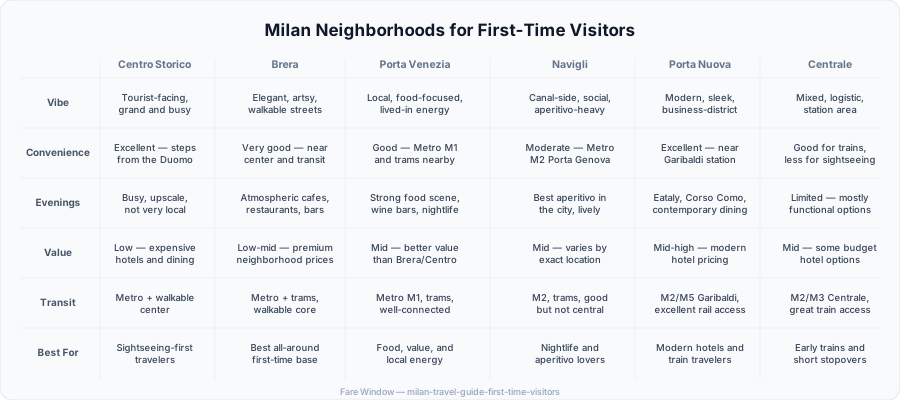
Centro Storico: best for sightseeing convenience
Centro Storico is the easiest first-time base if you want to be close to the Duomo, Galleria Vittorio Emanuele II, La Scala, and the main shopping streets. It makes short trips simple and reduces transit friction. The tradeoff is price and atmosphere. Some blocks feel grand and beautiful; others feel like everyone is either shopping, rushing, or following a tour flag. Stay here if convenience matters more than neighborhood texture.
Brera: best overall first-time atmosphere
Brera is one of Milan's best first-trip neighborhoods because it gives you beauty without making you feel trapped in a tourist machine. It has galleries, restaurants, narrow streets, boutiques, and easy access to the center. This is the area to point many first-timers toward if the budget works. It feels Milanese in a polished, walkable, evening-friendly way. The catch is that it can be expensive, and the nicest streets know exactly what they are worth.
Porta Venezia: best for food, value, and local energy
Porta Venezia is one of the smartest bases for travelers who want better value, strong food options, LGBTQ-friendly nightlife, good transit, and a more lived-in feel. It is connected enough for sightseeing but less obvious than Centro Storico or Brera. You can move between Corso Buenos Aires shopping, Giardini Indro Montanelli, natural wine bars, casual restaurants, and good transit links without feeling pinned to a postcard zone.
Navigli: best for nightlife and aperitivo, not quiet sleep
Navigli is the canal district, and it is best for travelers who want evening energy. Aperitivo, bars, restaurants, and people-watching are the point here. It can be fun, social, and photogenic. The tradeoff is obvious: noise, crowds, and a slightly more touristy nightlife edge around the canals. If you want peaceful mornings and early nights, do not book the loudest canal-side room and then act betrayed by physics.
Porta Nuova and Garibaldi: best for modern comfort and train access
Porta Nuova and Garibaldi are good if you like modern hotels, business-district polish, architecture, and easy rail connections. Think sleek towers, Bosco Verticale, Eataly, Corso Como, and good access rather than romantic old lanes. This works well for travelers planning day trips or onward train travel.
Best overall pick: Brera if budget allows, Porta Venezia if you want value and food, Centro Storico if sightseeing convenience is everything.
How to get around Milan
Milan is easy to get around if you combine walking with public transit. The central sights are walkable, and the Metro, trams, and buses fill in the gaps. For first-time visitors, the main rule is simple: walk the compact historic center, then use the Metro for longer jumps. The Duomo, Galleria, La Scala, Brera, and Sforza Castle can be combined on foot.
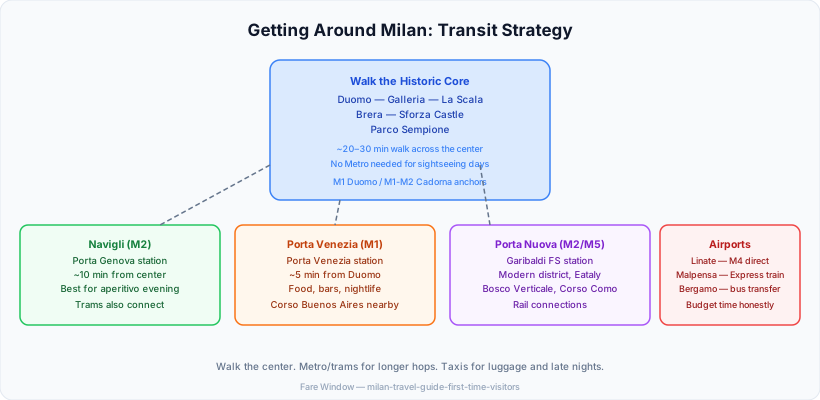
Milan's public transport system is run by ATM and includes the Metro, trams, buses, and trolleybuses. The Metro is the easiest layer for visitors because it is fast, legible, and connects most major areas. Trams are slower but more atmospheric, especially older lines through central neighborhoods.
Airport choice matters too. Linate is the easiest airport for central Milan because the M4 Metro connects it directly into the city. Malpensa is farther out, but the Malpensa Express train makes it manageable. Bergamo Orio al Serio is often used by budget airlines and usually means a longer bus transfer, so price the time cost honestly before celebrating the fare.
Practical movement plan: choose one main area per half-day, walk within it, use Metro or tram between areas, and save taxis for luggage or late evenings.
What to do in Milan without wasting your trip
Milan has a short list of famous sights and a longer list of experiences that make the city click. The trick is not to turn the trip into a luxury shopping mall with a cathedral attached.
Start with the Duomo, but do it properly
The Duomo is Milan's obvious must-see, and it earns the attention. The exterior is dramatic, the interior is vast, and the rooftop is the part many first-timers should prioritize if weather is good. Being up among the spires gives you a better sense of the building's scale than standing in the square with everyone else taking the same photo. Book rooftop access ahead in busy periods. Go early or later in the day if you want a calmer experience.

See The Last Supper only if you book ahead
Leonardo da Vinci's The Last Supper is one of Milan's biggest art draws, but it is not a casual walk-up attraction. Tickets are limited and should be booked in advance through official channels or reputable tours if the official slots are gone. The visit itself is controlled and relatively short, which surprises some people. That is not a reason to skip it if you care about art history; it is a reason to plan it cleanly.
Use Brera for Milan's softer side
Brera is where Milan becomes more persuasive. The streets are smaller, the pace is slower, and the area gives you galleries, cafes, boutiques, and a less corporate version of the city. The Pinacoteca di Brera is worth considering if you want a serious art stop without turning the whole trip into museum homework.
Walk Sforza Castle to Parco Sempione
Sforza Castle and Parco Sempione create one of Milan's easiest first-time walking arcs. The castle gives you history and scale, while the park gives you breathing room. Continue toward Arco della Pace if you want cafes and aperitivo nearby. This is a good counterweight to the polished fashion-center version of Milan.
Give design and shopping their proper place
Shopping is part of Milan's identity, but it works best when you treat it as design culture, not just buying things. The Quadrilatero della Moda is high-end and theatrical. Corso Buenos Aires is more practical. Brera and Porta Venezia are better for smaller finds and wandering. If you are visiting during Design Week, the city changes dramatically — events, installations, showrooms, and pop-ups spread across neighborhoods.
Consider one day trip, not three
Milan is a strong base for day trips, especially Lake Como, Bergamo, Pavia, or Turin. For a first Milan trip, choose one rather than trying to prove you understand train schedules. Lake Como is the classic choice but works best when you start early. Bergamo is easier, beautiful, and underrated, with a historic upper town that feels very different from Milan.
Food, coffee, and aperitivo: how Milan actually eats
Milan's food scene is better when you stop searching only for “classic Italy” and start paying attention to local rhythm. This is a city for risotto alla milanese, cotoletta, modern restaurants, bakeries, wine bars, aperitivo, and regional variety from across Italy.
Breakfast is usually quick: coffee and pastry rather than a giant sit-down production. Lunch can be casual. Dinner often starts later than North American visitors expect. Aperitivo is the key Milanese habit: order a drink in the early evening and get snacks or small plates with it. Some places are generous; others are more refined. Either way, it is part of how the city transitions from work to evening.

- Brera — atmospheric but expensive; good for a special evening.
- Porta Venezia — more varied and interesting for repeatable meals and value.
- Navigli — lively for aperitivo and dinner; dodge obvious tourist traps on the busiest stretches.
- Isola and Porta Romana — good for a more local restaurant feel.
First-timer food plan: do one classic Milanese meal, one aperitivo evening, one neighborhood restaurant outside the Duomo orbit, and one low-pressure bakery and coffee morning. That will teach you more about the city than chasing a viral pasta place with a line full of people who all saw the same video.
Safety and practical tips for Milan
Milan is generally safe for first-time visitors, but it has normal big-city issues: pickpocketing, station-area sketchiness, taxi confusion, and overpriced tourist-zone restaurants. Be most alert around Milano Centrale, crowded Metro stations, the Duomo area, and busy tram stops. Keep bags closed, do not leave phones loose on cafe tables, and be cautious with anyone trying too hard to help you around ticket machines.
Restaurants and eating well
Be careful around the most obvious Duomo-facing terraces unless you have made peace with paying for the view. You can absolutely have a drink nearby if you want the scene, but do not assume central equals best.
Dress and churches
Dress is more noticeable in Milan than in many cities, though you do not need to cosplay as a runway intern. Clean, simple, comfortable clothes work. Good walking shoes matter because the city rewards walking. For churches including the Duomo, bring modest coverage.
Booking and planning ahead
For The Last Supper and popular restaurants, book ahead. For day trips, check train times before the night before. For taxis, use official taxis or reputable apps rather than random approaches near the station.
Simple 2- and 3-day Milan itinerary
A good Milan itinerary should leave space for wandering, aperitivo, and neighborhood feel. If you overpack it, Milan starts to feel like errands with better architecture.
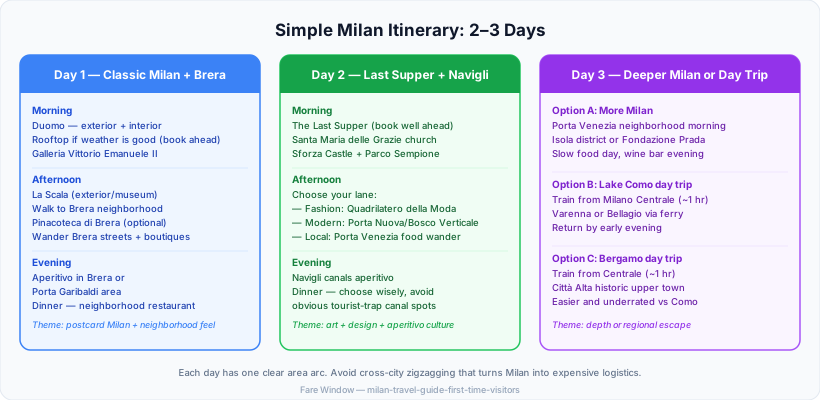
Day 1: Classic Milan and Brera
Start at the Duomo and do the rooftop if the weather is good. Walk through Galleria Vittorio Emanuele II, pass La Scala, then continue toward Brera for lunch or coffee. Spend the afternoon wandering Brera, visiting the Pinacoteca if you want art, or looping toward Sforza Castle and Parco Sempione. End with aperitivo in Brera, Porta Garibaldi, or around Arco della Pace. This day gives you the postcard Milan plus the neighborhood version that makes the city more likable.
Day 2: Last Supper, design, and Navigli
Book The Last Supper for the morning or early afternoon if you can. Pair it with Santa Maria delle Grazie and then move toward Sforza Castle if you did not cover it fully on day one. In the afternoon, choose your lane: fashion and design wandering around Brera and the Quadrilatero, modern Milan around Porta Nuova and Bosco Verticale, or a slower food-focused route through Porta Venezia. In the evening, head to Navigli for aperitivo and dinner, but choose carefully rather than surrendering to the first menu with laminated enthusiasm.
Day 3: Choose a deeper Milan day or a day trip
If you have a third day, decide whether you want more Milan or a regional escape. For more Milan, explore Porta Venezia, Isola, Fondazione Prada, or additional museums depending on your interests. For a day trip, choose Lake Como for scenery, Bergamo for a beautiful historic town, or Turin if you are willing to commit to a fuller rail day. Do not try to combine them. Travel planning is not a buffet; at some point the plate collapses.
When Milan is a smart Fare Window trip
Milan is a smart Fare Window destination when flight prices into northern Italy are meaningfully better than Rome, Florence via connections, or Venice, or when Milan gives you better onward routing. Because the city has multiple airport options and strong rail links, it can be a useful gateway even if it is not your only destination.
It also works well as a shoulder-season city break. Spring and fall are the sweet spots, but winter can be good value for travelers who care about food, museums, shopping, and design more than long sunny days. The best Milan trip is not built around proving the city is secretly Rome. It is built around what Milan actually does well: a stylish base, efficient movement, excellent northern Italy access, strong aperitivo culture, serious design, and a few world-class sights that are worth planning properly.
If that sounds like your kind of trip, Milan is not a layover. It is the opening move.
FAQ
Is Milan worth visiting for first-time travelers?
Yes, if you treat it as a northern Italian city with its own strengths — design, food, aperitivo, art, and efficient transit. It is not a substitute for Rome or Florence, but it is much better than the “skip Milan” advice suggests.
How many days do you need in Milan?
Two to three full days for Milan itself. Add a fourth day if you want a Lake Como or Bergamo day trip.
What is the best area to stay in Milan for first-time visitors?
Brera for the best all-around first-time atmosphere. Porta Venezia for better value and food. Centro Storico if sightseeing convenience is the priority.
What is the best time of year to visit Milan?
April to June and September to October. May, early June, late September, and October are the strongest months for weather, city energy, and walkability.
Do you need to book the Last Supper in advance?
Yes. Tickets are limited and often sell out weeks ahead. Book through official channels as early as possible.
Is the Milan Duomo rooftop worth it?
Yes, particularly if the weather is good. The rooftop gives you a much better sense of the building's scale than the square below. Book ahead during busy periods.
Planning a trip to Milan?
Let Fare Window find the best fares
Set your trip's departure and return windows. Fare Window checks every date combination automatically and sends you a daily fare report.
Start your free trialKeep planning
Related travel guides
Explore more first-time destination guides while you compare routes, seasons, and trip shapes.


