
Osaka Travel Guide for First-Time Visitors
A practical Osaka travel guide for first-time visitors who want the right neighborhood, the right season, and a better-shaped trip.

Osaka is one of the best first stops in Japan for travelers who want energy, food, and a city that feels easier to use than it looks. It is not the prettiest city in Japan and it is not the most traditional, but it is one of the most enjoyable if you care more about eating well, staying in a convenient neighborhood, and building a trip that actually works.
Quick take: Osaka is worth visiting if you want a lively, food-first city with strong train connections, easy neighborhood choices, and better everyday value than Tokyo. It works especially well as a base for a first Kansai trip.
Quick Facts
- Best base: Namba for atmosphere or Umeda for rail convenience.
- Best months: April, May, late October, or November.
- Ideal length: 2 to 3 nights in Osaka.
- Biggest mistake: Overstuffing the schedule instead of focusing on neighborhoods and food.
- Food strategy: Use Namba, Shinsaibashi, Kuromon Market, and surrounding side streets as a loose food-and-walking zone.
Table of Contents
Is Osaka worth visiting?
Yes — Osaka is worth visiting for first-time travelers who want Japan to feel fun before it feels ceremonial. Tokyo is bigger and more overwhelming. Kyoto is more beautiful and more obviously historic. Osaka sits in a sweet spot where the trip can feel exciting without becoming a logistics hobby.
Quick answer: Osaka is best for first-time visitors who care about food, neighborhood energy, and using one base to explore Kansai without moving hotels every night.
What Osaka does best is livability. The city is full of places to eat, the transit is strong, the street life is active into the evening, and the best version of the trip is usually simple: stay near the right station, eat constantly, and use the city as a launchpad for a few targeted experiences. If you are the kind of traveler who likes wandering, snacking, and having options after dark, Osaka punches above its postcard weight.
Osaka also makes sense if you are trying to balance cost and convenience on a first Japan trip. Hotels can still spike in busy periods, but in general the city often feels more forgiving than Tokyo while giving you fast access to Kyoto, Nara, and Kobe. That combination is hard to beat.
Best time to visit Osaka
The best time to visit Osaka is usually late March to May or late October to November. Those windows give you the best balance of walkability, atmosphere, and manageable weather.

Quick answer: The best time to visit Osaka for most travelers is April, May, late October, or November. Avoid midsummer unless you handle heat well.
Spring is the most tempting season for a first trip. Late March into early April can line up with cherry blossoms, and the city feels lively without summer's swampy brutality. The tradeoff is obvious: crowds rise, hotel prices climb, and the whole country seems to have had the same idea. If your dates touch Golden Week in late April or early May, expect demand to get uglier fast.
Autumn is the easiest season to recommend if your priority is comfort. Late October and November are excellent for long city days, and side trips around Kansai become more appealing when the weather stops trying to boil you. Autumn lacks the spring-blossom romance, but from a pure planning perspective it is one of the strongest times to go.
Summer is the hardest sell. Osaka in July and August is hot, humid, and draining in a way that can make even good plans feel sticky and stupid. If summer is your only option, build in malls, arcades, late starts, and more indoor meals than your fantasy itinerary wanted.
Winter can be solid for value and lighter crowds, especially if you are more interested in food and city rhythm than flowers. Just do not expect the same outdoor magic or leafy side trips.
Flight and hotel prices usually behave best when you avoid the obvious pressure points: cherry blossom peaks, Golden Week, and major domestic holiday clusters. If you want a better-value Osaka trip, aim just outside peak bloom or toward late autumn weekdays.
Where to stay in Osaka
The best place to stay in Osaka depends on whether you want nightlife and food on your doorstep or smoother transit across the region. For most first-time visitors, the real choice is Namba versus Umeda.
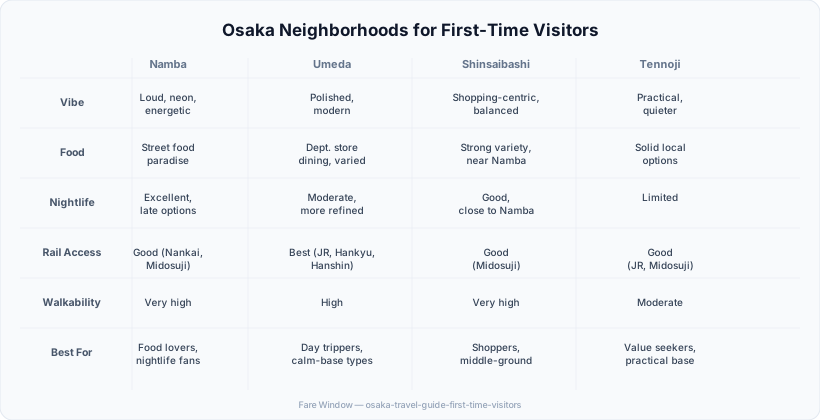
Quick answer: Stay in Namba for food and nightlife, Umeda for transport convenience, Shinsaibashi for balance, and Tennoji if value matters more than atmosphere.
Namba: best for food, nightlife, and classic first-trip energy
Stay in Namba if you want Osaka to feel immediate. This is the best base for travelers who want to walk out of the hotel and land straight in neon, food streets, shopping arcades, and late-night motion. It connects well to the Minami side of the city and makes Osaka feel memorable fast.
The downside is that Namba can be chaotic. It is busy, loud, and tourist-heavy, especially around the obvious strips. If you stay here, the move is to use the area for convenience and energy without assuming every meal should happen on the most photographed block in town.
Umeda: best for rail convenience and a smoother base
Stay in Umeda if you want the easiest transport logic. This is the better base for travelers planning day trips, catching trains across Kansai, or preferring a more polished district that still has plenty to do. Umeda makes the mechanics of the trip easier.
The tradeoff is personality. Umeda is efficient and useful, but it can feel more commercial and less distinct after dark than the south side. If your dream Osaka trip is messy, snacky, and neon-lit, Namba usually wins.
Shinsaibashi: best middle-ground option
Stay in Shinsaibashi if you want to split the difference. It gives you strong access to shopping, easy movement toward Namba, and a central position without planting yourself in the loudest pocket of the city.
Its weakness is that parts of it can feel a little generic. It works well, but it is not always the place people remember most clearly.
Tennoji: best for value-minded travelers who still want good transit
Stay in Tennoji if you want a more practical base with slightly better value potential. It has strong rail links and enough around it to feel useful, but it usually lands a step below Namba and Umeda for first-time atmosphere.
If this is your only Osaka stop and you want the city to make a strong first impression, Namba or Umeda are safer bets.
What to do in Osaka that actually matters
The best things to do in Osaka are the things that help you feel the city, not the things that merely prove you stood near them. Osaka works best when you treat it as a food city with strong neighborhoods, not as a checklist of monuments.

Quick answer: Prioritize neighborhoods, food, and one good city view. Do not let Osaka become just Dotonbori photos and an overstuffed attraction list.
Start with the food neighborhoods. That does not mean blindly grazing only through Dotonbori and calling it research. The better version is to use Namba, Shinsaibashi, Kuromon Market, and the surrounding side streets as a loose food-and-walking zone. Osaka rewards curiosity more than obsession with one viral address.
Give yourself one elevated city view. Abeno Harukas and Umeda Sky Building both do the job. You do not need both unless you are a skyline completionist. Pick the one that fits your route and use it to understand the scale of the city you are moving through.
Choose your “big sight” carefully. Osaka Castle matters more as a visual and historical anchor than as the most emotionally moving castle visit in Japan. If you are already doing Kyoto or Himeji, do not expect Osaka Castle to be the knockout of the trip. It is still worth it for many first-time visitors, but it should not consume the whole day.
After dark is when Osaka starts making its case. The city has a looser, friendlier, more extroverted rhythm at night than many visitors expect. Even a simple evening of wandering, snacking, and ducking into small bars or casual restaurants can do more for your memory of Osaka than another museum stop.
If you have extra time, Osaka is also a strong base for day trips. Nara is the easiest classic add-on. Kyoto is obvious but often deserves its own stay if you want depth. Kobe works if you want a lower-stakes change of scene.
How many days in Osaka
Most first-time travelers need 2 to 3 nights in Osaka. That is enough time to understand the city, eat well, and avoid reducing it to a station transfer with snacks.
Quick answer: Plan on 2 nights minimum and 3 nights if you want Osaka to feel like a city, not a corridor between Kyoto and the airport.
Two nights works if Osaka is one stop in a broader Japan trip and you mainly want one full city day plus two good evenings. Three nights is better if you want room for neighborhoods, a proper food crawl, one major sight or viewpoint, and either a slower pace or a day trip.
Stay longer if Osaka is your Kansai base. That can be smarter than constantly switching hotels, especially if you want to split time between Osaka itself and nearby cities.
A simple first-time Osaka itinerary
The simplest good Osaka itinerary is arrival evening, one full city day, and one extra day you can use either for more Osaka or a nearby day trip.
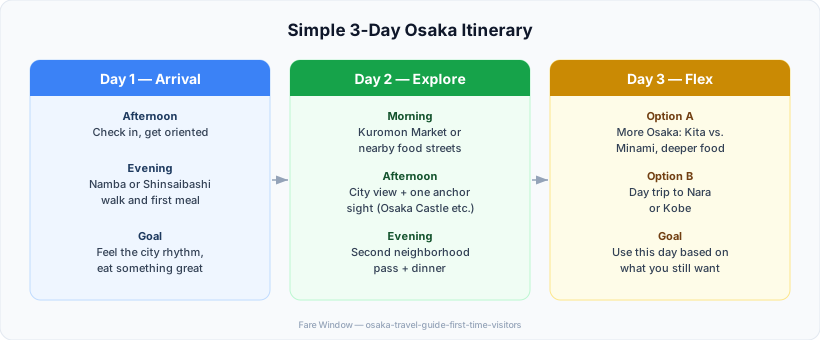
Day 1: arrive and lean into the south side
Check into your hotel, get oriented, and spend the evening around Namba or Shinsaibashi. Your real job on night one is not to maximize productivity. It is to understand the city rhythm, eat something excellent, and avoid turning yourself into a jet-lagged museum zombie.
Day 2: neighborhood exploration, food, and one anchor sight
Use the day for Osaka's strongest mix: walking, eating, and targeted sightseeing. This is a good day for Kuromon Market or nearby food streets, a city view like Abeno Harukas or Umeda Sky Building, and one larger anchor such as Osaka Castle if it interests you. Keep the evening free for a second neighborhood pass when the city wakes up again.
Day 3: extra Osaka or a day trip
If you still want more city time, use day three for Kita versus Minami comparison, deeper food exploration, shopping, or a slower version of the city. If you are using Osaka as a base, this is the cleanest day for Nara or Kobe. Kyoto is possible too, but it can easily become a whole separate trip rather than a side quest.
Practical Osaka travel tips
The smartest Osaka travel tip is to choose your hotel by station logic first and vibes second. The city gets much easier when your base is close to the right transport spine.
Do not underestimate walking and heat. Osaka is navigable, but large stations, long underground passages, and humid weather can wear you down faster than the map suggests.
Cards are widely accepted, but carrying some cash is still sensible for smaller places and low-friction purchases. Restaurant timing matters too: popular places can build lines early, and some of the best meals are at casual spots that reward flexibility more than obsession.
Finally, do not overschedule every city in Kansai like they are neighborhoods of the same place. Osaka, Kyoto, and Nara each deserve breathing room. Trying to speedrun all three is how people end up with 900 photos and one memory of being tired.
Final take
Osaka is a strong first-time Japan destination because it makes travel feel usable. It gives you food, movement, nightlife, and regional access without demanding that every hour be architected like a military drill. If you stay in the right neighborhood and give it at least a couple of nights, Osaka usually ends up being more fun than the people who only came for a photo stop expected.
Planning a trip to Osaka?
Let Fare Window find the best fares
Set your trip's departure and return windows. Fare Window checks every date combination automatically and sends you a daily fare report.
Start your free trialKeep planning
Related travel guides
Explore more first-time destination guides while you compare routes, seasons, and trip shapes.


