
Palma de Mallorca Travel Guide for First-Time Visitors
A practical Palma de Mallorca guide for first-time visitors who want the right neighborhood, good food, easy movement, and a realistic city-plus-island trip shape.

Palma de Mallorca is the right first Balearic base if you want a real city with sea air, good food, short airport logistics, and easy day-trip options without committing your whole trip to a resort town. The mistake is treating Palma like “Mallorca with a cathedral attached.” It is not the whole island, and it is not a beach resort in disguise. It works best when you use it as a compact city break with selective island escapes.
If this is your first Mallorca trip, Palma is the sensible place to land for 2 to 4 nights before deciding whether you want more beach time, mountain villages, or resort coast. Stay central if walking, food, and sightseeing matter. Stay outside the old core only if you understand the tradeoff: easier hotels and sometimes better value, but less of the door-to-door Palma feeling.
Quick answer: Palma is best for first-time visitors who want food, history, walkability, and optional island day trips, not travelers who only want a beach resort.
Quick Facts
- Best first-time base: La Llotja, Santa Catalina, Sa Calatrava, or the Old Town edges around Plaça Major and Sant Jaume.
- Best trip length: 3 days for Palma itself, 4 or 5 if you want a beach or Serra de Tramuntana day trip.
- Best months: April to June and September to October for city wandering without peak-summer pressure.
- Airport logistics: Palma airport is close to the city; bus or taxi is usually simpler than renting a car immediately.
- Biggest mistake: Booking a car for the whole stay while sleeping in the old center, then paying to babysit it in garages.
- Food strategy: Mix one market lunch, one tapas crawl in Santa Catalina or La Llotja, and one proper Mallorcan meal away from the busiest cathedral streets.
Table of Contents
- 1.Is Palma de Mallorca a good first-time base?
- 2.Where should first-time visitors stay in Palma?
- 3.How do you get around Palma without making life harder?
- 4.What should you actually do in Palma?
- 5.Where should you eat and drink in Palma?
- 6.How many days do you need in Palma?
- 7.What is a simple first-time Palma itinerary?
- 8.What practical tips matter most in Palma?
- 9.When should you book Palma for better value?
Is Palma de Mallorca a good first-time base?
Palma is a strong first-time base if you want a city trip first and an island trip second. You get the cathedral, the old lanes, markets, restaurants, museums, marina walks, and airport convenience, with beaches and mountain towns close enough for day trips. That combination is why Palma works better for uncertain first-timers than jumping straight to a resort coast.
Quick answer: Palma is best for first-time visitors who want food, history, walkability, and optional day trips. It is weaker for travelers whose main goal is rolling from hotel bed to beach lounger every morning.
The city is especially good for couples, solo travelers, food-focused visitors, and anyone who prefers evenings in neighborhoods rather than resort entertainment strips. It is also a smart base if your flight times are awkward, because the airport-to-city transfer is short and uncomplicated.
Where Palma disappoints is beach fantasy. Yes, there are beaches nearby, and the water can be beautiful. But if your image of Mallorca is a quiet cove under cliffs, Palma is not where that experience naturally happens. You can reach that version of Mallorca, but you need to plan for it separately.
Where should first-time visitors stay in Palma?
First-time visitors should stay close enough to the historic center to walk to dinner, the cathedral, the waterfront, and the main neighborhoods without turning every outing into a taxi decision. The best area depends on whether you want atmosphere, restaurants, quiet, or easy logistics.
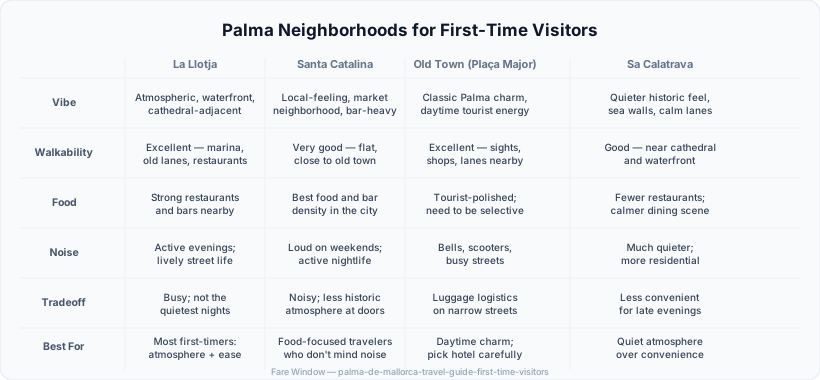
Quick answer: La Llotja and the Old Town edges are the easiest first-time bases; Santa Catalina is better for food and nightlife.
La Llotja
La Llotja is the easiest sweet spot for many first-timers. It puts you near the cathedral, marina, restaurants, bars, and old-town lanes without feeling as boxed-in as the tightest medieval streets. It is convenient, atmospheric, and busy enough that you will not wonder where the city went after dark.
Santa Catalina
Santa Catalina is better if food and nightlife matter more than cathedral-doorstep sightseeing. It has a strong restaurant and bar scene, a market, and a more local-neighborhood feel, though it can be noisy and weekend-heavy. If your trip is built around dinners, aperitivo pacing, and walking back from bars, Santa Catalina makes sense.
Old Town (Plaça Major and Sant Jaume)
The Old Town around Plaça Major, Sant Jaume, and the shopping lanes is best for travelers who want classic Palma charm and daytime convenience. The tradeoff is that some streets feel tourist-polished, and luggage logistics can be annoying if your hotel is buried in pedestrian lanes.
Sa Calatrava
Sa Calatrava and the eastern side of the old city suit travelers who want quieter historic atmosphere near the sea walls and cathedral. It is beautiful and calmer, but less convenient for late-night eating unless you are comfortable walking back through quieter streets.
Paseo Marítimo
Paseo Marítimo and the marina hotels are practical but less charming. Choose them if you want larger hotels, sea-facing rooms, or easier taxi and car logistics. Skip them if your priority is stepping straight into Palma's old-city texture.
How do you get around Palma without making life harder?
The best way to explore Palma is mostly on foot, with taxis or buses used strategically. The old center is compact, but the city is not completely frictionless: summer heat, narrow streets, scooters, cruise crowds, and uneven paving all change how far “just a 20-minute walk” feels.
Quick answer: Most first-timers do not need a rental car for Palma city days; rent one only for specific island day trips.
Do not rent a car for your Palma city days unless you already know you need it. Parking in or near the old center is annoying, paid garages add up, and the car becomes an obligation instead of freedom. Rent for a specific island day if you are heading to mountain villages, coves, or less connected beaches.
For the airport, most first-timers should choose the simplest transfer available at the moment: taxi if you have luggage or arrive late, bus if you are traveling light and staying near a useful stop. Palma airport is close enough that this should not be the part of the trip you over-engineer.
Cathedral, La Llotja, Old Town, Santa Catalina, Es Baluard, and the waterfront.
Bellver Castle, outlying beaches, late nights, and days when heat makes heroic walking stupid.
Island day trips only — mountain villages, coves, and less connected beaches.
What should you actually do in Palma?
The best first Palma visit should be built around a few strong anchors instead of a checklist of every church, courtyard, and viewpoint. Prioritize the cathedral area, the old center, one market or food neighborhood, one waterfront walk, and one view over the city.

Start with La Seu — but give it context
Start with La Seu, Palma's cathedral, because it defines the city physically and visually. The approach from Parc de la Mar gives you the cleanest first impression: cathedral, walls, water, and palms in one frame. Go inside if architecture matters to you, but do not reduce the experience to “see cathedral, tick box, leave.” The surrounding lanes, palace area, and sea-wall walks are part of the point.
Wander the old lanes with a shape
Spend unstructured time in the old lanes, but give the wandering a shape. Link Plaça de Cort, Plaça Major, Sant Francesc, and the shopping streets, then drift toward La Llotja for a different mood. The city rewards slow corners more than forced monument collecting.
Visit Es Baluard for a useful change of pace
Visit Es Baluard if you want contemporary art and a useful change of pace from old-town stone. It is also well placed between Santa Catalina and the historic center, which makes it easy to combine with lunch or an evening food crawl.
Add Bellver Castle for the city perspective
Add Bellver Castle if you want the best city-and-bay perspective. It is not the most convenient walk from the center, but the circular castle and views help you understand Palma's relationship to the bay. Go by taxi or bus if the heat is up.

Keep beach expectations honest
For beach time, keep expectations honest. Playa de Palma and Can Pastilla are easy but developed. Cala Major is closer and simple enough for a short beach break. For the coves that make people forget about rent, you are usually talking about an island day, not a quick Palma stroll.
Where should you eat and drink in Palma?
Palma's food scene is one of the best reasons to stay in the city, but first-timers should avoid eating every meal beside the cathedral or on the most obvious tourist streets. The better strategy is geographic: use markets and neighborhoods to shape meals instead of chasing random “best restaurant” lists.

Mercat de l'Olivar
Mercat de l'Olivar is useful for a central market lunch, especially if you want seafood, snacks, or a reset from restaurant meals. It is not some undiscovered local secret; it is a working market that visitors also use. Go earlier rather than at the exhausted end of the lunch window.
Santa Catalina for a food crawl
Santa Catalina is the easiest neighborhood for a first-night food crawl. You can move between bars, restaurants, and the market area without much planning. It is lively, social, and a little over-loved, but still useful because it concentrates options in a walkable area.
La Llotja for dinner
La Llotja works well for dinner if you want old-city atmosphere with plenty of restaurants nearby. Be selective near the busiest lanes: menus translated into seven languages are not automatically bad, but they are usually asking you to stop thinking. Keep walking if the place feels like it survives entirely on foot traffic.
What to eat
For Mallorcan food, look beyond the obvious tapas loop. Try tumbet, sobrassada, pa amb oli, ensaïmada, seafood rice, or dishes built around local lamb, pork, and vegetables. Palma is international enough that you can eat anything, but at least one meal should remind you that you are in Mallorca.
How many days do you need in Palma?
Three days is the right first-time Palma trip for most travelers. That gives you one arrival-and-old-town day, one deeper city day, and one flexible day for Bellver, beach time, or a short island excursion. Two days works if you are using Palma as a stopover; four or five works if you want day trips without changing hotels.
Quick answer: Three days is enough for Palma itself, while four or five days lets you add beaches or mountain villages without rushing.
Focus on the cathedral, old town, La Llotja, and a waterfront walk. You have seen Palma, but only lightly.
Add Bellver Castle, Es Baluard, a market lunch, and a better-paced dinner plan. Enough for a compact city break.
Add a beach half-day or a Sóller/Valldemossa-style island day. The sweet spot for a first visit.
Palma becomes a comfortable base for mixed travel: city mornings, beach afternoons, one larger day trip.
What is a simple first-time Palma itinerary?
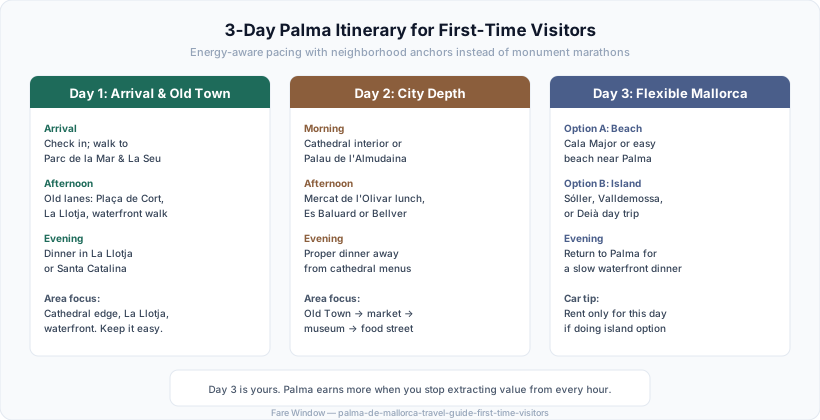
A good first-time Palma itinerary should protect your energy in the heat, keep evenings neighborhood-based, and avoid using the city as a launchpad before you have actually understood it.
Day 1: Arrival and orientation
Check in, walk to Parc de la Mar and La Seu, wander the old lanes around Plaça de Cort and La Llotja, then have dinner in La Llotja or Santa Catalina. Keep it simple; arrival days are where over-planning goes to die.
Day 2: City depth
Visit the cathedral interior or another cultural stop in the morning, use Mercat de l'Olivar or Santa Catalina for lunch, then do Es Baluard or Bellver Castle in the afternoon. Finish with a proper dinner away from the most obvious cathedral-side menus.
Day 3: Flexible Mallorca day
If you want ease, choose a beach break near Palma and a slow waterfront evening. If you want island character, plan Sóller, Valldemossa, Deïà, or a mountain and coastal route. If you rent a car, rent it for this day only unless your whole itinerary genuinely needs one.
Day 4 (if you have it)
Day 4 should be unglamorous and excellent: revisit the neighborhood you liked most, book a slower lunch, shop for local goods, and leave room for the trip to breathe. Palma is better when you stop trying to extract value from every hour like it owes you money.
What practical tips matter most in Palma?
The most useful Palma tips are about timing, heat, crowds, and logistics. The city is easy, but the easy version depends on not fighting its busiest streets at the worst times.
- Visit the cathedral area early or later in the day. The old center can feel calm one hour and packed the next, especially around La Seu, Plaça Major, and the main shopping lanes when cruise ships are in.
- Book central accommodation carefully. A romantic old-town room can be perfect, but check whether taxis can get close, whether there are stairs, and whether late-night street noise is likely.
- Use beaches strategically. If the beach is the main reason for your trip, do not make Palma your only base unless you are comfortable with developed beaches or day trips.
- Watch belongings in crowded tourist areas. Palma is not a scary city for visitors, but complacency around bags, phones, and beach gear is still how small problems happen.
- Plan lunch and dinner around Spanish timing. Check opening hours instead of assuming restaurants will fit your schedule. A snack strategy helps: bakery in the morning, market or light lunch, proper dinner later.
When should you book Palma for better value?
For most first-time visitors, Palma value is best in spring and fall, when the city still feels lively but hotel rates and heat are less punishing than peak summer. April, May, early June, September, and October are the most useful planning months for city-first trips.
Shoulder season sweet spot — good weather, lower prices, city not yet overwhelmed by peak summer.
Hot weather and beach energy, but higher prices, faster-filling rooms, and more pressure in old-town lanes.
Second shoulder window — still warm, calmer than summer, and better value for central accommodation.
Lower prices, calmer city, but some island experiences feel quieter; treat it as a city/food break.
Quick answer: Book the neighborhood first and the deal second. A cheap hotel in an inconvenient location can cost you more in taxis, time, and low-grade irritation than you saved.
Final take: who should choose Palma first?
Choose Palma first if you want Mallorca with a soft landing: airport ease, city texture, good restaurants, walkable neighborhoods, and optional island day trips. It is one of the better Mediterranean city bases for first-timers because it gives you choices without making the whole trip feel like logistics.
Skip Palma as your main base if your dream trip is mostly quiet coves, resort pools, rural villas, or mountain villages. Use Palma for a night or two, then move on.
The best first Palma trip is not “see everything.” It is three well-paced days: stay central, eat deliberately, walk the old city at the right times, take one view over the bay, and leave the island fantasy enough room to be real instead of rushed.
FAQ
Is Palma de Mallorca a good base for first-time visitors?
Yes. Palma is one of the stronger first Mediterranean city bases because it combines real city texture, good food, walkable neighborhoods, airport convenience, and optional island day trips without the limitations of a pure resort town.
Where should first-time visitors stay in Palma?
La Llotja and the Old Town edges work for most first-timers. Santa Catalina is better if food and nightlife are the priority. Sa Calatrava suits travelers who want quieter historic atmosphere.
Do you need a car in Palma de Mallorca?
Not for city days. Walk for the old town, waterfront, and most neighborhoods; use taxis or buses for Bellver Castle and outlying areas. Rent a car only for specific island day trips to mountain villages or hard-to-reach coves.
How many days do you need in Palma?
Three days is enough for a first Palma trip. Four or five days lets you add day trips without rushing. Two days works as a stopover but is tight for getting a real sense of the city.
What is the best month to visit Palma de Mallorca?
April to June and September to October are the best months for a first visit. You get good weather, manageable crowds, and better value on accommodation compared to peak July and August.
Planning a trip to Palma de Mallorca?
Let Fare Window find the best fares
Set your trip's departure and return windows. Fare Window checks every date combination automatically and sends you a daily fare report.
Start your free trialKeep planning
Related travel guides
Explore more first-time destination guides while you compare routes, seasons, and trip shapes.


