
Chongqing Travel Guide for First-Time Visitors
A practical Chongqing guide for first-time visitors who want the right season, the right base, and a realistic plan for a city built on hills, heat, and excellent food.

Chongqing is best for travelers who want a big-city China trip with dramatic scenery, serious food, and a sense that the entire place was designed by a committee of staircases and chaos.
It is not China on easy mode. It is China on vertical mode.
If you want a polished, museum-heavy capital-city experience, Beijing is simpler. If you want a softer first stop with more conventional sightseeing flow, Chengdu is easier. But if you want a city that feels cinematic, intensely local, and completely unlike the usual East Asia starter pack, Chongqing is worth the learning curve.
Quick Facts
- Best for: Food-focused travelers, urban explorers, repeat China visitors, and first-timers who do not mind some friction.
- Not ideal for: Travelers with major mobility limits, people who hate humidity, or anyone expecting flat, intuitive city navigation.
- Minimum stay: 3 full days.
- Better stay: 4 to 5 days if you want time for neighborhoods, hot pot, river views, and a Dazu or Wulong side trip.
- Core choice: Stay central near Jiefangbei for convenience, or near Nanbin Road if atmosphere matters more.
Table of Contents
Is Chongqing worth visiting?
Yes, Chongqing is worth visiting if you want a destination with strong local identity rather than a checklist city of famous monuments.
What makes Chongqing stand out is the combination of steep hills, river geography, dense high-rise neighborhoods, neon night views, and one of China's most famous food cultures. It feels dense and theatrical in a way that many big cities do not. The city is especially strong for travelers who like wandering, eating, looking at infrastructure that makes no sense until you realize it somehow does, and seeing how geography changes daily life.
Quick answer: Chongqing is a strong choice for 3 to 5 days if you want urban atmosphere, food, river views, and a more intense city experience than Chengdu or Shanghai.
The tradeoff is that Chongqing can be tiring. Distances are deceptive, maps can lie to your face because of elevation, summer heat is no joke, and some famous photo spots are better as short visits than as the foundation of your whole trip.
Best time to visit Chongqing
The best time to visit Chongqing is usually March to May and October to November.

These periods give you the best shot at manageable temperatures, less brutal humidity, and air that does not feel like a warm wet blanket is making personal threats. Spring is greener and softer. Autumn is often the more comfortable all-around pick for walking and evening views.
Summer is the hardest season for most visitors. Chongqing is one of China's famously hot furnace cities, and the heat combines with humidity in a way that makes uphill walking much less charming after about ten minutes. If you visit in July or August, plan slower afternoons, more indoor stops, and less ego.
Winter is workable if you mainly care about city atmosphere and food, but it can feel grey and damp rather than crisp. You are not usually dealing with postcard winter beauty here. You are dealing with low-contrast urban mood.
Quick answer: October and April are usually the safest sweet spots for a first Chongqing trip.
Seasonal tradeoffs at a glance
Best balance of weather, greenery, and city wandering.
Best for dramatic night views, worst for heat and humidity.
Strongest overall season for first-time visitors.
Fewer crowds, moodier atmosphere, less comfortable weather.
Timing anchors worth knowing
The city gets more crowded and more expensive around major Chinese public holidays, especially Labor Day and National Day. If your dates overlap those windows, expect heavier crowds at key viewpoints, denser train demand, and less pleasant famous-photo-stop experiences.
If you want Chongqing at its best, target shoulder-season weekdays and avoid major domestic holiday peaks.
Where to stay in Chongqing
The best area to stay in Chongqing for most first-time visitors is around Jiefangbei and Yuzhong District.
That part of the city gives you the easiest access to food, metro connections, riverfront viewpoints, and many of the places first-time visitors actually want to see. It is busy, commercial, and not exactly serene, but it reduces transport friction in a city that already comes with enough of that for free.
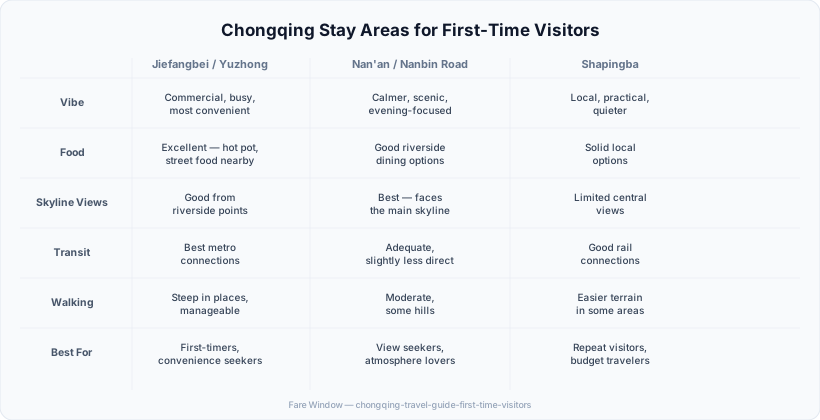
Quick answer: Stay in Jiefangbei if convenience matters most; stay near Nanbin Road if you want more atmosphere and skyline views.
Jiefangbei / central Yuzhong
This is the best base for convenience, transit access, and first-trip efficiency.
Stay here if you want to walk to restaurants, reach metro lines easily, and keep famous central sights within simple range. The tradeoff is that it can feel crowded and a bit generic by megacity standards in certain pockets.
Nan'an / Nanbin Road side
This area is best if you care more about skyline views, evening atmosphere, and a slightly less frantic feel.
It gives you strong night views back toward the main skyline and works well if your trip is more about mood, dinners, and river scenery than ticking off central sights as efficiently as possible. The tradeoff is slightly less plug-and-play convenience.
Shapingba
This area works better for repeat visitors, students, or travelers with a specific reason to be there.
It is less obvious as a first-time tourist base unless you are prioritizing a particular station, university area, or a more local daily rhythm.
What first-time visitors should avoid
Do not book solely based on a river view photo or a discount without checking how the property connects to the metro and whether the route involves steep walking or awkward elevation changes. In Chongqing, two places that look close on a map can behave like they are in a custody dispute.
What to do in Chongqing
The best things to do in Chongqing are the ones that combine city geography, food, and viewpoint-based wandering rather than trying to speedrun every social-media location.

1. Eat Chongqing hot pot
Hot pot is not optional if food is one of your reasons for coming.
The point is not just to have one meal and declare victory. The point is to understand how central spicy broth, group dining, late hours, and neighborhood food culture are to the city's identity. If you are spice-sensitive, order strategically instead of acting brave for twenty minutes and miserable for six hours.
2. Explore Hongyadong, but manage expectations
Hongyadong is worth seeing for the layered riverside architecture and night lighting, but it is better as a timed stop than the emotional center of your trip.
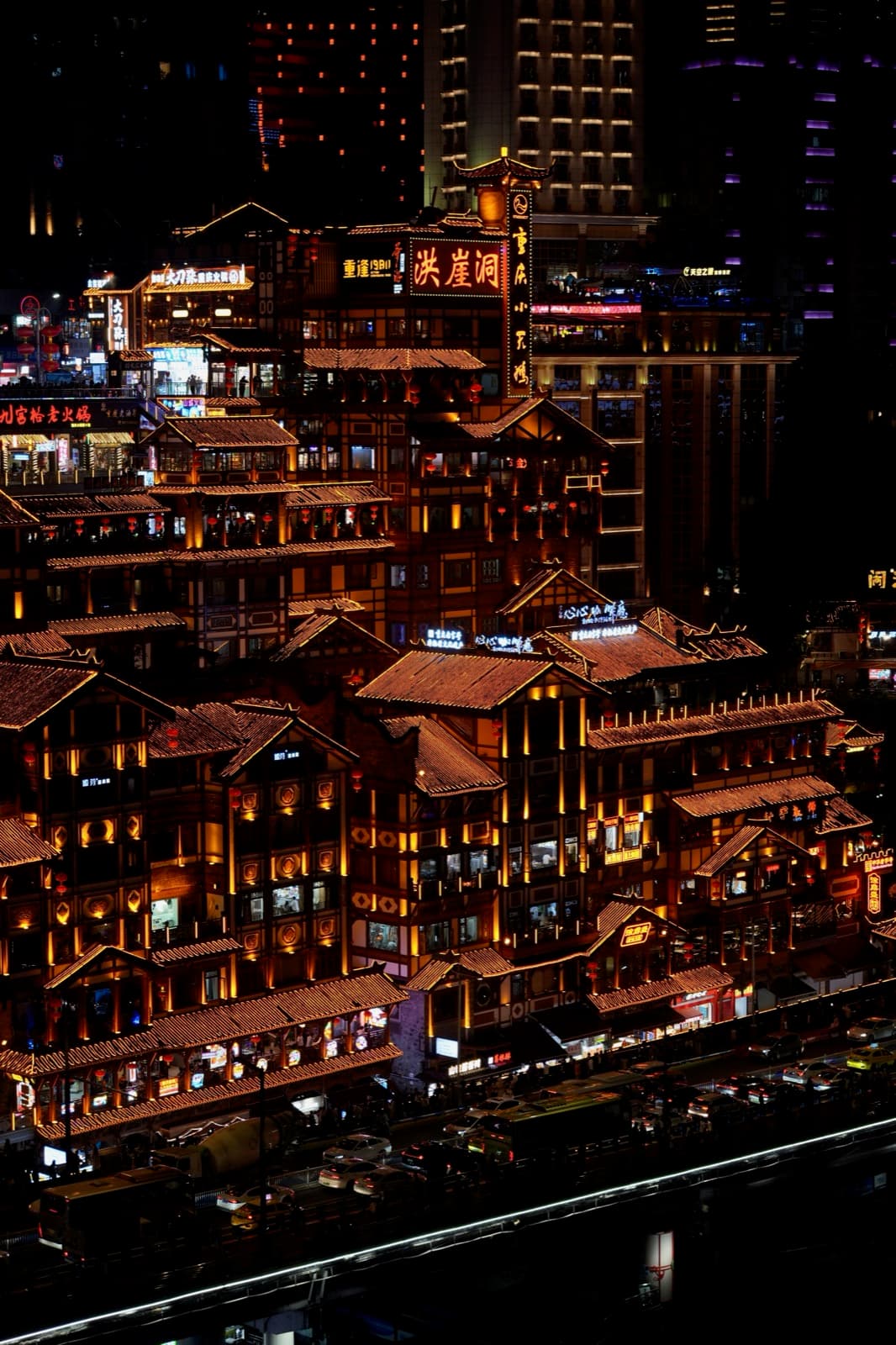
Go for the atmosphere, views, and photos, then move on. The mistake is treating it as if it will deliver endless substance once you arrive. It is more scene than deep experience.
3. Ride the Yangtze River Cableway if the line is reasonable
The cableway is useful because it gives you a sense of the city's terrain and river relationship, not because the ride itself is long.
If lines are ugly, skip the martyr routine and spend that time on a river walk or viewpoint instead. Chongqing offers a lot of vertical drama for free.
4. Wander mountain-city streets and stair routes
One of the best Chongqing experiences is simply walking through elevated streets, older lanes, stepped residential areas, and lookout points where the city suddenly unfolds below you.
This is where Chongqing stops being a list of attractions and starts feeling like itself.
5. See the skyline after dark
Chongqing is more visually powerful at night than during the middle of the day.
Even if you are not a nightlife person, make room for evening river views, lit-up bridges, and at least one skyline-focused walk. This is one of the clearest cases where timing changes the value of the experience.
6. Add one substantial side trip if you have time
If you have 4 to 5 days, a side trip helps balance the dense urban experience.
The Dazu Rock Carvings are the better pick if you want cultural depth and history. Wulong is the better pick if you want dramatic natural scenery. Do not try to cram both into a short first trip unless your vacation style is logistics-induced resentment.
Quick answer: Prioritize hot pot, night views, hillside walking, and one or two well-chosen major sights over a bloated attraction checklist.
How many days you need in Chongqing
You need at least 3 full days in Chongqing for a satisfying first visit.
Three days is enough to cover the central city, food, night views, and a few signature experiences without feeling like you got off a train, blinked twice, and had to leave. Four days is more comfortable if you want a slower pace or time to understand different areas. Five days makes sense if you want a side trip or if Chongqing is one stop in a broader China itinerary and you do not want the city to feel rushed.
Quick answer: Plan 4 days if you can; drop to 3 only if your broader itinerary is already packed.
Possible, but compressed and not ideal.
Solid minimum for first-timers.
Best balance for most travelers.
Best if adding a side trip or a deeper neighborhood/food focus.
A practical 4-day Chongqing itinerary
A 4-day Chongqing itinerary works best when you combine one anchor area with flexible evening planning.
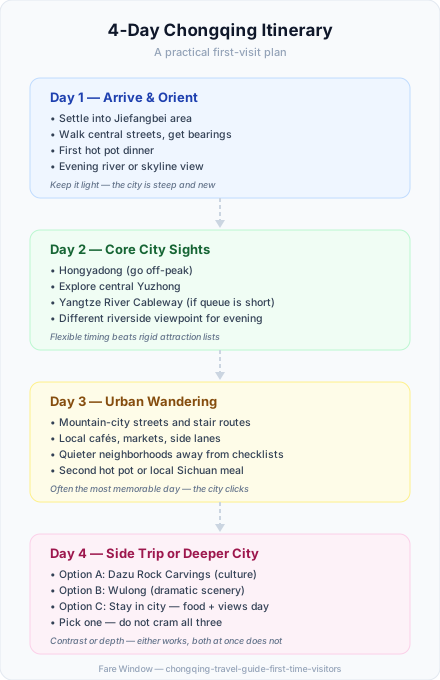
Day 1: Arrive and get oriented
Stay central, walk around Jiefangbei, eat a first hot pot meal, and finish with an evening river or skyline view. Do not over-program arrival day in a city that already asks your legs and navigation brain to do extra work.
Day 2: Core city experiences
Visit Hongyadong at an off-peak time, explore central Yuzhong areas, ride the cableway if the queue is acceptable, and spend the evening in a different riverside or viewpoint area.
Day 3: Urban wandering day
Use this day for mountain-city walking, local streets, cafes, markets, or a neighborhood with a less checklist-heavy feel. This is often the day people remember most because the city finally starts to make sense.
Day 4: Side trip or deeper city focus
Choose Dazu for culture, Wulong for landscape, or stay in the city and build a food-and-views day if you prefer less transit. The right choice depends on whether you want contrast or depth.
How to plan for better prices
The cheapest time to visit Chongqing is usually outside major Chinese holiday periods and outside the hottest peak-summer weeks that still attract domestic travel demand.
For many travelers, the sweet spot is not absolute cheapest but best value: shoulder season, booked early enough for good flight and hotel choice, with weekday-heavy dates when possible.
Quick answer: For value, aim for spring or autumn weekdays outside major holiday peaks.
Price-planning rules that actually help
- Avoid Labor Day and National Day periods unless those are your only options.
- Book flights earlier for autumn travel, because comfortable-weather windows are not exactly a secret.
- Compare hotels by transit practicality, not just nightly rate.
- If you are combining Chongqing with Chengdu or another China stop, compare open-jaw and rail-linked route options before booking flights blindly.
Practical Chongqing travel tips
The most useful Chongqing travel tip is to respect the city's terrain when planning your day.
A short distance can still mean stairs, elevation changes, heat exposure, and extra time. Build lighter daily plans than you would for flatter cities.
Tips that matter most
- Use the metro, but expect walking complexity around stations. The transit system helps, but station exits can drop you into very different levels of the city.
- Wear shoes you can actually walk uphill in. Fashion loses quickly to topography.
- Keep addresses in Chinese when possible. This helps with ride-hailing, station checks, and hotel communication.
- Plan indoor breaks in summer. Heat and humidity can flatten your energy fast.
- Do not over-chase social media photo spots. Some are genuinely fun; others are ten percent experience and ninety percent queue management.
- Be realistic about spice. Chongqing food is a feature, not a prank, but it helps to know your limits.
Final verdict: who should choose Chongqing?
Choose Chongqing if you want a city with texture, food culture, and a strong sense of place, and you do not mind trading ease for character.
Skip it or shorten it if you want a smoother, flatter, more conventionally legible first stop in China. Chongqing rewards curiosity and patience more than it rewards rigid sightseeing plans.
For the right traveler, that is exactly why it works.
Planning a trip to Chongqing?
Let Fare Window find the best fares
Set your trip's departure and return windows. Fare Window checks every date combination automatically and sends you a daily fare report.
Start your free trialKeep planning
Related travel guides
Explore more first-time destination guides while you compare routes, seasons, and trip shapes.


