
Istanbul Travel Guide for First-Time Visitors
A practical Istanbul travel guide for first-time visitors who want the right base, smarter ferry and transit use, better food choices, realistic pacing, and fewer rookie mistakes.

Istanbul is one of the great first trips if you want history, food, water, hills, markets, ferries, mosques, cats, and the distinct feeling that one city has been arguing with three empires and a breakfast table for about 1,600 years. It is also a city where first-timers can accidentally turn a magical trip into a logistics problem: staying in the wrong area, underestimating hills, overloading Sultanahmet, getting stuck in traffic, or treating the Asian side like an optional footnote.
This Istanbul travel guide is built for practical first-trip decisions: where to stay, how the main areas actually feel, when the tram or ferry helps, when taxis become pain with upholstery, where food gets interesting, what to prioritize, what to skip, and how to build a simple itinerary that does not collapse under mosques, queues, and baklava ambition.
Quick answer: First-time visitors should usually stay in Sultanahmet/Sirkeci for maximum historic convenience, Galata/Karaköy for a better evening base, Cihangir/Pera/Beyoğlu for food and nightlife, or Kadıköy/Moda if they want a more local Asian-side trip and do not mind ferry or subway crossings. Use the tram, metro, ferries, and a transit card where routes are clean; avoid relying on taxis in traffic; and plan the old-city sights early before crowds and heat turn “romantic history” into a sweaty queue management seminar.
Quick Facts
- Best for: History, architecture, food, ferry rides, markets, layered neighborhoods, atmospheric walking, and first trips that feel genuinely different.
- Less ideal for: Travelers who dislike hills, crowds, street sales pressure, complex logistics, or cities where “nearby” can mean “uphill with consequences.”
- Ideal first trip length: 4 full days; 3 days works if you prioritize; 5 to 6 days lets you add Kadıköy, Balat/Fener, Bosphorus time, and slower food neighborhoods.
- Best areas to stay: Sultanahmet/Sirkeci, Galata/Karaköy, Pera/Cihangir/Beyoğlu, Kadıköy/Moda, or Nişantaşı for a polished modern base.
- Getting around: Use tram, metro, ferry, and transit card where practical. Walk in clusters. Use ferries for both joy and geography. Be selective with taxis.
- Best time: April to early June and September to October are usually best; summer is hot and crowded; winter is quieter, cheaper, and damp.
- First-timer mistake: Spending the whole trip in Sultanahmet. The monuments are essential, but Istanbul gets much better once you cross the bridge or the water.
Table of Contents
- 1.Is Istanbul a good first-time destination?
- 2.Where to stay in Istanbul
- 3.How Istanbul neighborhoods actually feel
- 4.Getting around Istanbul without wasting your trip
- 5.Food in Istanbul: where the trip gets good
- 6.What to do in Istanbul on a first visit
- 7.Safety, scams, dress, and practical tips
- 8.A simple Istanbul itinerary for first-time visitors
- 9.Best time to visit Istanbul
- 10.How to find better Istanbul flight and hotel value
Is Istanbul a good first-time destination?
Istanbul is an outstanding first-time destination if you want a city that feels big, old, alive, and impossible to reduce to one postcard. It has the “major sights” version of travel — Hagia Sophia, Blue Mosque, Topkapı Palace, Grand Bazaar, Basilica Cistern, Bosphorus views — but the trip gets better when those sights are balanced with ferries, neighborhood meals, tea stops, waterfront walks, and a little slack in the schedule.

The city is not frictionless. Distances are deceptive. Hills are real. Traffic can be savage. Some tourist zones have aggressive sales energy. Major monuments can involve queues, prayer-time closures, renovation surprises, and crowd pressure. If you expect Istanbul to behave like a tidy museum district with kebabs, you will get humbled quickly.
Quick answer: Istanbul is best for travelers who want history, food, atmosphere, water views, markets, and strong neighborhood contrast. It is less ideal for travelers who need perfectly smooth logistics, low-pressure tourism, or a fully walkable flat city.
Where to stay in Istanbul
The best area to stay in Istanbul depends on whether you want historic convenience or a better everyday base. For a first visit, most travelers should choose between Sultanahmet/Sirkeci and Galata/Karaköy/Beyoğlu, then consider Kadıköy if they are more independent.
Sultanahmet is the easiest base for classic first-time sightseeing. Hagia Sophia, Blue Mosque, Topkapı Palace, Basilica Cistern, the Hippodrome, and old-city lanes are close. If you have only two or three days, or if walking to the monuments matters more than evening variety, it works. The downside is that Sultanahmet can feel touristy after dark and food quality varies.
Galata and Karaköy are a favorite first-time compromise for many visitors. You get easy access across the bridge to the old city, better restaurants and cafes, evening energy, waterfront proximity, and a more modern-but-still-Istanbul feel. Pera, Cihangir, and wider Beyoğlu are better for nightlife, restaurants, galleries, and a more lived-in European-side base. Kadıköy and Moda on the Asian side are excellent for food, local evenings, ferries, and a less monument-centered stay.
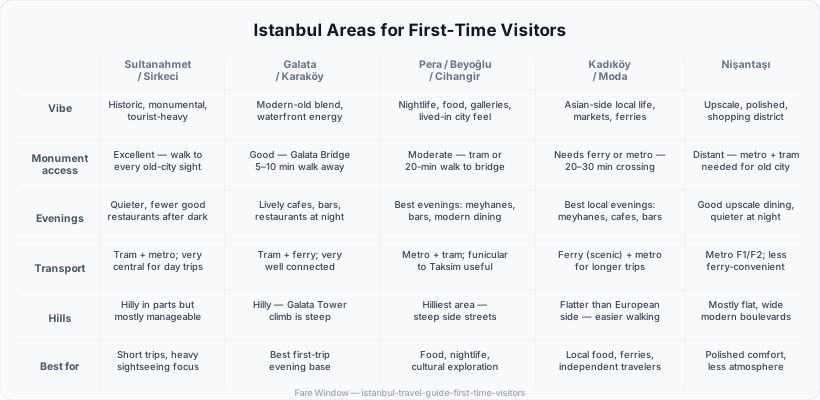
Quick answer: Stay in Galata/Karaköy or Beyoğlu for the best first-trip balance of old-city access and evening energy. Choose Sultanahmet only if monuments within walking distance matter more than everything else.
How Istanbul neighborhoods actually feel
Istanbul is not one center with a few suburbs attached. It is a set of overlapping cities tied together by hills, water, bridges, ferries, and wildly different moods.
Sultanahmet and Eminönü/Sirkeci
Sultanahmet is the monumental old city: mosques, palaces, cisterns, tour groups, souvenir shops, and the greatest hits. You need it. You do not need to let it define the whole trip. Eminönü and Sirkeci are movement and commerce: ferries, spice market, waterfront crowds, commuters, street food, trams, and Galata Bridge. This area is chaotic in a useful way. It shows Istanbul working, not just posing.
Galata, Karaköy, and Beyoğlu
Galata and Karaköy are the bridge between old and modern Istanbul: steep streets, cafes, bars, boutique hotels, galleries, waterfront walks, and easy access to both sides of the Golden Horn. Beyoğlu, Pera, Cihangir, and Taksim give you nightlife, food, old apartment buildings, cultural venues, and more contemporary city life. İstiklal Avenue can be crowded and commercial, but side streets are the point.
Kadıköy, Moda, and Balat/Fener
Kadıköy and Moda are the Asian-side reward: markets, meyhanes, coffee, bars, ferries, residential energy, and better everyday food browsing than most first-timers expect. Balat and Fener are photogenic, colorful, and historically layered, but they are better as a focused half-day than a casual wander squeezed between major sights.
Getting around Istanbul without wasting your trip
Istanbul transport is powerful when you use the right mode for the right job. The tram is excellent for old-city routes. The metro helps with longer modern-city connections. Ferries are both transport and experience. Buses can be useful but are less beginner-friendly. Taxis can be helpful late or with luggage, but traffic and routing disputes can drain the joy out of your day with impressive efficiency.

Get set up for public transport early with an Istanbulkart-style transit card or the current accepted visitor payment method. Use it for trams, metro, ferries, funiculars, and other public transport where accepted. The principle does not change: tapping through transit is better than negotiating every movement like a medieval trade agreement.
Use the T1 tram logic for many old-city moves: Sultanahmet, Gülhane, Sirkeci, Eminönü, Karaköy, and connections onward. Use ferries for Kadıköy, Üsküdar, and Bosphorus perspective. A ferry ride is one of Istanbul's best “attractions,” which is convenient because it is also actual transportation.
Quick answer: Plan by zone. Do old-city sights together. Do Galata/Karaköy/Beyoğlu together. Do Kadıköy as its own evening or half-day. Do not bounce from Topkapı to Balat to Kadıköy to Taksim in one day.
Food in Istanbul: where the trip gets good
Istanbul food is not just kebab plus baklava, though you should absolutely make room for both. The first-timer strategy is to eat by neighborhood and meal style: breakfast, street snacks, old-city classics, meyhane evenings, fish or meze near the water, Kadıköy market grazing, and one dessert stop that ruins supermarket baklava forever.

Start simple: simit, tea, menemen, kaymak and honey, börek, and Turkish breakfast if you want a slow morning. For quick food, look for döner, dürüm, lahmacun, pide, köfte, kumpir, balık ekmek near the water, roasted chestnuts in season, and stuffed mussels if you are comfortable with street-food risk.
Eating by neighborhood
- Sultanahmet/Eminönü for practical old-city meals and snacks, but do not assume every restaurant near a famous monument is worth your stomach's limited real estate.
- Karaköy/Galata/Beyoğlu for better cafes, modern Turkish meals, meyhanes, and evenings.
- Kadıköy for one of the best food areas for first-timers who want market energy and fewer old-city tourist menus.
- Bosphorus waterfront for seafood and tea when the setting is part of the meal.
Quick answer: Eat by area: old-city snacks and classics around Sultanahmet/Eminönü, cafes and meyhane evenings in Karaköy/Galata/Beyoğlu, market grazing in Kadıköy, and Bosphorus seafood or tea when the setting matters.
What to do in Istanbul on a first visit
Start with the old city because the icons are famous for a reason. Hagia Sophia, Blue Mosque, Topkapı Palace, Basilica Cistern, the Hippodrome, Süleymaniye Mosque, Grand Bazaar, and Spice Bazaar can easily fill more time than you expect. The key is prioritization. Do not try to deeply “do” every museum, mosque, bazaar, and palace in one day unless you enjoy turning wonder into inventory.
Structure your days by zone
Use one day for Sultanahmet and the old city, one for Galata/Karaköy/Beyoğlu, one for Bosphorus/ferry/Kadıköy, and one for Balat/Fener, Süleymaniye, Dolmabahçe, or a slower food day depending on your interests.
Take the Bosphorus seriously
The Bosphorus should not be treated as scenery only. Take a public ferry, a short cruise, or a route that gives you time on the water. Istanbul from the water makes the geography click: Europe, Asia, the Golden Horn, hills, palaces, mosques, bridges, neighborhoods. It is the city's best orientation lecture, and mercifully nobody gives you a PowerPoint.
Know what to skip or limit
The Grand Bazaar is historic and worth seeing, but if shopping pressure annoys you, make it a short architectural wander rather than a half-day commercial combat sport. Taksim Square itself is less interesting than the streets and neighborhoods around it. And do not overpay for a mediocre dinner because it has a rooftop view; Istanbul has enough views that bad food does not deserve immunity.
Safety, scams, dress, and practical tips
Istanbul is generally manageable for first-time visitors, but tourist friction is real. The main issues are not usually dramatic danger; they are overcharging, taxi games, aggressive sales, restaurant surprises, fake friendliness that leads to a shop, and the occasional “helpful” stranger whose business model has excellent posture.
Practical things that matter
- Taxis: prefer official apps or reputable hotel-arranged options, confirm destination, watch routing, and be cautious with cash or payment confusion. Public transport and ferries often remove the taxi problem entirely.
- Tourist-zone scams: be wary of shoe-shine drops, overly helpful strangers steering you to shops or bars, unclear restaurant pricing, and high-pressure carpet or leather sales.
- Mosque etiquette: dress respectfully — shoulders and knees covered, shoes off, women may need a head covering. Check prayer times and closures. Carry a scarf or light layer.
- Comfort basics: comfortable shoes matter more than most things. Cards are widely useful, but keep some cash for small purchases, tips, toilets, markets, and snacks.
- Crowds and pickpockets: watch belongings in crowded trams, markets, and tourist zones.
Quick answer: Istanbul is safe with normal city awareness. Keep your “free help from a stranger in a major tourist zone” filter turned on. It is a small switch. Saves money.
A simple Istanbul itinerary for first-time visitors
A good Istanbul itinerary clusters sights by geography, uses transport that matches the route, and leaves room for the unexpected — which is usually where Istanbul actually happens.
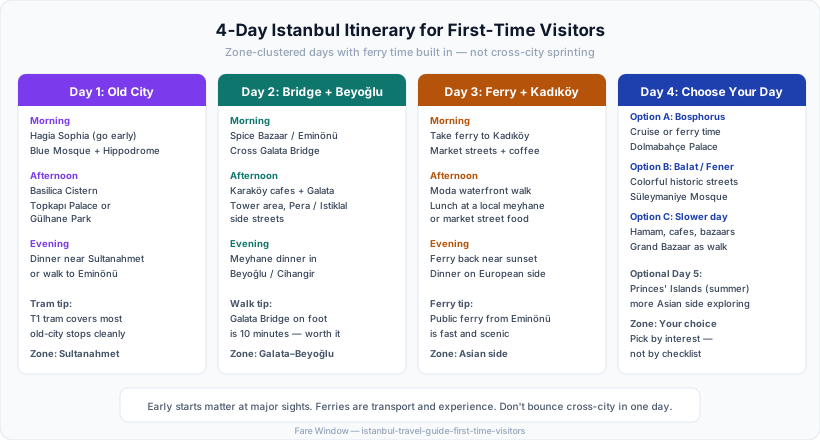
Day 1: Sultanahmet and the old city
Start early with Hagia Sophia, Blue Mosque, the Hippodrome, Basilica Cistern, and Topkapı Palace or Gülhane Park depending on energy. Keep Grand Bazaar or Spice Bazaar as a shorter add-on, not a second full-time job.
Day 2: Eminönü, Galata, Karaköy, and Beyoğlu
Begin around Spice Bazaar/Eminönü, cross Galata Bridge on foot, explore Karaköy and Galata, then climb or transit toward Pera, Cihangir, İstiklal side streets, and a meyhane or modern Turkish dinner.
Day 3: Ferry, Kadıköy, and Asian-side food
Take a public ferry across, wander Kadıköy market streets, continue to Moda if weather is good, eat slowly, and return by ferry near sunset if timing works. This is the day that stops Istanbul from feeling like only monuments.
Day 4: Bosphorus, Süleymaniye, Balat/Fener, or Dolmabahçe
Choose based on your style. Architecture and water? Bosphorus and Dolmabahçe. Historic atmosphere and photos? Balat/Fener plus Süleymaniye. Food and rest? Build a slower route around cafes, markets, and ferry time.
If you have a fifth day, add a longer Bosphorus cruise, Princes' Islands in warm weather, more Asian-side exploring, hamam time, additional museums, or a shopping and food day. Istanbul rewards extra time because the best moments are rarely the ones you scheduled at 9:15 sharp.
Best time to visit Istanbul
The best time to visit Istanbul is usually April to early June or September to October. Weather is better for walking, ferry rides, outdoor meals, and mosque and city wandering. Spring can bring tulips and softer light; fall often brings comfortable days and less punishing heat.
Best for walking, ferries, tulip season, and outdoor meals. Comfortable but increasingly popular.
Hot, crowded, and more expensive. Major sights get very busy. Not ideal but workable.
Second-best window — cooler, still good weather, fewer peak crowds.
Quieter and cheaper. Can be damp, chilly, and gray, but still atmospheric for a different kind of trip.
Quick answer: April to early June and September to October are usually the best times for a first Istanbul trip. Summer is hot and crowded; winter is quieter, cheaper, and damp but still rewarding.
How to find better Istanbul flight and hotel value
Istanbul is a major air hub, which means flight value often comes from flexible dates, long-haul connections, and stopover logic. The city works well as a standalone trip or as a bridge between Europe, the Middle East, and Asia. Compare arrival airport, transfer time, and hotel location before celebrating a cheap fare. A bargain that lands late and puts you across the city from your hotel may be less charming at midnight.
Hotel value depends heavily on the area. Sultanahmet can be worth paying for if your trip is short and monument-heavy. Galata/Karaköy/Beyoğlu can be better if you care about evenings and food. Kadıköy can offer better local atmosphere and value, but it adds crossing time for old-city sights.
The best first-time hotel is not the cheapest room or the most famous view. It is the one that reduces friction: near a useful tram, metro, ferry, or walking cluster; not on a brutally loud street unless you plan to be out late; and matched to the side of Istanbul you actually want to experience.
Bottom line: Istanbul is best when you balance the old-city icons with ferries, food neighborhoods, and realistic movement. Stay in the right base, cluster your days, use public transport where it shines, keep taxi skepticism handy, and leave time for tea, hills, cats, and the Bosphorus doing what it does best.
Planning a trip to Istanbul?
Let Fare Window find the best fares
Set your trip's departure and return windows. Fare Window checks every date combination automatically and sends you a daily fare report.
Start your free trialKeep planning
Related travel guides
Explore more first-time destination guides while you compare routes, seasons, and trip shapes.


