
Kuala Lumpur Travel Guide for First-Time Visitors
A practical Kuala Lumpur travel guide for first-time visitors who want the right base, better food choices, realistic transport planning, and fewer humid mistakes.

Kuala Lumpur is one of Southeast Asia's best first-city trips if you like food, hotel value, malls that double as climate shelters, and a city that feels layered without being hard to enter. It is also a city where first-timers make the same mistake: they book a “central” hotel, assume everything is walkable, then spend three days being slowly defeated by heat, road crossings, disconnected sidewalks, and Grab drivers who know the city better than any map app ever will.
This Kuala Lumpur travel guide is built around the decisions that actually shape the trip: where to stay, how the main areas feel, when trains help, when rideshare is the sane choice, where food becomes the point, what to prioritize, and how to plan a simple itinerary without turning KL into a humid obstacle course.
Quick answer: Most first-time visitors should stay in Bukit Bintang for food, shopping, nightlife, and easy access; KLCC for skyline views and polished convenience; Chinatown/Pasar Seni for heritage, transit, and value; or KL Sentral only if airport/rail logistics matter more than atmosphere. Use MRT/LRT/Monorail for obvious routes, Grab for awkward gaps, and plan outdoor sightseeing early or late because Kuala Lumpur is not a pedestrian fantasy. It is a great city. It is not Amsterdam with satay.
Quick Facts
- Best for: Food, hotel value, skyline views, short city breaks, Southeast Asia beginners, mall-and-market variety.
- Stay in: Bukit Bintang, KLCC, Chinatown/Pasar Seni, or KL Sentral for logistics.
- Best time: Hot and humid year-round; plan around afternoon rain, haze risk, Ramadan/Eid timing, and hotel pricing.
- Minimum stay: 3 full days; 2 days as a stopover; 4 days for deeper food neighborhoods.
- Getting around: Mix MRT/LRT/Monorail, KLIA Ekspres, walking in short bursts, and Grab for heat, rain, and late nights.
Table of Contents
- 1.Is Kuala Lumpur a good first-time destination?
- 2.Where to stay in Kuala Lumpur
- 3.How Kuala Lumpur neighborhoods actually feel
- 4.Getting around Kuala Lumpur without wasting your trip
- 5.Food in Kuala Lumpur: where the trip gets good
- 6.What to do in Kuala Lumpur on a first visit
- 7.Safety, weather, and practical tips
- 8.A simple Kuala Lumpur itinerary
- 9.Best time to visit Kuala Lumpur
- 10.How to find better flight and hotel value
Is Kuala Lumpur a good first-time destination?
Kuala Lumpur is a strong first-time destination if you want an easy, affordable, food-heavy city with enough landmark drama to feel like a proper trip. The Petronas Towers still do their job. The hotel value is often excellent. The food range is ridiculous in the best way: Malay, Chinese, Indian, mamak, banana leaf, nasi lemak, roti canai, satay, laksa, kopitiam breakfasts, modern cafes, and rooftop bars all operating in one humid, hungry city.
The tradeoff is that KL is not effortlessly beautiful or frictionless at street level. Some areas are walkable in pockets, but the city is chopped up by highways, mega-malls, elevated crossings, construction, and heat. If you judge it like a compact European capital, you will miss the point and annoy yourself. KL works best when you accept its rhythm: transit when it is direct, Grab when it is not, food by neighborhood, and indoor breaks without shame.
Quick answer: Kuala Lumpur is best for travelers who want food, value, skyline views, shopping, and an easy Southeast Asia city break. It is less ideal for travelers who want beach time, old-town walkability, or a perfectly tidy sightseeing grid.
Where to stay in Kuala Lumpur
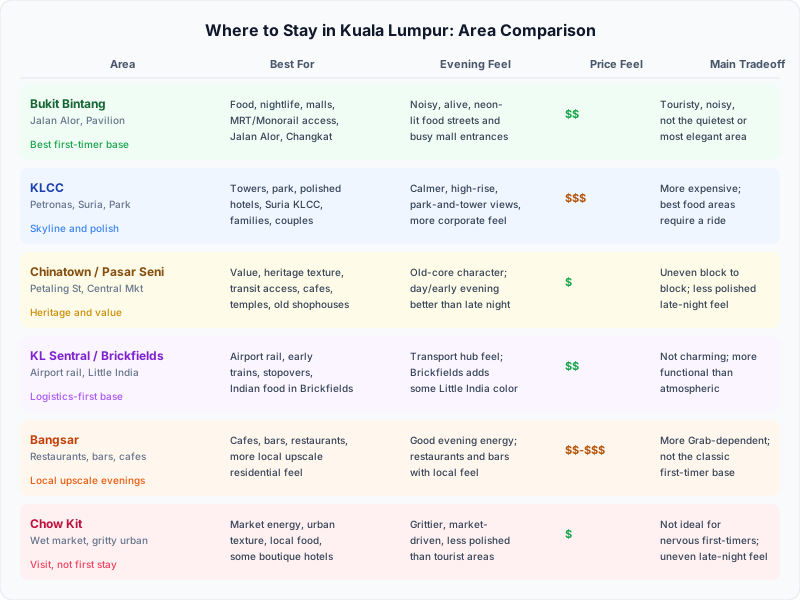
For most first-time visitors, Bukit Bintang is the easiest base. It puts you near malls, Jalan Alor, Changkat nightlife, Pavilion, MRT/Monorail access, and a lot of hotel options. It is not the quietest or most elegant area, but it solves the first-trip problem: you can eat, shop, walk a little, get a train, and find a Grab without making logistics your new personality.
KLCC
KLCC is better if you want polished hotels, skyline views, the Petronas Towers, Suria KLCC, KLCC Park, and a calmer high-rise feel. It is excellent for couples, families, and travelers who like convenience with air-conditioning attached. The downside is that KLCC can feel more corporate and expensive, and some of the best food neighborhoods require a ride.
Chinatown and Pasar Seni
Chinatown and Pasar Seni are the best choice for value, heritage texture, and transit. Petaling Street, Central Market, old shophouses, cafes, temples, and the Pasar Seni station make this area practical for travelers who want more character than KLCC without being too far from the core. The tradeoff is that the area can feel uneven block to block, especially late.
KL Sentral and Brickfields
KL Sentral and Brickfields are logistics-first. Stay here if you have airport rail needs, early trains, or a short stopover. Brickfields adds Indian food and Little India color, which helps, but KL Sentral itself is more transport hub than charming base.
Bangsar
Bangsar is not the classic first-timer base, but it can work if you want cafes, bars, restaurants, and a more local upscale residential feel. You will use Grab more. That is the price of being slightly cooler than the obvious tourist answer.
Quick answer: Stay in Bukit Bintang for the easiest first trip. Choose KLCC for skyline polish, Chinatown/Pasar Seni for value, KL Sentral for logistics, or Bangsar for a more local food-and-bar base.
How Kuala Lumpur neighborhoods actually feel
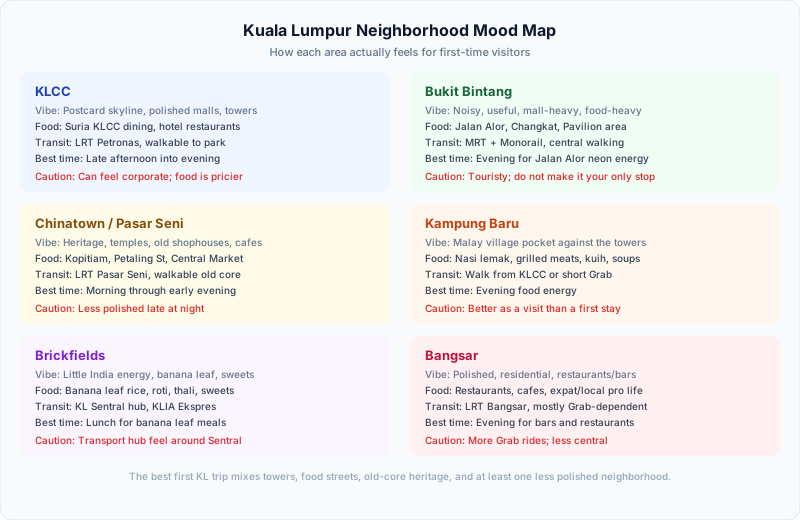
KLCC is the postcard version: towers, park, fountains, polished malls, business hotels, and skyline photos. Visit it, maybe stay there, but do not let it define the whole city. KL's better texture is often a few rides away.

Bukit Bintang is the practical tourist engine. It is noisy, useful, mall-heavy, food-heavy, and alive at night. Jalan Alor is touristy, but still useful for a first evening because it gives you food, neon, and orientation in one place. Just do not make it your only food experience or KL will file a complaint.
Chinatown/Pasar Seni gives you heritage buildings, Petaling Street, Central Market, temples, cafes, and old-new contrast. It is better in the day and early evening than as a late-night wandering zone for cautious first-timers.
Kampung Baru is essential because it shows a Malay village-like pocket against the towers. Go for food and contrast, not because it is a polished attraction. Brickfields is Little India energy around KL Sentral: banana leaf meals, sweets, shops, traffic, and rail convenience. Bangsar is more polished and residential. Chow Kit is grittier, more market-driven, and interesting if you like urban texture, but it is not where I would send a nervous first-timer to stay.
Getting around Kuala Lumpur without wasting your trip
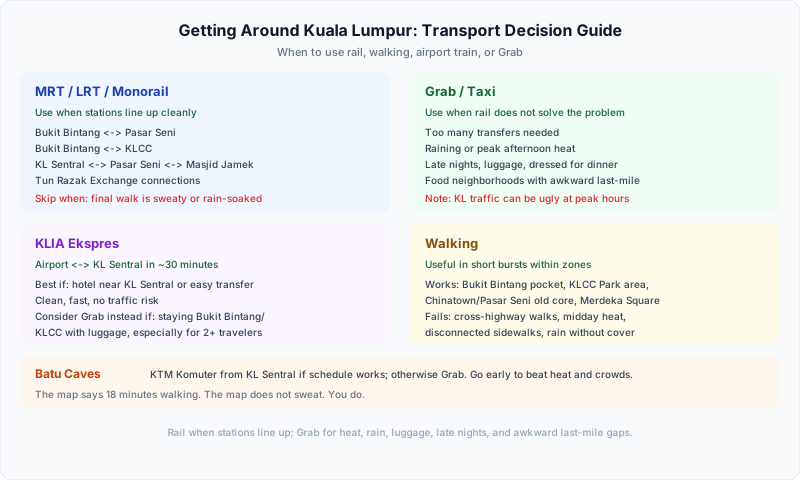
Kuala Lumpur has useful public transport, but the network is not magically door-to-door for visitors. The MRT, LRT, Monorail, and commuter rail can be excellent when your hotel and destination sit near the right stations. They can be annoying when the final walk is sweaty, disconnected, or badly timed with rain.
Use trains for obvious routes: Bukit Bintang to Pasar Seni, KLCC, Tun Razak Exchange, and parts of the core; KL Sentral for airport/train connections; Batu Caves by KTM Komuter if the schedule works. Use Grab when a route requires too many transfers, when it is raining, when you are tired, when you are dressed for dinner, or when the map says “18 minutes walking” and your survival instinct says “absolutely not.”
From KLIA, the KLIA Ekspres to KL Sentral is the cleanest rail option if your hotel is near Sentral or you are comfortable transferring. If you are staying in Bukit Bintang or KLCC with luggage, a Grab or taxi can be simpler, especially for two people.
Quick answer: Use rail when the stations line up cleanly; use Grab for awkward last-mile trips, rain, late nights, airport-to-hotel convenience, and food neighborhoods that are technically close but annoying to reach.
Food in Kuala Lumpur: where the trip gets good
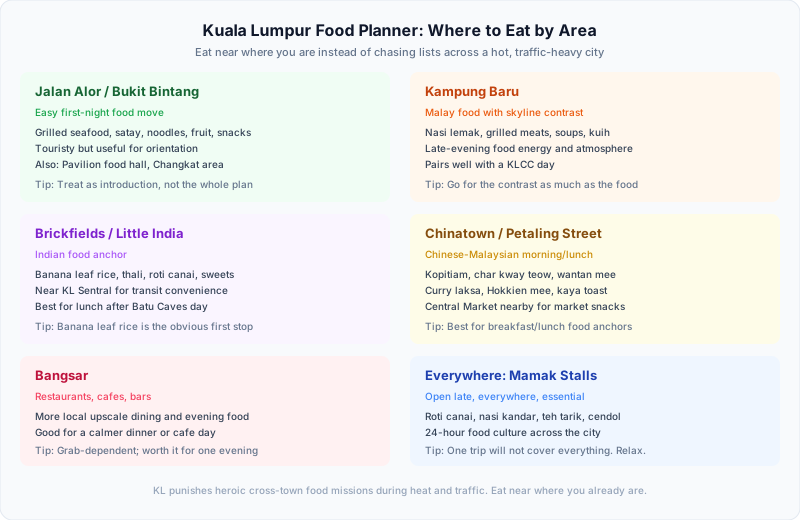
Food is the reason KL becomes more than a cheap skyline stopover. The city's best first-timer meals are not all in one place, so plan food by area instead of chasing a list across town like a raccoon with roaming data.

In Bukit Bintang, Jalan Alor is an easy first-night move: grilled seafood, noodles, satay, fruit, snacks, and tourist chaos. It is not the deepest food experience in Malaysia, but it is useful and fun if you treat it as an introduction, not a final exam.
For Malay food, make time for Kampung Baru. Nasi lemak, grilled meats, soups, kuih, and late-evening food energy are the draw. It pairs well with a KLCC day because the contrast is the whole point.
For Indian food, Brickfields is the obvious first stop, especially for banana leaf rice, thali-style meals, roti, and sweets. For Chinese-Malaysian food, Chinatown and nearby kopitiam-style stops help fill the morning/lunch role. Add curry laksa, char kway teow, Hokkien mee, wantan mee, roti canai, nasi kandar, satay, cendol, teh tarik, and kaya toast to the mental list — then accept that one trip will not cover everything.
Quick answer: Eat near where you already are. KL punishes heroic cross-town food missions during heat and traffic. Build your day around one or two food anchors and let snacks fill the gaps.
What to do in Kuala Lumpur on a first visit
Start with the Petronas Towers and KLCC Park because they are famous for a reason. Go late afternoon into evening if you can. The towers look better as the light changes, the park becomes more pleasant, and you can fold dinner into the same area.
Add Merdeka Square, Masjid Jamek, River of Life, Central Market, and Chinatown as a heritage-and-old-core route. This is where KL's colonial, Islamic, Chinese, and market layers sit close enough to make sense in one outing. Do it earlier in the day or with indoor breaks.

Batu Caves is worth it for most first-time visitors, especially if you have at least three days. Go early to beat heat and crowds. Respect temple norms, watch your belongings around monkeys, and do not schedule it as a casual add-on after an already full day unless you enjoy turning vacations into endurance events.
Use Kampung Baru for food and contrast, Brickfields for Little India meals, and Bangsar or Changkat/Bukit Bintang for evening drinks depending on your style. If you want a view, choose one skyline bar or observation experience; you do not need to collect every tall building like trading cards.
Safety, weather, and practical tips
Kuala Lumpur is generally manageable for first-time visitors, but normal city awareness matters. Watch for bag snatching risk near roads, keep phones secure, be careful with late-night walking in quieter streets, and use Grab when an area feels empty or awkward. Most visits are smooth; the point is not fear, it is not being the easiest target in a city of several million people.
Weather shapes the trip. KL is hot and humid year-round, with heavy rain possible, especially in afternoon or evening bursts. Carry a small umbrella, wear breathable clothing, and plan indoor anchors: malls, museums, cafes, hotel breaks. Malls are not just shopping spaces here; they are climate infrastructure with better lighting.
Dress is fairly relaxed in tourist areas, but bring modest clothing for mosques, temples, and religious sites. Shoes come off in some places. During Ramadan, many restaurants still operate, but hours and atmosphere can shift; evening food markets can be excellent. Haze can occasionally affect air quality, so check conditions if you are sensitive.
Practical tips
- Plan outdoor sightseeing early or late. Midday heat is real and KL sidewalks are not forgiving.
- Carry a small umbrella. Afternoon rain bursts arrive fast and end fast.
- Download Grab before you arrive. It is the rideshare default and often simpler than regular taxis.
- Use malls as climate infrastructure. Indoor breaks are strategy, not laziness.
- Bring modest clothing for religious sites. Mosques and temples have dress requirements.
A simple Kuala Lumpur itinerary for first-time visitors
A good first KL itinerary is three full days, with each day built around one main zone and one food strategy. That keeps the trip efficient without making it feel like a humidity-powered spreadsheet.
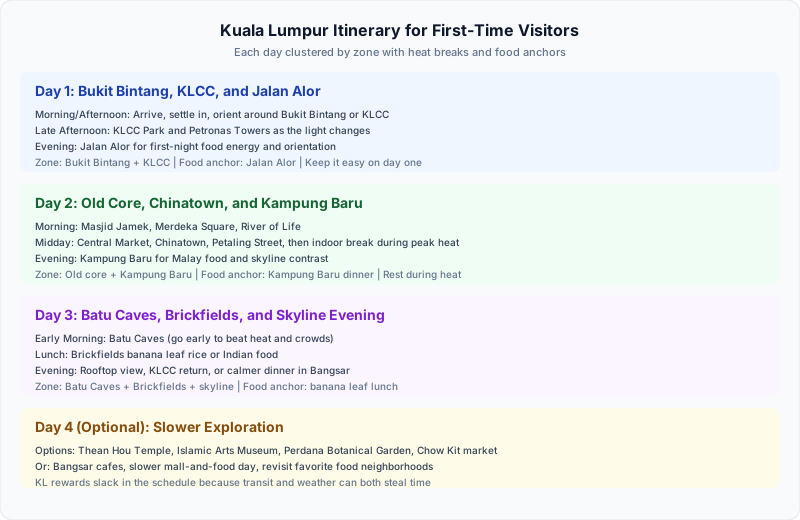
Day 1: Bukit Bintang, KLCC, and Jalan Alor
Arrive, settle in, orient around Bukit Bintang or KLCC, visit KLCC Park and the Petronas Towers late afternoon, then eat around Jalan Alor or nearby. Keep it easy. First days are for not being stupid with jet lag.
Day 2: Old core, Chinatown, Central Market, and Kampung Baru
Start around Masjid Jamek, Merdeka Square, and the River of Life, move toward Central Market and Chinatown, then rest during peak heat. In the evening, go to Kampung Baru for Malay food and tower contrast.
Day 3: Batu Caves, Brickfields, and a skyline evening
Go to Batu Caves early. Return for Brickfields/Little India food, then use the evening for a rooftop view, KLCC return, or a calmer dinner in Bangsar.
Day 4 if you have it
Add Thean Hou Temple, Islamic Arts Museum, Perdana Botanical Garden, Chow Kit market, Bangsar cafes, or a slower mall-and-food day. KL rewards a little slack in the schedule because transit and weather can both steal time.
Best time to visit Kuala Lumpur
Kuala Lumpur is warm, humid, and rain-prone all year, so there is no perfect month where the city suddenly becomes crisp and walkable. The better strategy is to pick dates based on flight value, hotel pricing, festivals, haze risk, and your tolerance for rain.
Rain often arrives in heavy bursts rather than ruining an entire day, which means flexible planning works better than obsessing over forecasts. Outdoor sights belong earlier or later. Midday belongs to lunch, museums, malls, hotel pools, and air-conditioning.
Hot and humid always — plan around rain, not around a perfect month.
Food rhythms shift; evening markets can be excellent.
Varies by year — check conditions if air quality matters to you.
Can affect hotel prices and restaurant pace.
Quick answer: Visit KL when flights and hotels line up well, then design days around heat and rain. There is no mythical dry season that still sweats through its shirt.
How to find better Kuala Lumpur flight and hotel value
KL often offers better hotel value than Singapore, Tokyo, or Hong Kong, which makes it a good city for upgrading your stay without detonating the budget. The trick is not just picking the cheapest room. The trick is picking a room that reduces friction.
For first-timers, a slightly more expensive hotel near Bukit Bintang MRT/Monorail, KLCC, Pasar Seni, or KL Sentral can save time and rideshare costs. If a hotel looks like a deal but sits across highways, far from rail, or in a dead evening area, the savings may evaporate one Grab ride at a time.
Flight-wise, KL works well as a Southeast Asia hub or stopover. Compare arrivals into KLIA with onward regional flights, and think about whether your first night should be logistics-first near KL Sentral or comfort-first near Bukit Bintang/KLCC.
Final take
Kuala Lumpur is best when you plan it as a food-first, value-rich, transit-plus-Grab city with strong neighborhoods and imperfect walkability. Stay in the right pocket, eat by area, use trains when they make sense, avoid midday heroics, and let KL be KL instead of forcing it into a tidy city-break template it never agreed to sign.
Let Fare Window find the best fares to Kuala Lumpur
KL prices shift with Ramadan/Eid timing, school breaks, regional events, and seasonal hotel demand. Track flexible dates before you lock the whole trip around one expensive week.
Start tracking faresKeep planning
Related travel guides
Explore more first-time destination guides while you compare routes, seasons, and trip shapes.


