
Singapore Travel Guide for First-Time Visitors
A practical Singapore travel guide for first-time visitors covering where to stay, neighborhoods, MRT transport, hawker food, things to do, safety, weather, and itinerary pacing.

Singapore is one of the easiest places in Asia to visit for the first time, but it is not a low-effort city if you want the good version of the trip. The mistake is treating it like a tiny stopover with one skyline, one food court, and a photo at Marina Bay. That version works, but barely. It is like buying a Swiss Army knife and using it only to open a bag of chips.
This Singapore travel guide is built for first-time visitors who want the practical decisions first: where to stay, which areas feel different, how to use the MRT without overthinking it, where food becomes the main event, what is actually worth prioritizing, and how to plan a simple itinerary without turning every day into a humidity-powered spreadsheet.
Quick answer: First-time visitors should usually stay around City Hall/Marina Bay for landmark convenience, Bugis/Kampong Glam for value and food access, Chinatown/Tanjong Pagar for central evenings and hawker culture, or Orchard only if shopping and hotel comfort matter more than neighborhood character. Use the MRT for most trips, taxis or Grab for late nights and awkward cross-island hops, and plan outdoor sightseeing early or late because Singapore is not playing around with humidity.
Quick Facts
- Best for: First Asia trip, food, clean and efficient city travel, family trips, architecture, gardens, short stopovers that can become real trips.
- Stay in: City Hall/Marina Bay, Bugis/Kampong Glam, or Chinatown/Tanjong Pagar.
- Best time: Hot and humid year-round; February to April is often slightly easier, but plan around rain, events, and hotel pricing.
- Minimum stay: 3 to 4 full days; 2 days as a tight stopover.
- Getting around: MRT plus walking covers most first trips; add Grab or taxis for late nights, rain, luggage, and Sentosa.
Table of Contents
- 1.Is Singapore a good first-time destination?
- 2.Where to stay in Singapore
- 3.How Singapore neighborhoods actually feel
- 4.Getting around Singapore without overcomplicating it
- 5.Food in Singapore: hawker centres done right
- 6.What to do in Singapore on a first visit
- 7.Safety, rules, weather, and practical tips
- 8.A simple Singapore itinerary
- 9.Best time to visit Singapore
- 10.How to find better flight and hotel value
Is Singapore a good first-time destination?
Singapore is an excellent first-time destination if you want Asia to feel accessible without becoming bland. It is safe, organized, multilingual, well-connected by transit, and packed with food cultures that are easy to reach without needing a fixer, a driver, or a tolerance for total chaos.
The tradeoff is that Singapore can feel polished. If your dream trip is messy alleyways, unpredictable street scenes, cheap long-stay living, and a bit of travel friction, Singapore may feel too controlled. If your dream trip is landing after a long flight, tapping into the train, eating brilliantly by lunch, and not spending your first day negotiating a taxi scam, Singapore is a gift.
Quick answer: Singapore is best for travelers who want food, gardens, architecture, safety, and easy logistics in a compact city. It is less ideal for travelers who want beaches, low prices, or a sprawling old-city feel.
Singapore also works unusually well as a “first Asia” trip because the learning curve is gentle. You can get the sensory hit — tropical heat, hawker centres, Chinese/Malay/Indian/Peranakan food, temples, wet markets, futuristic gardens — while still having clean transit, clear signage, and a city that mostly does what it says on the tin.
Where to stay in Singapore
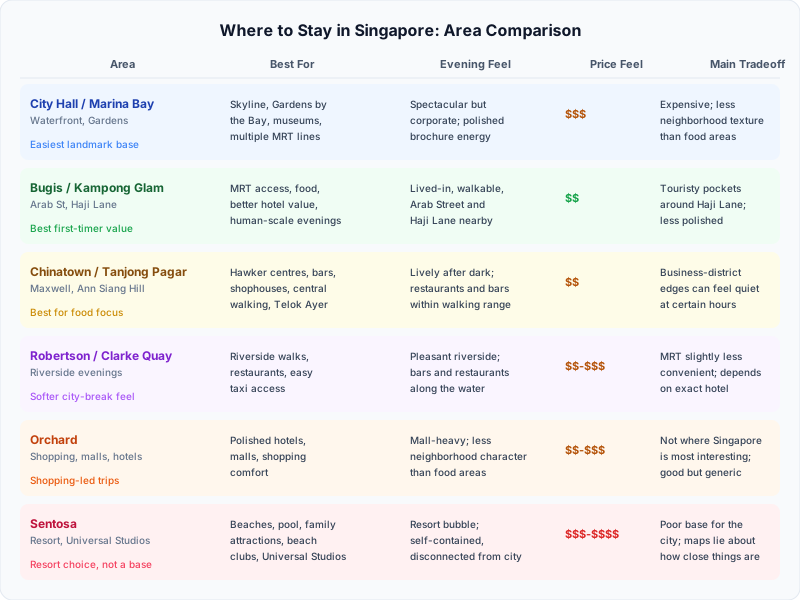
The best area to stay in Singapore for most first-time visitors is City Hall, Marina Bay, Bugis, Kampong Glam, Chinatown, or Tanjong Pagar, depending on whether you want landmark convenience, better value, food access, or a more neighborhood-driven trip.
City Hall and Marina Bay
If budget allows, City Hall and Marina Bay are the easiest bases. You are close to the waterfront, Gardens by the Bay, the National Gallery, Raffles Hotel, the Esplanade, and multiple MRT lines. The downside is price and a slightly corporate feel. Marina Bay is spectacular, but it can feel like staying inside a very expensive brochure.
Bugis and Kampong Glam
Bugis and Kampong Glam are the best first-timer compromise for many travelers. You get MRT access, better hotel value than Marina Bay, Arab Street and Haji Lane nearby, easy food, and a more lived-in evening feel. This is the area to look at first if you want the trip to feel central without paying waterfront prices.
Chinatown and Tanjong Pagar
Chinatown and Tanjong Pagar are strong for food-focused travelers. You can walk to Maxwell Food Centre, Chinatown Complex, Amoy Street Food Centre, Telok Ayer, Ann Siang Hill, and a lot of bars and restaurants. It is central, practical, and more interesting after dark than the hotel-tower zones.
Quick answer: Stay in Bugis/Kampong Glam for the best value-to-access ratio, City Hall/Marina Bay for landmark convenience, or Chinatown/Tanjong Pagar for food and evening life. Sentosa is a resort choice, not a Singapore base.
Sentosa
Sentosa is a resort choice, not a Singapore base. Stay there if beaches, Universal Studios, kid-friendly attractions, and pool time are the trip. Do not stay there because a map made it look close to everything. Maps lie through omission. So do hotel descriptions, which is basically their cardio.
How Singapore neighborhoods actually feel
Singapore's neighborhoods matter because the city is compact but not emotionally uniform. The same first trip can feel futuristic, old-world, corporate, food-obsessed, resorty, or mall-heavy depending on where you sleep and where you spend evenings.

- Marina Bay is the postcard: skyline, waterfront walks, Gardens by the Bay, the Merlion, Marina Bay Sands, and expensive-looking everything.
- Civic District and City Hall are practical and underrated: museums, colonial-era buildings, the river, Raffles, Fort Canning.
- Kampong Glam and Bugis give a more layered first impression: Sultan Mosque, Arab Street, casual food, and good transit.
- Chinatown, Telok Ayer, and Tanjong Pagar are where food, temples, shophouses, offices, bars, and hawker centres overlap.
- Little India is louder, denser, and more sensory. Excellent for food, markets, and temples. Visit hungry.
- Tiong Bahru is calm, cafe-heavy, and good for a slower morning.
- Joo Chiat and Katong bring Peranakan shophouses, laksa, and a more residential east-side feel.
Simple decision: The best first trip usually mixes the polished waterfront with food neighborhoods, older shophouse streets, and one slower local-feeling area.
Getting around Singapore without overcomplicating it
Use the MRT as your default, then add walking, buses, taxis, or Grab when the weather, route, or timing makes public transport annoying. Singapore's public transport is one of the rare systems where “just take the train” is usually good advice.
For most visitors, the simplest payment option is tapping a contactless bank card or mobile wallet where accepted through Singapore's SimplyGo system. The Singapore Tourist Pass provides unlimited basic bus and train travel for one, two, or three days and can be worth it if you are taking several rides a day; otherwise, contactless payment is often less hassle.
Quick answer: Take the MRT for airport access, Marina Bay, Chinatown, Little India, Bugis, Orchard, and most cross-city routes. Use Grab or taxis for late nights, heavy rain, Sentosa transfers, or routes that require too many changes.
Walking is useful but not romantic in the European city sense. Singapore is clean and orderly, but heat changes the math. A 20-minute walk at 8 a.m. can be pleasant. The same walk at 2 p.m. can feel like being steamed in your own bad decisions. Build days around MRT clusters and shaded indoor breaks.
From Changi Airport, the MRT is clean and affordable, but a taxi or Grab is often the better first move after a long-haul flight, especially with luggage or a family. Jewel Changi is worth time if your arrival or departure allows it, but do not plan your entire first day around the airport unless you genuinely enjoy airports. Jewel is impressive. It is still an airport mall with a waterfall, not a substitute for a city.
Food in Singapore: how to eat well without treating hawker centres like a checklist
Food is one of the main reasons to visit Singapore, and hawker centres are the best introduction because they put the city's Chinese, Malay, Indian, and Peranakan influences into daily-life form. Singapore's hawker culture is recognized by UNESCO, but the important thing for travelers is simpler: this is where the trip gets good fast.

Start with one or two famous centres, then stop chasing every “best stall” list like it owes you money. Maxwell Food Centre is convenient near Chinatown and good for a first hawker meal. Chinatown Complex is larger and more local-feeling. Lau Pa Sat is easy for central visitors and satay evenings. Old Airport Road is better if you want to leave the core for a classic hawker experience. Tekka Centre is excellent around Little India. Tiong Bahru Market is useful for a calmer morning.
The right approach is to eat by area. If you are in Chinatown, do Maxwell, Chinatown Complex, Amoy Street, or Hong Lim. If you are in Little India, eat Indian food instead of dragging yourself across town for a chicken rice queue. If you are near Katong, lean into laksa and Peranakan flavors. Singapore rewards food geography more than food box-ticking.
What should you try? Chicken rice, laksa, char kway teow, satay, roti prata, nasi lemak, Hokkien mee, kaya toast, chili crab if you want a sit-down splurge, and kopi or teh when caffeine is required and dignity is already gone.
Quick answer: For a first trip, use hawker centres as neighborhood anchors: Maxwell or Chinatown Complex near Chinatown, Tekka Centre near Little India, Lau Pa Sat for a central satay evening, and Tiong Bahru Market or Old Airport Road for a more local-feeling meal.
What to do in Singapore on a first visit
The best first Singapore itinerary mixes the futuristic waterfront, older neighborhood texture, food, gardens, and one slower east-side or resort-style choice. Do not spend the whole trip indoors in malls, even though Singapore makes that dangerously easy.
Marina Bay and Gardens by the Bay
Start with Marina Bay and Gardens by the Bay because they are famous for a reason. The waterfront loop is strongest late afternoon into evening, when the heat softens and the skyline starts doing its expensive magic trick. Gardens by the Bay is worth seeing even if you normally roll your eyes at “must-see” attractions.

Chinatown, Telok Ayer, and the Civic District
Add Chinatown, Telok Ayer, and the Civic District for the city's older layers: temples, shophouses, food centres, museums, and colonial-era architecture. The National Gallery is a good indoor anchor, especially if weather turns ugly.
Kampong Glam, Bugis, and Little India
Use Kampong Glam, Bugis, and Little India as a food-and-neighborhood day rather than a checklist of photo stops. Sultan Mosque, Arab Street, Haji Lane, Tekka Centre, Sri Veeramakaliamman Temple, and the side streets around Little India make a better day when you move slowly and eat along the way.
Sentosa or a slower extension
Choose Sentosa only if you actually want what Sentosa offers: resort energy, beach clubs, Universal Studios, kid attractions, or a very easy pool-and-sand afternoon. For a more interesting non-core day, consider Joo Chiat/Katong for shophouses and food, or Tiong Bahru for a softer morning.
Safety, rules, weather, and practical tips
Singapore is one of the safest major destinations a first-time visitor can choose, but that does not mean you should switch your brain off and let the city parent you. Normal city awareness still applies: watch your bag in busy areas, check road crossings, and do not assume every rule is optional because it was optional somewhere else.
The practical rules are mostly common sense: do not litter, do not smoke where it is prohibited, respect queues, use crossings properly, and pay attention to signs in transit and public spaces. Singapore is orderly because the rules are real, not decorative. North America could learn from this, but then we would have to read signs, and apparently that is where civilization collapses.
The bigger travel issue is weather. Singapore is hot, humid, and rain-prone year-round. Pack light breathable clothing, comfortable shoes, sunscreen, a compact umbrella, and enough humility to take indoor breaks. If you try to brute-force sightseeing from 10 a.m. to 5 p.m. every day, the city will win.
Practical tips
- Tap water is safe to drink. English is widely used.
- Credit cards work most places. Small food stalls may prefer cash or local payment methods, so keep some Singapore dollars handy.
- Dress is casual in most places, but bring something smarter for rooftop bars, nicer restaurants, or hotel lounges.
- Build days around MRT clusters and indoor breaks. Do not fight the humidity head-on.
- Carry a compact umbrella. Rain can appear suddenly and end just as fast.
A simple Singapore itinerary for first-time visitors
A good first Singapore itinerary is three full days, with each day built around one main zone and one food strategy. That keeps the trip efficient without making it feel like a layover with delusions of grandeur.
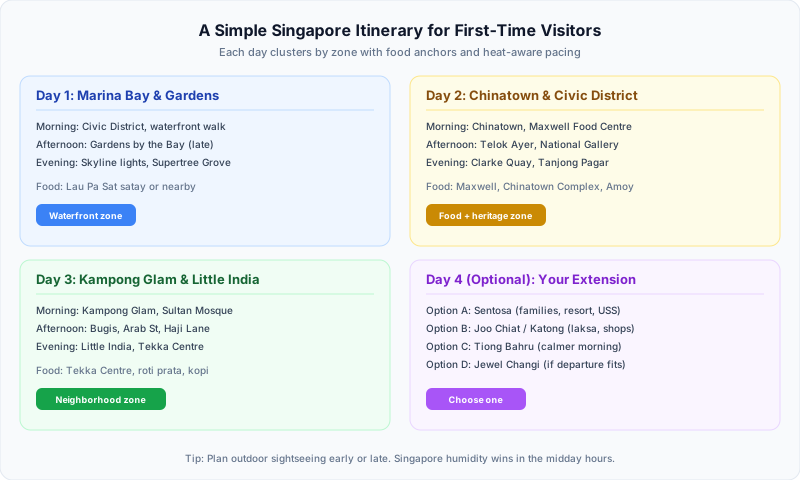
Day 1: Marina Bay, Gardens, and the waterfront
Start easy after arrival. Walk the Civic District or Marina Bay area, visit Gardens by the Bay in the late afternoon, then stay for the skyline and evening lights. Eat nearby if you are tired, or head to Lau Pa Sat for satay if you want an easy central food win.
Day 2: Chinatown, Telok Ayer, Tanjong Pagar, and the river
Build the day around food and old-city texture. Visit Chinatown, eat at Maxwell or Chinatown Complex, walk Telok Ayer, add the National Gallery or Asian Civilisations Museum if you want an indoor anchor, then finish around the river, Clarke Quay, Robertson Quay, or Tanjong Pagar.
Day 3: Kampong Glam, Bugis, Little India, and a slower evening
Start around Kampong Glam and Arab Street, move through Bugis, then eat around Little India or Tekka Centre. If you still have energy, use the evening for Orchard, a rooftop drink, or a return to Marina Bay.
Day 4 if you have it
Choose your extension. Sentosa for families and resort time. Joo Chiat/Katong for Peranakan color and east-side food. Tiong Bahru for a slower morning. Jewel Changi if departure timing makes it useful.
Best time to visit Singapore
There is no perfect weather month in Singapore; the better question is what inconvenience you would rather manage. The city is consistently hot and humid, with rain possible throughout the year. February to April can be relatively comfortable by Singapore standards, while November to January often brings wetter northeast monsoon conditions. June to September can bring haze risk depending on regional conditions, though this varies by year.
Often relatively comfortable — a good default target for first trips.
Possible haze risk from regional conditions; varies by year.
Wetter northeast monsoon — still workable with indoor-heavy planning.
Hotel prices spike sharply — book early or avoid if possible.
Quick answer: Visit Singapore when flights and hotels line up well, then design days around heat and rain. February to April is often a comfortable target, but good planning matters more than picking a perfect month that does not really exist.
How to find better Singapore flight and hotel value
Singapore is a major air hub, so flight value often comes from flexibility: compare nearby departure days, watch long-haul connections through Changi, and do not ignore stopover logic if Singapore is part of a larger Asia trip. A two- or three-night Singapore stopover can be excellent, but only if you stay central and avoid wasting half the visit transferring between hotel zones.
Hotel value is more location-sensitive than it first appears. A cheaper hotel far from the MRT or outside your evening areas can quietly cost you time, rideshares, and patience. For most first-time visitors, paying slightly more for Bugis, City Hall, Chinatown, or Tanjong Pagar beats saving a little and repeatedly commuting back from an awkward edge.
If Marina Bay hotels are too expensive, do not treat that as failure. Singapore is one of the easiest cities to visit without staying in the postcard zone. Stay near an MRT station, build days by area, spend your money on food and a few worthwhile paid attractions, and let the skyline be something you visit instead of something you finance.
Final take
Singapore is best when you plan it as a compact, food-driven, transit-friendly city with serious heat and distinct neighborhood moods. Stay central, eat by area, use the MRT, go outdoors early or late, and resist the urge to make every “best of Singapore” list your personal prison sentence.
Let Fare Window find the best fares to Singapore
Singapore prices shift with event calendars, school breaks, and seasonal hotel demand. Track flexible dates before you lock the whole trip around one expensive week.
Start tracking faresKeep planning
Related travel guides
Explore more first-time destination guides while you compare routes, seasons, and trip shapes.


