
Seoul Travel Guide for First-Time Visitors
A practical first-time Seoul guide covering where to stay, neighborhoods, transit, food, things to do, safety tips, common mistakes, and a simple 4-day itinerary.

Seoul is one of the best first-time city trips in Asia if you like food, transit, design, late nights, cafés, shopping, history, and neighborhoods that change personality every few subway stops. It is also a city that punishes vague planning. Stay in the wrong area, overload your palace day, assume taxis solve everything, or save all your food choices for “wherever looks good,” and Seoul starts feeling bigger, colder, and more confusing than it needs to.
For a first visit, the smart version of Seoul is simple: base yourself somewhere central or well-connected, use the subway for most movement, build each day around one or two districts instead of crossing the city repeatedly, and leave room for food decisions. Seoul rewards wandering, but only after you have chosen the right part of town to wander in.
Quick answer: Seoul is best for food-first travelers, shoppers, urban explorers, café people, K-culture fans, and efficient city travelers. It is less ideal for travelers who want beach relaxation, ancient-city quiet, or a small walkable center where everything is ten minutes apart.
Quick Facts
- Best for: Food-first travelers, shopping, K-culture fans, efficient city trips, and first-time Asia city visits.
- Best base: Myeongdong/Euljiro for convenience, Insadong/Jongno for history, Hongdae/Yeonnam for nightlife and cafés.
- Best months: Spring (April–May) and autumn (September–October) for easiest weather.
- Ideal trip length: 4 to 5 full days is the sweet spot.
- Getting around: Subway plus walking. Use Naver Map or KakaoMap, not Google Maps.
- Airport tip: AREX for Seoul Station/Hongdae connections; airport limousine buses if one stops near your hotel.
- Common mistake: Crossing the city repeatedly instead of clustering days by neighborhood.
Table of Contents
- 1.Who Seoul is best for — and who should skip it
- 2.Where to stay in Seoul the first time
- 3.Getting around Seoul without wasting half the trip
- 4.What to do in Seoul on a first trip
- 5.Food strategy for first-time visitors
- 6.A simple 4-day Seoul itinerary
- 7.Safety and practical tips
- 8.Common first-time mistakes in Seoul
Who Seoul is best for — and who should skip it
Seoul is excellent for travelers who like cities that work. The subway is huge, clean, and logical once you learn the map rhythm. Food is everywhere. Cafés are practically a civic religion. Neighborhoods have strong identities: royal-palace Seoul, student Seoul, fashion Seoul, business Seoul, river-park Seoul, back-alley barbecue Seoul, and shopping-mall Seoul all coexist without politely waiting their turn.
It is especially good for first-time visitors who want a high-energy city but do not want the intimidation level of Tokyo or the traffic stress of some Southeast Asian capitals. Seoul feels modern and organized, but still gives you enough texture: hanok lanes, street food alleys, basement restaurants, late-night chicken-and-beer shops, neon shopping streets, mountain views, and old palaces sitting inside a city of glass towers.
Quick answer: Skip or shorten Seoul if your ideal trip is slow beach time, resort ease, ancient ruins, or small-town charm. Seoul can be cozy in pockets, but it is not a slow city.
Seoul can be a city where your best day might involve a palace, two subway lines, a market lunch, a café queue, skincare shopping, fried chicken at midnight, and 24,000 steps you did not negotiate with your knees beforehand. If that sounds good, Seoul is for you.
Best season at a glance
Mild temperatures, cherry blossoms, pleasant walking. High demand — book early.
Hot, humid, rainy. Typhoon season possible. Still busy but less comfortable outside.
Best weather overall. Fall foliage. Crowds and hotel demand spike again.
Cold and dry. Clear skies but properly chilly. Fewer tourists, lower prices.
Where to stay in Seoul the first time
Your Seoul base matters because the city is large. The subway can take you almost anywhere, but “almost anywhere” still burns time when you keep zigzagging across the Han River. Pick your area by trip style, not by whichever hotel photo has the friendliest duvet.
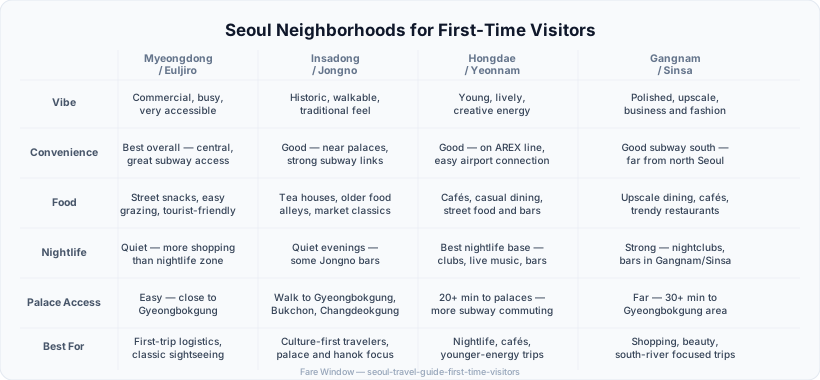
Quick answer: Stay in Myeongdong/Euljiro for the easiest first trip. Choose Insadong/Jongno if palace access matters most. Choose Hongdae if nightlife and cafés are your priority.
Myeongdong / Euljiro: best all-around first-time base
Myeongdong is the easiest first-time choice. It puts you close to shopping, street food, N Seoul Tower access, City Hall, Namdaemun Market, and useful transit. Euljiro, just north and east, is often the better version for travelers who want convenience without staying directly in the brightest shopping crush.
The tradeoff: Myeongdong can feel commercial and tourist-heavy. It is practical, not soulful. Think of it as a good launchpad, not necessarily the place you fall in love with.
Insadong / Jongno: best for history, palaces, and walkable old Seoul
Insadong and Jongno are ideal if you want palaces, traditional streets, tea houses, temples, older food alleys, and easy access to Gyeongbokgung, Changdeokgung, Bukchon, Ikseon-dong, and Cheonggyecheon Stream. You can walk more here than in many other districts.
The tradeoff: nightlife is quieter than Hongdae and the hotel mix can be uneven. Pick carefully around station access.
Hongdae / Yeonnam: best for nightlife, cafés, and younger energy
Hongdae is Seoul's student-energy, nightlife, shopping, music, and casual-food zone. Yeonnam, nearby, is better for cafés, boutiques, leafy lanes, and a slightly less frantic version of the same general scene. It is also convenient for the airport railroad line.
The tradeoff: it is less convenient for palace-heavy sightseeing. You will be commuting east more often for classic sights.
Gangnam / Sinsa / Apgujeong: best for shopping, beauty, and polished Seoul
Gangnam is useful if your trip leans into shopping, clinics, business, upscale dining, nightlife, COEX, or south-river appointments. Stay here if you already know your Seoul trip is south-river focused.
The tradeoff: you will spend more subway time crossing the river for traditional sightseeing. Gangnam is real Seoul, but it is not the easiest first Seoul.

Getting around Seoul without wasting half the trip
Use the subway as your default. Seoul's metro system is extensive, reliable, and usually faster than traffic. Get a transit card such as T-money or another visitor-friendly card, install Naver Map or KakaoMap, and accept that Google Maps is not the king here. This is not the time to die on the Google hill. The hill has poor routing.
For most first-time visitors, the subway plus walking covers the trip. Taxis help late at night, when luggage is involved, when rain gets ugly, or when a route requires an annoying transfer. But taxis can be slowed by traffic, and some drivers may not be comfortable with English addresses. Have your destination in Korean or use an app.
Key rule: Plan by clusters. Do not do Gyeongbokgung in the morning, Gangnam lunch, Hongdae afternoon, and Dongdaemun at night unless you enjoy spending your vacation proving that trains exist.
From Incheon Airport, the AREX train is clean and efficient if your hotel connects well to Seoul Station, Hongdae, or the airport rail corridor. Airport limousine buses can be easier with luggage if they stop near your hotel.

What to do in Seoul on a first trip
The best Seoul first trip combines palaces, markets, neighborhood wandering, food, and one south-river day. The city works best when you use each day to go deep into one district instead of bouncing across the whole map.
Start with Gyeongbokgung, Bukchon, and Insadong — but pace it properly
Gyeongbokgung Palace is the obvious first major sight, and it works because the surrounding district gives you a full half-day or full day. Add Bukchon Hanok Village for traditional lanes, Insadong for shops and tea, and possibly Ikseon-dong for cafés and narrow-lane wandering.
The mistake is treating this area like a checklist. Gyeongbokgung is large, Bukchon is hilly and residential, and Insadong rewards slow browsing. Give the area breathing room. If you wear hanbok for palace photos, build in time for rental, walking, and returning it without turning your morning into costume logistics with tourism attached.

Use Myeongdong and Namsan as an easy evening
Myeongdong is not the deepest neighborhood in Seoul, but it is useful. Go for street snacks, cosmetics, easy shopping, and first-night energy. Pair it with Namsan Seoul Tower if the weather is clear and you want the city-view moment. Do not eat every meal in Myeongdong. It is great for convenience and grazing, less great as your entire understanding of Korean food.
Give Hongdae or Yeonnam an evening, not just a quick stop
Hongdae comes alive later. Go too early and you may wonder why everyone hyped it. Go in the late afternoon into evening for shopping, cafés, buskers, casual restaurants, bars, and people-watching. Yeonnam is better for a slower café-and-walk version before Hongdae gets louder.
Cross the river only when the day supports it
Gangnam, Sinsa, Apgujeong, COEX, and Seongsu are all worth considering, but do not scatter them randomly into north-river sightseeing days. Group south Seoul activities together. Seongsu is especially good if you like cafés, design shops, pop-ups, and warehouse-to-cool-neighborhood energy.
Add the Han River if the weather is kind
The Han River parks are one of Seoul's best pressure valves. Yeouido Hangang Park or Banpo Hangang Park can be lovely for a picnic, walk, bike ride, or convenience-store ramen moment. Go near sunset if weather is good. Skip it if it is freezing, raining, or your itinerary is already overloaded.
Food strategy for first-time visitors
Seoul is a food city, but first-timers can still eat badly if they only chase viral spots or panic-order in tourist zones. The better strategy is to plan food by neighborhood.
Use Myeongdong for snacks, not every dinner. Use Gwangjang for market classics. Use Hongdae, Yeonnam, and Seongsu for cafés and casual meals. Use Jongno, Euljiro, and Mapo for barbecue, older restaurants, and local atmosphere. Use Gangnam, Sinsa, and Apgujeong for polished restaurants and trendier dining.
- Korean barbecue at least once — ideally somewhere not chosen entirely by the nearest hotel sign.
- Market food at Gwangjang — bindaetteok, mayak gimbap, dumplings, and general market energy.
- Fried chicken and beer — because Seoul understands late-night engineering.
- A proper café stop in Yeonnam, Seongsu, or Sinsa.
- One simple local meal — seolleongtang, kalguksu, bibimbap, jjigae, or noodle soup.
- Convenience-store snacks for the hotel room, because travel maturity includes tiny triangle rice and zero shame.

Dietary note: If you have dietary restrictions, research ahead and save Korean phrases. Seoul is easier than it used to be for international visitors, but not every small restaurant can handle complex dietary explanations on the fly.
A simple 4-day Seoul itinerary for first-time visitors
A good 4-day Seoul itinerary should cluster each day around a neighborhood or district, leave room for food decisions, and resist the temptation to see everything at once.
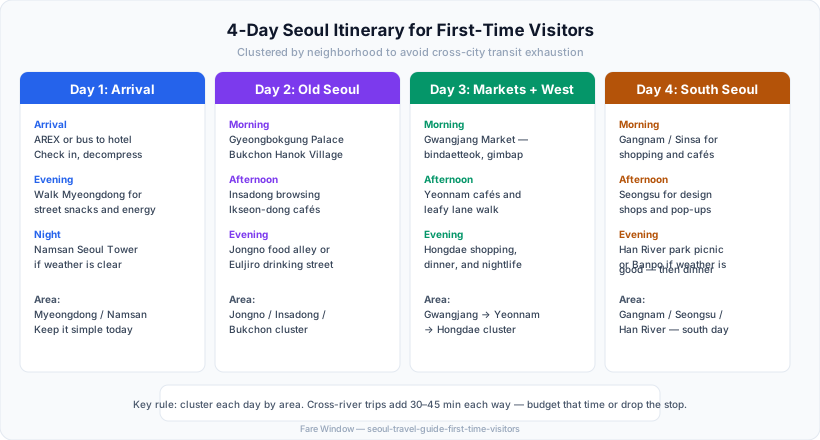
Day 1: Arrival, Myeongdong, and Namsan
Arrive, get into the city, check in, and keep the first day gentle. Walk Myeongdong, snack lightly, pick up basics, and go to Namsan Seoul Tower if the weather is clear. Do not schedule a palace marathon after a long-haul flight unless you enjoy learning about history through jet-lagged resentment.
Day 2: Gyeongbokgung, Bukchon, Insadong, Ikseon-dong
Make this your classic Seoul day. Start with Gyeongbokgung, then move through Bukchon carefully and respectfully because it is still residential. Spend time in Insadong, then finish around Ikseon-dong or Jongno for food. This day works best when you do not rush it.
Day 3: Market food, Hongdae, and Yeonnam
Start with Gwangjang Market or a Jongno food stop. In the afternoon, head toward Hongdae and Yeonnam for cafés, shops, street energy, dinner, and nightlife. This day gives you the contrast between older central Seoul and younger west Seoul.
Day 4: Gangnam, Seongsu, or Han River
Choose based on your style. Pick Gangnam/Sinsa/Apgujeong for shopping, beauty, and polished cafés. Pick Seongsu for design shops and pop-up energy. Pick the Han River if the weather is good and you want a slower city-life moment. Do not try to do all three deeply in one day unless your hobby is logistics.
If you have a fifth day
Add Changdeokgung and its Secret Garden if available, a DMZ tour if that interests you, a deeper food crawl, a museum day, or a day trip. Seoul is better with a fifth day because the first four usually get swallowed by the obvious hits.
Safety and practical tips
Seoul is generally a safe city for visitors, including solo travelers, but normal big-city awareness still applies. Watch your belongings in crowded nightlife areas and markets, use official taxis or apps, and do not treat low crime as permission to switch your brain off.
Apps and navigation
Download Naver Map or KakaoMap before you arrive. Save your hotel name and address in Korean. Carry a transit card and a backup payment method. Many places accept cards, but markets, small stalls, and transit routines can be easier with local payment habits and some cash.
Weather and seasons
Seoul has real seasons. Summer can be hot, humid, and rainy. Winter can be properly cold. Spring and autumn are the easiest first-time weather windows, though cherry blossom and fall foliage periods bring crowds and higher hotel demand.
Etiquette
Keep voices moderate on transit, stand to the side on escalators when local flow suggests it, do not photograph people intrusively, and be respectful in residential hanok areas. In restaurants, use the call button when there is one, and do not be shocked if service feels efficient rather than chatty. Seoul is not being rude. Seoul is busy.
Common first-time mistakes in Seoul
Over-crossing the city
The biggest mistake is over-crossing the city. Seoul looks manageable on a map until you realize every transfer, station walk, and café detour adds up. Cluster your days.
Staying too far from useful transit
A cheaper hotel that adds thirty minutes each way is not a bargain. It is a small daily theft wearing a hotel logo.
Making food too spontaneous in the wrong places
Wandering works in Hongdae, Yeonnam, Jongno, Euljiro, and markets. It works less well when everyone is hungry, tired, and standing outside a random office tower in Gangnam.
Assuming Seoul is only palaces and shopping
Make room for a river park, older food alley, café neighborhood, or ordinary residential-feeling walk. That is where the city starts becoming more than attractions.
Final verdict
Seoul is a brilliant first-time city if you plan it by neighborhoods instead of attractions. Stay in Myeongdong/Euljiro for convenience, Insadong/Jongno for history, Hongdae/Yeonnam for youth and nightlife, or Gangnam/Sinsa if your trip is south-river focused. Use the subway, cluster your days, eat by area, and resist the urge to see everything in one sweep.
The best Seoul trip is not the one with the longest checklist. It is the one where each day has a clear part of the city, enough time to eat properly, and enough slack to follow the side streets that made you want to come in the first place.
FAQ
Is Seoul worth visiting for first-time travelers?
Yes. Seoul is one of the strongest first-time Asia city trips for travelers who like food, transit, neighborhoods, cafés, shopping, and urban energy.
How many days do you need in Seoul?
Four to five full days is the sweet spot. Three days works if you focus hard. A week lets you add day trips and slower neighborhoods.
What is the best area to stay in Seoul for first-time visitors?
Myeongdong or Euljiro for the most convenient first trip. Insadong or Jongno if you want palace and hanok access right away.
Is the Seoul subway easy to use?
Yes. Get a T-money card, install Naver Map or KakaoMap, and the subway is straightforward. Signs are in Korean and English.
What is the best time of year to visit Seoul?
Spring (April–May) and autumn (September–October) are the most popular for good reason. Both have pleasant weather and manageable crowds outside of cherry blossom and foliage peak periods.
Is Seoul safe for solo travelers?
Generally yes. Seoul has low violent crime and good infrastructure. Apply normal big-city awareness in nightlife areas and crowded markets.
Planning a trip to Seoul?
Let Fare Window find the best fares
Set your trip's departure and return windows. Fare Window checks every date combination automatically and sends you a daily fare report.
Start your free trialKeep planning
Related travel guides
Explore more first-time destination guides while you compare routes, seasons, and trip shapes.


